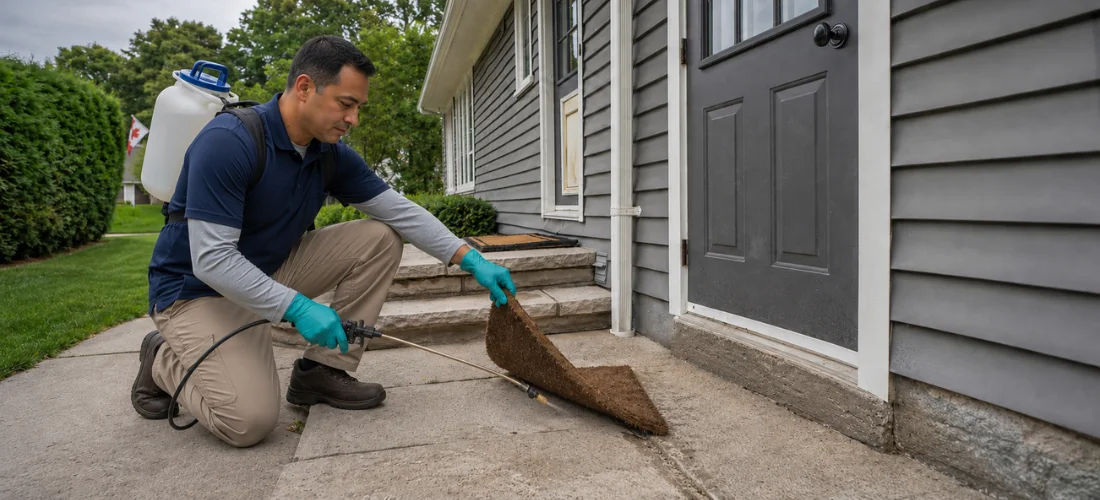
Pest control Ontario services are essential because they protect residents, food, buildings, and household comfort from infestations that can spread quickly and become expensive to eliminate. Professional inspections can help identify entry points, nesting areas, moisture problems, and early warning signs that homeowners often overlook.
Ontario offers a high quality of life, but its changing seasons create favorable conditions for many unwanted intruders.
A reliable pest control Ontario plan helps households manage these seasonal risks before a minor issue develops into a widespread infestation. The problem is rarely limited to seeing an occasional insect or rodent.
An infestation can contaminate food, affect indoor comfort, damage building materials, and create ongoing anxiety for the people living there. That is why pest management should be considered part of responsible household maintenance rather than an emergency service used only after a serious problem appears.
Ontario’s Climate Encourages Seasonal Activity
Ontario experiences warm summers, wet transitional seasons, and cold winters. These conditions influence where insects and rodents feed, reproduce, hide, and seek shelter.
- During spring, warmer temperatures and increased moisture encourage ant colonies and other insects to become active. Melting snow and rainfall may also expose cracks, drainage problems, and damp areas around foundations.
- Summer brings greater activity from mosquitoes, flies, wasps, ants, and outdoor insects. Open doors, damaged screens, outdoor meals, standing water, and overflowing waste containers make access to food and shelter easier.
- Autumn creates a different concern. As outdoor temperatures fall, mice, rats, spiders, cluster flies, and other invaders search for protected spaces. Small openings around siding, utility lines, roof edges, doors, and foundations can provide access.
- Winter does not make every infestation disappear. Heated buildings allow cockroaches, rodents, bed bugs, and stored-product insects to remain active. Once inside, they may have steady access to warmth, food, water, and undisturbed hiding places.
| Season | Common concerns | Conditions that increase activity | Recommended action |
|---|---|---|---|
| Spring | Ants, spiders and emerging insects | Rain, thawing soil and moisture | Inspect foundations and correct drainage |
| Summer | Wasps, flies and mosquitoes | Heat, outdoor food and standing water | Manage waste and inspect outdoor areas |
| Autumn | Mice, rats and cluster flies | Falling temperatures and available gaps | Seal exterior openings before cold weather |
| Winter | Rodents, cockroaches and bed bugs | Indoor heat, food and shelter | Monitor kitchens, basements and sleeping areas |
Seasonal awareness allows owners to act before activity reaches its peak. It also makes inspections more focused because different areas require attention at different times of the year.
Infestations Can Affect Household Health
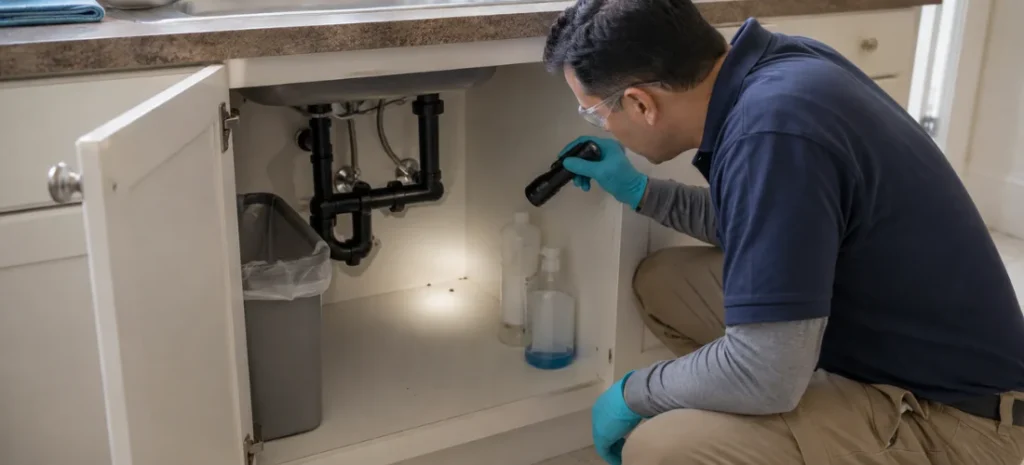
One of the strongest reasons to take pest management seriously is the potential effect on health and sanitation.
Rodents may leave urine, droppings, nesting material, and contaminated food behind. Rodent droppings, urine, saliva, and nesting materials should be treated as potentially harmful. Dry droppings should not be swept or vacuumed because doing so may release contaminated particles into the air. They should instead be carefully disinfected and removed using appropriate protective measures.
Cockroaches can move through waste, drains, damp spaces, and food preparation areas. Their body parts, droppings, and secretions may also aggravate allergies in sensitive individuals.
Wasps present another concern, particularly when a nest is close to a doorway, deck, play area, or frequently used path. A person who unknowingly disturbs a concealed nest may receive multiple stings. People with serious sting allergies face greater risks and should never attempt removal themselves.
Bed bugs are not known primarily for spreading disease, but they can cause itchy bites, disrupted sleep, stress, and considerable emotional discomfort. Their ability to hide in mattress seams, bed frames, baseboards, furniture, and personal belongings makes them difficult to eliminate through casual cleaning.
Effective management reduces exposure by combining sanitation, exclusion, monitoring, targeted treatment, and follow-up inspections.
Small Invaders Can Cause Expensive Damage
The visible signs of an infestation may seem minor, but activity behind walls or under floors can be much more extensive.
Rodents regularly gnaw to maintain their teeth. They may damage stored belongings, insulation, plastic plumbing components, wood, and electrical wiring. Damaged wiring can create a safety concern, while contaminated insulation may require removal and replacement.
Carpenter ants do not eat wood, but they excavate it to create nesting galleries. Colonies are often associated with damp or weakened timber around windows, roofs, decks, door frames, or areas affected by plumbing leaks.
Termites are less commonly discussed in Ontario than in warmer regions, but established populations occur in parts of the province. Because their activity can remain concealed, visible evidence may appear only after structural materials have been affected.
Wasps may establish nests inside wall voids, soffits, roof spaces, sheds, or underground cavities. Attempting to seal an active opening without addressing the nest can force insects toward another exit, potentially directing them farther into the building.
The cost of professional management is often easier to control when compared with the possible property damage associated with a long-established colony or rodent population.
Food and Storage Areas Are Vulnerable
Kitchens, pantries, garages, basements, and storage rooms provide many of the resources unwanted visitors need.
Open packages, crumbs, cooking grease, pet food, recycling residue, and poorly sealed garbage can support activity. Even a tidy kitchen may contain overlooked food beneath appliances, inside cabinet corners, or around waste containers.
Pantry insects may arrive in flour, grains, cereals, dried fruit, seeds, spices, or pet food. Once introduced, they can move into nearby packages and contaminate a larger portion of the pantry.
Rodents can chew through paper, cardboard, and some plastic packaging. Food touched by insects or rodents should not simply be cleaned and returned to storage because contamination may not be visible.
Practical home pest prevention includes transferring dry goods into sealed containers, cleaning spills promptly, rotating stored food, inspecting packages, and keeping pet food covered when it is not being served.
Infestations Rarely Resolve on Their Own
Seeing one insect does not always confirm a major problem. However, repeated activity, droppings, unusual sounds, bite marks, shed skins, damaged food packages, or nesting material should not be ignored.
Many species remain concealed for most of the day. Cockroaches hide in narrow gaps near heat, food, and moisture. Mice may travel through wall voids and emerge only when a room is quiet. Bed bugs usually remain close to resting areas but can hide in spaces that are difficult to inspect.
When the visible individuals are removed but the nest, colony, eggs, or entry route remains, activity commonly returns. Spraying the insects that can be seen may provide temporary relief without reaching the source.
This is one reason generic do-it-yourself methods often produce inconsistent results. The correct response depends on identifying the species, understanding its behavior, locating the source, and selecting an appropriate control method.
Professional Identification Improves Treatment
Different species can look similar while requiring very different solutions.
Carpenter ants, for example, should not be managed in exactly the same way as pavement ants. A single mouse entering through an open garage requires a different response from an established rodent population nesting inside the structure. Small beetles found near a window may originate from stored food, fabrics, wood, or outdoor vegetation.
A trained technician looks beyond the visible evidence. The inspection may include the foundation, roofline, utility openings, attic, basement, kitchen, bathrooms, garage, storage areas, and exterior landscaping.
The technician may also assess:
- Where activity is concentrated.
- How the invader entered.
- Whether a nest is indoors or outside.
- Which food and water sources are available.
- Whether moisture is supporting activity.
- Which occupants or animals require additional safety precautions.
- Whether neighbouring units may be involved.
- What follow-up work will be required.
Correct identification makes local pest treatment more precise, reduces unnecessary product use, and improves the likelihood of long-term control.
Integrated Pest Management Offers Better Results
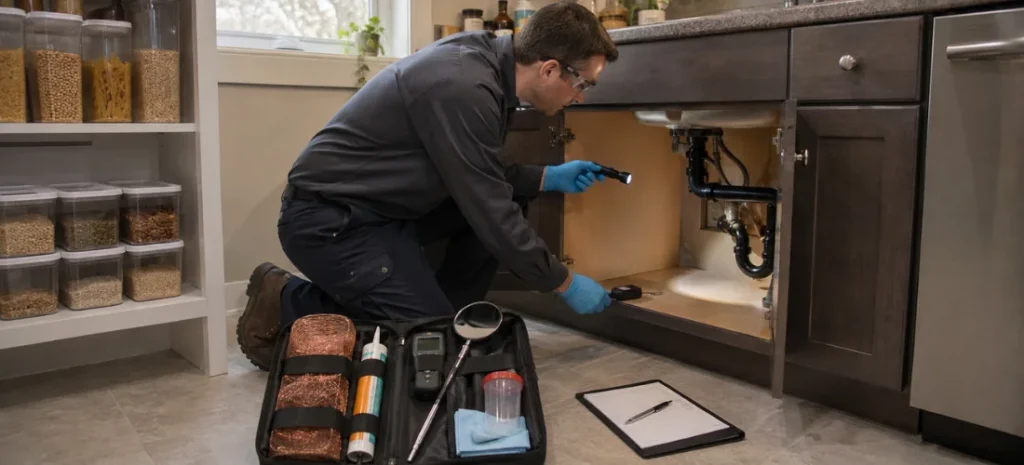
Modern management should not rely entirely on spraying or baiting. A more complete approach is integrated pest management, often called IPM.
IPM begins with inspection and identification. The technician then evaluates the level of activity, environmental conditions, entry routes, and practical control options. Non-chemical measures may be used first or combined with carefully selected products.
| Stage | Purpose | Typical action |
|---|---|---|
| Inspection | Find evidence and contributing conditions | Check harbourage areas, moisture and access points |
| Identification | Confirm the species | Examine droppings, damage, insects or nesting evidence |
| Exclusion | Reduce access | Seal cracks, repair screens and protect utility openings |
| Sanitation | Remove supporting resources | Secure food, control waste and clean affected areas |
| Treatment | Address established activity | Use traps, baits or targeted applications |
| Monitoring | Confirm whether control is working | Reinspect devices, affected rooms and entry points |
| Follow-up | Reduce the chance of recurrence | Adjust treatment and correct remaining conditions |
This approach is particularly useful in pest control homes where children, older adults, pets, or people with allergies may be present. Treatment can be planned around the building, the species, and the needs of occupants instead of applying the same method everywhere.
DIY Products Have Limitations
Store-bought traps, baits, and insecticides can sometimes help with limited activity, but they must be selected and used carefully.
A product that is suitable for one species may be ineffective for another. Applying excessive amounts, mixing products, or using an outdoor product indoors can create unnecessary exposure without solving the infestation.
Some products may be used only by trained or licensed individuals, while the province’s cosmetic pesticide rules restrict certain outdoor uses. A professional offering pesticide services should hold the licensing required for the work being performed.
DIY pest control is most likely to fail when:
- The species has been identified incorrectly.
- The nest or harbourage cannot be reached.
- Multiple entry points remain open.
- Eggs or immature stages survive.
- Products are placed in the wrong locations.
- The population extends into neighbouring units.
- Follow-up monitoring is not performed.
Professional help becomes particularly important when activity is widespread, repeatedly returns, involves stinging insects, or could expose occupants to contaminated material.
Regular Service Can Save Money
Emergency treatment is sometimes unavoidable, but a planned approach is usually more manageable.
Routine inspections can identify small gaps, moisture issues, early nesting evidence, and vulnerable storage practices before major intervention is required. Owners can then make targeted repairs instead of responding after widespread contamination or structural deterioration has occurred.
Regular service can also help protect the value and appearance of homes. Clean storage spaces, intact materials, properly sealed exteriors, and documented maintenance are useful when preparing a residence for sale, lease, renovation, or seasonal closure.
The goal is not to fill every room with products. It is to build a practical system that reduces access, removes supporting conditions, monitors vulnerable locations, and responds quickly when warning signs appear.
Warning Signs Should Never Be Ignored
Homeowners should arrange an inspection when they notice:
- Droppings in cabinets, drawers, basements, or garages.
- Scratching or movement inside ceilings and walls.
- Greasy marks along baseboards or structural edges.
- Damaged food packages.
- Unexplained insect wings near windows.
- Repeated bites after sleeping.
- Dark spotting around mattresses or furniture.
- Live cockroaches during daylight.
- Ant trails that repeatedly return.
- Buzzing inside walls or roof areas.
- A sudden increase in flies.
- Damaged wood or hollow-sounding timber.
- Unusual odours from concealed spaces.
- Pet attention focused on one wall, cabinet, or appliance.
These signs do not always reveal how large the problem has become. An inspection provides a clearer picture and helps determine whether monitoring, repair, sanitation, or immediate treatment is needed.
Every Household Needs a Customized Plan
No two buildings have exactly the same vulnerabilities. A residence near wooded land may experience different pressure from one beside restaurants or dense commercial activity.
Older buildings may contain more gaps and hidden voids, while newly constructed properties can still experience issues through deliveries, utility openings, attached garages, or unfinished exterior work.
An effective plan considers:
- Building type and age.
- Previous infestation history.
- Nearby vegetation and water.
- Waste storage practices.
- Children and animals.
- Shared walls or utility systems.
- Seasonal vacancy.
- Food storage and preparation.
- Exterior maintenance.
- Existing structural defects.
The best prevention strategy is therefore not a generic checklist. It is a combination of household habits, building improvements, regular observation, and professional support when evidence appears.
In situations like these, hiring an expert and professional pest control service provider becomes necessary. Invaders Canada is an efficient choice for the job. Homeowners and property owners alike can rely on our services for balanced, effective pest control against infestations. Contact us today to learn more.
Conclusion
Professional pest control Ontario services are a necessary part of protecting residential health, comfort, sanitation, and long-term building value. Waiting until activity becomes obvious often allows the problem to spread into hidden areas. Early inspection, correct identification, exclusion, targeted treatment, and continued monitoring provide a more reliable solution. By treating pest management as routine household care, Ontario residents can reduce avoidable repair costs, protect food and living spaces, and respond to warning signs before they become a larger concern.
FAQs
How often should a house be inspected?
An annual professional inspection is a sensible starting point. Properties with a previous infestation, shared walls, nearby restaurants, heavy vegetation, or recurring seasonal activity may benefit from more frequent checks.
What is the best time of year to arrange service?
There is no single best month. Spring is useful for addressing emerging insect activity, while early autumn is ideal for finding and sealing rodent entry points. Visible evidence at any time warrants prompt attention.
Are professional treatments safe for children and animals?
Licensed technicians select and apply products according to label requirements and site conditions. Tell the provider about children, animals, allergies, pregnancy, or other concerns before service so suitable precautions can be planned.
Why does activity sometimes continue after treatment?
Some methods require time to affect a colony or hidden population. Eggs may also hatch after the first visit. Follow-up monitoring helps determine whether the expected decline is occurring or whether the plan needs adjustment.
Can sealing exterior gaps solve the entire problem?
Sealing gaps is highly valuable, but it may not eliminate activity already established inside. In some situations, closing an opening too soon can trap wildlife or redirect insects into occupied rooms. Identification and inspection should guide the timing of repairs.