You are locking up after a busy day when an employee points to something behind a storage shelf. It looks like mouse droppings. No one saw a mouse; the floor was cleaned that morning, and customers never enter this part of the building. It is tempting to sweep the mess away and deal with it later. That is how expensive pest problems often begin.
Reliable commercial pest control Toronto business owners can use is not simply a technician arriving with traps or spray. It is a practical system for finding how pests entered, what kept them there, and what must change so the same problem does not return. This guide explains that system and includes a 10-minute self-audit for uncovering weak points before they become expensive.
Why Toronto Businesses Face Persistent Pest Pressure
Toronto’s density works in a pest’s favour. One block may contain apartments, cafés, shops, loading areas, drains, and construction. Your unit can be spotless and still be affected by outdoor waste, a shared-wall gap, or the property next door.
Cold pushes rodents toward warmth, while warmer months increase fly and ant activity. Construction can disturb established nesting areas at any time.
That means cleanliness alone is not enough. Commercial protection has to account for three connected areas:
- Your building: Doors, drains, vents, wall gaps, rooflines, and utility openings.
- Your operation: Deliveries, stock rotation, cleaning, staff habits, and waste handling.
- Your surroundings: Neighbouring units, exterior bins, alleys, landscaping, and construction.
Ignore any one of these and the problem can keep returning, even after a successful treatment.
The Real Cost Is Usually Bigger Than the Treatment Bill
Imagine a bakery finding a cockroach near a preparation table. The insect disappears in seconds, but the business must still examine ingredients, clean equipment, contact its provider, and decide whether production can continue.
The direct service fee may be the smallest cost.
A commercial pest incident can also lead to:
- Discarded ingredients or sellable stock.
- Damaged packaging, wiring, or equipment.
- Interrupted shifts or delayed orders.
- Customer complaints or damaging photos.
- Lease, supplier, insurer, or regulator problems.
Pests can contaminate food and contact surfaces, spread disease, damage packaging, and harm property. Property owners should focus on keeping them out, detecting activity early, and removing the problem without contaminating products.
What Toronto and Ontario Require From Food Premises
Ontario Regulation 493/17 requires every food premise to be protected against pest entry and kept free from conditions that allow pests to harbour or breed. Operators must also maintain records of pest-control measures and retain them for at least one year.
| Premise risk category | Minimum routine frequency | Maximum interval shown by the City |
|---|---|---|
| High | 3 times per year | 4 months |
| Moderate | 2 times per year | 6 months |
| Low | 1 time per year | 12 months |
These figures describe Toronto Public Health’s routine schedule, not how often your pest provider should visit. A high-volume kitchen or site beside construction may need far more frequent attention.
Ontario has licensing requirements for structural extermination. Confirm that the person performing the work holds the appropriate licence.
Commercial Pest Control Toronto Process: 7 Simple Steps

Professional pest management should not feel confusing. Although the exact treatment depends on the building and pest involved, most commercial programs follow seven practical steps.
Step 1: Discuss the Problem
The provider first asks what was seen, where it happened, when it started, and whether similar activity occurred before. Details about deliveries, waste handling, neighbouring units, and recent construction can help narrow down the source.
Step 2: Assess the Property
A technician checks the interior and exterior of the building. Attention is given to doors, drains, storage rooms, utility openings, loading areas, moisture sources, waste zones, and other places where pests can enter or hide.
Step 3: Identify the Pest
Droppings or damaged packaging do not always confirm the exact species. Correct identification matters because mice, rats, cockroaches, flies, ants, and stored-product insects require different control methods.
Step 4: Find the Cause
Removing the visible pest is only part of the job. The technician should determine what allowed the problem to develop. Common causes include damaged door seals, leaking pipes, unsealed openings, exposed waste, clutter, and contaminated deliveries.
Step 5: Create a Site-Specific Plan
The provider selects suitable methods based on the species, activity level, building use, and sensitive areas. The plan should explain what will be treated, which products or devices may be used, and what the business must correct.
Step 6: Complete the Treatment
Treatment may involve traps, monitoring devices, bait stations, targeted product application, drain work, or sealing entry points. Work should be completed with minimal disruption to employees, customers, stock, and normal operations.
Step 7: Monitor and Follow Up
The provider returns to check devices, compare activity, and confirm whether the treatment worked. Reports should record what was found, what was completed, and which repairs still require attention.
A reliable commercial pest control Toronto process does not end when the visible activity disappears. It ends when the source has been addressed, results have been verified, and the business has a clear plan for keeping the problem from returning.
Restaurant Pest Control Toronto: Follow the Food’s Journey
In restaurants, the problem may begin before an ingredient reaches the kitchen. A pest can arrive inside a produce box, beneath a pallet, or through an open delivery door.
Follow the same route as your stock.
Receiving
Check carton seams, pallet bases, and reusable crates. Reject contaminated or badly damaged deliveries.
Storage
Keep products off the floor and leave wall edges visible. Rotate older items forward and remove empty cardboard quickly because its layers create shelter.
Preparation and Service
Clean beneath movable equipment, not only around it. Repair leaks instead of repeatedly wiping up water. Check beverage stations, drains, grease residue, and patio-door gaps.
Waste
Close lids, clean around containers, and keep the route to the waste area clear. Place outdoor bins away from entrances where possible.
These habits support food safety by controlling the route contamination can take. They also make professional treatment more effective because pests have fewer alternative sources of food and water.
Office Pest Control: Small Habits Create Hidden Problems
After everyone leaves, workspaces change. Crumbs remain in drawers, fruit sits in a bin, coffee syrup collects beneath a cabinet, and forgotten food stays in the shared refrigerator.
For offices, the simplest improvements are often behavioural:
- Store desk snacks in sealed containers.
- Remove food waste at the end of each workday.
- Introduce a dated refrigerator clean-out rule.
- Clean beneath coffee machines and water dispensers.
- Report leaks and door-seal damage immediately.
- Check used furniture, plants, and archive boxes before bringing them inside.
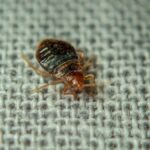
Bed bugs require a different response. They are not proof of poor hygiene, and blame discourages reporting. Avoid moving affected furniture through the building.
Record the location and arrange professional identification because other insects are often mistaken for bed bugs.
A multi-tenant lease may divide responsibility among the tenant, landlord, cleaner, waste contractor, and property manager. Confirm those roles before a problem becomes an argument over who should act.
Common Commercial Pests and What Their Clues Mean
Clues can be more useful than a sighting because they show where a pest travels or feeds.
| Pest | Early clues | Areas worth checking first |
|---|---|---|
| Mice or rats | Droppings, gnawing, rub marks, shredded material | Receiving doors, wall edges, utility rooms, stock areas |
| Cockroaches | Small droppings, egg cases, cast skins, musty odour | Warm equipment, drains, cupboards, pipe openings |
| Flies | Adults near windows, larvae, repeated activity near drains | Waste zones, drains, wet organic residue, doorways |
| Ants | Trails, winged adults, fine debris near gaps | Window frames, wall cracks, sinks, exterior edges |
| Stored-product insects | Webbing, holes, larvae, dust inside packages | Flour, grains, spices, pet food, older stock |
| Bed bugs | Dark spotting, cast skins, live insects | Upholstered seating, staff belongings, guest rooms |
Do not choose a pesticide from a clue alone. The wrong treatment can waste time or scatter another species into new areas.
What a Strong Commercial Program Should Include

The best commercial pest control Toronto plan is built around your property rather than copied from a standard package.
It should include:
- An initial assessment inside and outside the building.
- A map of monitoring points and high-risk zones.
- Species-specific action thresholds.
- Documented findings at each visit.
- Structural and sanitation recommendations.
- Targeted treatment with approved products when required.
- Clear urgent-response and follow-up procedures.
- Trend reporting that compares activity over time.
This is where prevention becomes real. “Seal gaps” is too vague.
Records should show what was found, what was done, who owns the remaining work, and when the provider returns. Repeated recommendations without action mean the program is documenting a failure rather than solving one.
How Often Should a Provider Visit?
There is no universal schedule. Frequency depends on building condition, operating hours, incoming goods, neighbouring activity, past problems, and the sensitivity of the area.
| Site condition | Suggested starting rhythm | Internal check between visits | Escalate when |
|---|---|---|---|
| Low exposure, sealed unit, no history | Every 8–12 weeks | Monthly | New evidence or building work appears |
| Moderate traffic or shared walls | Monthly | Weekly | Activity repeats in one zone |
| Food handling, healthcare, or heavy receiving | Weekly to monthly | Daily in critical zones | Evidence reaches a sensitive area |
| Active problem | Provider-defined intensive follow-up | Daily | Counts rise, spread, or fail to fall |
These are planning examples, not regulatory requirements. Your provider should explain why the proposed rhythm fits and what evidence would change it.
How to Compare Providers Without Choosing on Price Alone?
Ask for a site assessment before accepting a quote. A company that prices only by square footage does not yet understand your exposure.
Ask these questions:
- Who will perform the work, and can I verify the licence?
- Which pests, zones, and follow-up visits are included?
- What did you find during the initial assessment?
- Why are you recommending this service frequency?
- What requires an urgent call, and how fast will you respond?
- Will reports identify device-level findings and unresolved actions?
- Who owns the devices and records if the agreement ends?
Be cautious if every answer involves spraying. The same applies when a company promises permanent elimination without discussing gaps, water, cleaning, stock, waste, or neighbouring units.
Your Free 10-Minute Business Self-Audit
Walk through the property with your phone. Answer yes or no:
- Do exterior doors close fully without light showing around their edges?
- Are openings around pipes, cables, vents, and walls properly sealed?
- Are waste containers closed and stock areas clean?
- Are leaks, condensation, and standing water absent?
- Can employees report a sighting quickly?
- Is every monitoring device mapped?
- Can you retrieve the previous 12 months of service records within two minutes?
- Does every recommended repair have an owner and deadline?
- Was the plan reviewed after the last major property change?
Every “no” is a gap. Photograph it, assign it to someone, set a date, and confirm when it has been corrected.
The walk-through does not replace a professional assessment, but it will show you whether your biggest weakness is access, housekeeping, reporting, or unfinished maintenance.
Using professional pest control services can save commercial property owners from a lot of hassle. Invaders Canada is an expert company in Canada, offering pest control services to both residential and commercial spaces. Investing in the right services matters.
You can keep your properties safe and free of pests with us because we use a combination of advanced techniques and solutions. Contact us for more details.
Conclusion
Effective commercial pest control Toronto businesses can depend on should provide more than a temporary drop in sightings. It should explain where the pressure came from, protect sensitive areas, create useful records, assign corrective work, and confirm whether the response succeeded. Start with the 10-minute self-audit. Fix what you can see, then ask a licensed provider to examine what you cannot. When the next warning appears, your team will have a clear response instead of a rushed guess.
FAQs
Is one pest enough reason to call a professional?
Yes, when the species is unknown, the sighting occurs in a sensitive area, products may have been contaminated, or earlier activity has already been reported. Early identification is usually cheaper and less disruptive than waiting for clearer evidence.
Can employees use store-bought pesticides?
Unplanned use can create exposure, contamination, and recordkeeping problems. Some commercial-class products require certified application. Any product used must be registered and applied according to its label. Let a licensed professional decide what is appropriate.
Does a clean property guarantee that pests will stay away?
No. Cleaning removes resources, but pests may still arrive through deliveries, drains, shared walls, luggage, used furniture, or structural gaps. Sanitation must work with exclusion, monitoring, correct identification, and follow-up.
What should we do after a customer reports a pest?
Thank the customer and record the exact time and location. Preserve a photo or specimen if this can be done safely. Do not argue, guess at the species, or apply an unplanned product. Restrict access where necessary, contact the responsible manager, and document the response.
How often should a commercial property be serviced?
Monthly is standard for food handling. Quarterly is common for low-risk sites. If your building has a history, start monthly and step down after two clean quarters, not before.