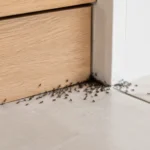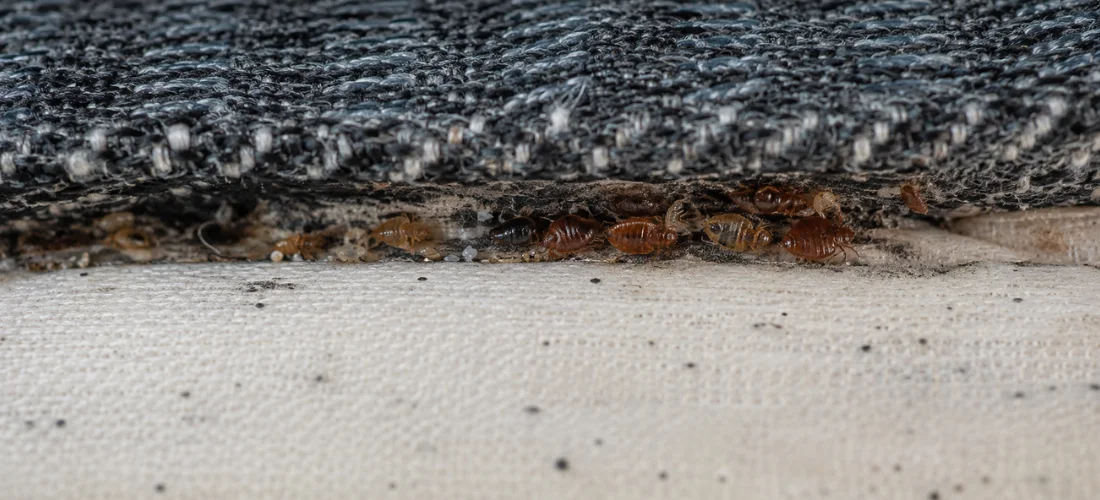
If you are wondering when are bed bugs most active, activity and reported infestations often appear highest from late spring through early fall in Canada, especially during summer travel. However, bed bugs can feed, reproduce, and spread in heated Canadian homes during every month of the year. Winter weather outside does not make an indoor infestation disappear.
Have you noticed bites after a summer trip or found suspicious marks in the middle of a Canadian winter? Understanding when are bed bugs most active can help you inspect at the right times, but the honest answer is more complicated than choosing one month on the calendar. Bed bugs live close to people, usually in temperature-controlled bedrooms, apartments, hotels, dormitories, shelters, and care facilities.
That protects them from much of Canada’s outdoor weather. Summer can bring more movement and more opportunities for them to spread, while heated buildings allow established infestations to continue through winter. This guide explains the difference between peak reports and actual indoor survival, how time of day affects feeding, what changes throughout the year, and when to take action.
Is There a Peak Period in Canada?
There is no dependable bed bug season during which every infestation begins or ends. Pest control calls and public reports may increase during warmer months, but that does not mean these insects vanish when temperatures fall.
In a heated building, are bed bugs seasonal in the same way as mosquitoes or wasps? No. Mosquitoes depend heavily on outdoor temperature and water, whereas bed bugs spend most of their lives hidden indoors near a human host. Canadian homes commonly remain within a comfortable temperature range throughout winter.
The practical distinction is simple:
| Question | Best Answer |
|---|---|
| When do reports often rise? | Summer and early fall |
| Can an infestation continue in winter? | Yes, especially in a heated building |
| Does outdoor frost kill insects inside a home? | No |
| Should inspection stop in colder months? | No |
| Is travel the only way they spread? | No, but luggage is a common route |
When Are Bed Bugs Most Active During the Year?
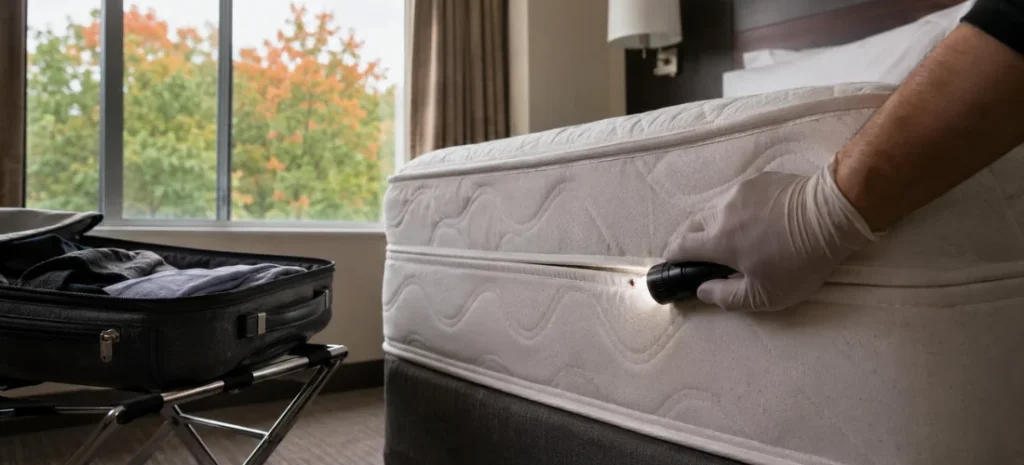
When people ask when are bed bugs most active, they are usually asking one of two things: when the insects feed most often or when infestations are most frequently noticed. Those are related, but they are not identical.
Research based on reported infestations has found a noticeable annual pattern, with reports often increasing in summer and declining in winter. However, reporting patterns do not prove that every indoor population becomes inactive during colder weather.
Human travel, moving, visitors, school schedules, delayed detection, and changes in reporting behaviour can all influence the numbers.
Summer and early fall commonly receive the most attention for four reasons:
- More travel: Hotels, short-term rentals, camps, flights, trains, and buses create more opportunities for accidental transport.
- More household movement: People visit family, host guests, move between rentals, and bring luggage or furniture indoors.
- Warm conditions: Higher temperatures can support faster development when rooms become warm enough.
- Delayed discovery: A few insects brought home during a trip may remain unnoticed until their population or physical evidence becomes easier to detect.
This is why the seasonality visible in pest control calls is partly a story about human movement, not simply outdoor temperature.
A Practical Canadian Activity Calendar
| Period | Likely Risk Pattern | What Homeowners and Renters Should Do |
|---|---|---|
| January to March | Existing indoor infestations continue, while holiday travel introductions may become noticeable | Inspect sleeping areas, monitor bites and spotting, and do not assume cold weather solved the problem |
| April to May | Travel and moving activity begin to increase | Check luggage, guest rooms, second-hand furniture, and mattress seams |
| June to August | More travel and accommodation turnover can increase introductions | Inspect accommodation, isolate luggage after returning, and dry suitable clothing on high heat |
| September to October | Summer introductions may become easier to detect, while student and rental moves add risk | Monitor bedrooms, dorms, apartments, and recently moved belongings |
| November to December | Indoor infestations persist, and holiday guests or trips create transfer opportunities | Keep luggage away from beds, inspect after travel, and respond quickly to signs |
This table shows general risk patterns, not guaranteed start and end dates. An apartment infestation discovered in February can be just as real and urgent as one discovered in August.
Why Canadian Winter Does Not Stop an Infestation?
Outdoor cold matters only when the insects and all affected items experience a lethal temperature for long enough. A bedroom wall void, mattress seam, baseboard gap, or upholstered chair does not normally reach the same temperature as the winter air outside.
The indoor heat that makes a Canadian home comfortable also supports continued feeding and development. Even when rooms are cooler at night, they are usually nowhere near the controlled extremes required for dependable cold treatment.
Freezing temperatures must be maintained for a prolonged period. It gives four days at a consistent -19°C as general guidance and warns that this still may not kill every insect.
Simply placing furniture on a balcony, opening windows, or turning down the thermostat is therefore unreliable. It can also damage pipes, electronics, furniture, and other belongings.
Colder conditions can slow development and extend the time between feeding, particularly when no host is available. Slower activity does not mean the infestation has been eliminated. Individuals can remain hidden, while surviving eggs or missed harbourages allow the problem to continue.
What Time of Day Are They Most Active?

Bed bugs usually leave their hiding places when a nearby host is resting. In many homes, that makes nighttime the most common feeding period. They respond to cues associated with a host, including body warmth and exhaled carbon dioxide.
They are often described as nocturnal, but they are not controlled entirely by the clock. A hungry insect may feed during daylight if a person regularly sleeps during the day, works night shifts, naps on a sofa, or remains still for long periods.
The phrase bed bugs active at night should not be interpreted as proof that daytime sightings are impossible.
Seeing one crawling during the day may mean its hiding place was disturbed, the population has become crowded, or it is searching for a meal. A daytime sighting deserves careful inspection rather than being dismissed as unusual.
Common hiding areas include:
- Mattress seams, labels, tufts, and piping.
- Box springs and bed-frame joints.
- Behind headboards and nearby baseboards.
- Screw holes and cracks in furniture.
- Upholstered chairs and sofas used for sleeping.
- Curtain folds, loose wallpaper, and picture frames near a bed.
- Gaps around electrical covers and wall penetrations.
They do not live only in beds. They settle wherever they can remain concealed while still reaching a sleeping or resting person.
What Makes Activity Increase Indoors?
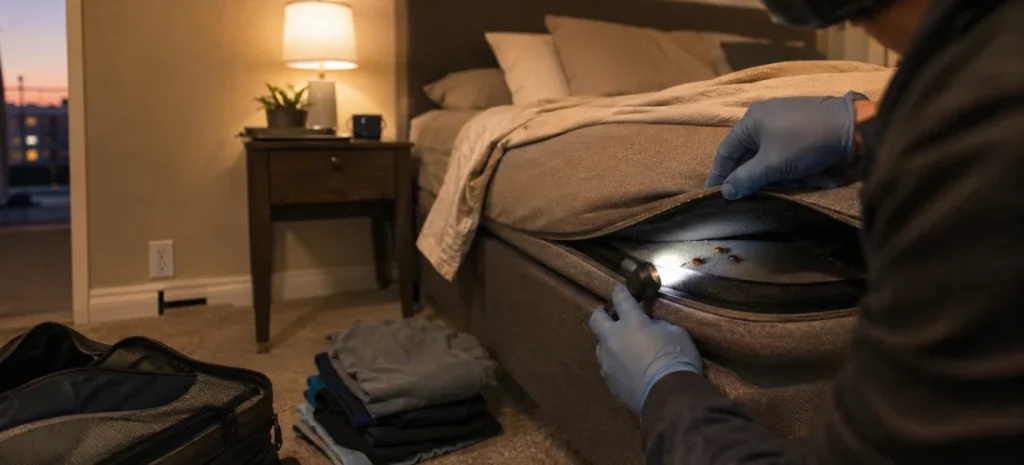
Calendar months alone do not determine how quickly an infestation grows. Conditions inside a room are often more important.
Access to a Host
Bed bugs feed on blood and usually remain close to sleeping or resting people. Regular access to a host allows nymphs to obtain the blood meals required for development and adults to continue reproducing.
An occupied bedroom provides a reliable feeding environment regardless of the weather outside.
Suitable Temperature
Warm, stable rooms support normal development. Very cool conditions may slow the process, but ordinary household temperatures do not provide effective control.
This helps explain year-round activity in homes, hotels, apartments, dormitories, shelters, and other occupied buildings.
Available Hiding Places
Clutter does not create an infestation, and poor housekeeping is not its cause. A clean home can experience the same problem as a cluttered one.
However, piles of belongings, crowded furniture, loose trim, damaged wallpaper, and numerous cracks can provide more harbourages. These conditions also make inspection and treatment more difficult.
Movement Between Places
These insects do not fly or jump. They crawl short distances and travel farther by hiding in luggage, bags, clothing, furniture, bedding, and other belongings.
In apartments, condos, and other multi-unit properties, they may also move between units through structural gaps, utility routes, wall openings, or shared hallways.
Delayed Detection
People react differently to bites, and some show no obvious skin reaction. Early populations are also small and well hidden, so several weeks may pass before spotting, shed skins, eggs, or live insects are found.
An infestation that seems to appear suddenly may have been developing quietly for some time.
Signs That Matter More Than the Month
Do not use the calendar as your main diagnostic tool. Look for physical evidence around sleeping and resting areas:
- Live, flat, oval insects that appear brown or reddish-brown.
- Dark fecal spots around seams, frames, or nearby surfaces.
- Pale shed skins left by developing nymphs.
- Small, whitish eggs or eggshells inside protected cracks.
- Rust-colored smears or blood spots on bedding.
- Unexplained bites that appear after sleeping.
Bites alone cannot confirm an infestation. Skin marks may be caused by other insects, allergies, irritation, or medical conditions.
Confirmation is stronger when a trained professional identifies a collected specimen or discovers characteristic evidence in the sleeping area.
Avoid changing bedrooms or sleeping on the sofa before getting professional advice. Moving where you sleep may encourage the insects to follow and spread into additional rooms.
Do not discard a mattress immediately either. Dragging infested furniture through a building can distribute insects, while replacement furniture may become infested if the rest of the room has not been treated.
How to Reduce Your Risk All Year?
Inspect Accommodation Before Settling In
Place luggage on a hard surface or luggage rack away from the bed while checking a hotel or rental room.
Examine mattress piping, the headboard area, bedside furniture, and visible upholstery for dark spotting, shed skins, eggs, or live insects.
If you find suspicious evidence, notify management and request another room away from the affected one. Avoid moving into a room directly beside, above, or below the suspected room where possible.
Handle Luggage Carefully After Travel
Unpack away from beds and upholstered furniture. Inspect luggage seams, pockets, wheels, zippers, and folds before placing the suitcase in storage.
Move suitable clothing and textiles through a heat-based laundry or drying process according to the fabric instructions and public-health guidance. Store inspected and cleaned items separately from anything awaiting treatment.
Do not leave a recently used suitcase under your bed.
Be Cautious With Used Furniture
Inspect second-hand beds, sofas, chairs, and bedroom furniture before bringing them inside your home.
Avoid collecting discarded furniture from curbs, apartment waste areas, or building hallways. A quick surface check is not enough because insects and eggs can remain hidden inside joints, fabric folds, screw holes, and internal framework.
If the item cannot be inspected thoroughly, leaving it behind is usually safer.
Make Monitoring Easier
Reduce clutter around beds and keep bed frames accessible for inspection. Purpose-built interceptors placed under bed legs can help capture insects attempting to reach or leave the bed.
Mattress and box-spring encasements can simplify inspection and trap insects already inside those items. However, encasements do not remove insects hiding elsewhere in the room.
Continue monitoring even when no new bites are visible.
Act on Confirmed Evidence
Vacuuming, laundering, steam treatment, encasements, monitoring, and targeted pesticide applications may all form part of an integrated treatment plan.
No single household trick is dependable in every infestation. A method that kills exposed adults may fail to reach eggs or insects hidden inside walls, furniture, and structural gaps.
Any pesticide used must be registered for its intended purpose in Canada and applied exactly according to the product label.
When to Contact a Pest Control Professional?
Set an inspection with the right exterminator when you find a live specimen, repeated dark spotting, shed skins, eggs, or persistent evidence across more than one sleeping area.
Professional assistance is especially important in apartments, condos, shelters, hotels, dormitories, and care facilities. In these environments, neighboring rooms or units may also require assessment.
A qualified technician should:
- Confirm that the insect is a bed bug.
- Estimate the extent of the infestation.
- Inspect likely harborages.
- Explain preparation requirements.
- Recommend appropriate control methods.
- Schedule follow-up visits or monitoring.
- Determine whether adjacent areas require inspection.
Ask what is included in the bedbug control service, what occupants must do before treatment, how many visits may be required, and how treatment success will be confirmed.
Do not rely on bug bombs, total-release foggers, or unlabelled pesticides. Foggers often fail to reach deep harborages and may cause insects to move into new areas.
Invaders Canada is a reliable and expert pest control service provider. We offer extermination services to both residential and commercial property owners. You can keep your spaces pest-free and safe against bed bugs when you invest in our services. Contact us today to get further information.
Conclusion
To conclude, when are bed bugs most active in Canada? Infestations are commonly more noticeable from late spring through early fall, with summer travel and household movement creating additional opportunities for spread. Still, a heated home allows them to survive, feed, and reproduce during any month. The safest approach is to treat them as a continuous indoor risk. Inspect after travel, check used furniture, watch for physical evidence, and respond as soon as an infestation is confirmed. Waiting for Canadian winter will not solve the problem. Early identification and appropriate treatment usually make control faster and more manageable.
FAQs
Do bed bugs die outside during a Canadian winter?
Some may die when exposed to sufficiently low temperatures for long enough, but outdoor weather is not a dependable treatment. Furniture and belongings may not cool evenly, protected insects may survive, and Health Canada notes that sustained extreme cold is required.
Are bed bugs worse in summer or winter?
They are often reported more frequently during summer and early fall, partly because people travel and move more. However, an established infestation can remain serious throughout winter inside a heated building.
Can bed bugs bite during the daytime?
Yes. They commonly feed while a host sleeps at night, but they can also feed during the day when someone rests then, when they are hungry, or when their hiding place has been disturbed.
How soon after travelling should I check for them?
Inspect your accommodation before unpacking, check your luggage again when returning home, and continue monitoring your sleeping area during the following weeks. Evidence may not become obvious immediately after an insect is introduced.
Can bed bugs remain active in an empty home?
Yes. They can survive for several months without feeding, particularly under cooler conditions. An empty apartment or unused bedroom should be professionally inspected before someone moves back in.