Effective ant control Brampton homeowners can rely on requires more than spraying visible insects. The lasting solution is to identify the species, locate the colony, remove the conditions attracting it, block entry points, and use the right treatment in the right place. If activity returns after repeated DIY attempts, a pest control professional should inspect the property and target the source.
Seeing a few tiny visitors near the kitchen sink may not feel urgent. Within days, however, a small problem can become a steady stream. Wiping them away creates temporary relief, but it rarely addresses why they entered. That is why successful ant control Brampton residents can trust must focus on long-term prevention. Brampton homes experience changing temperatures, wet springs, warm summers, and cold winters.
These conditions can push colonies closer to buildings in search of stable shelter, moisture, and reliable feeding opportunities. This guide explains what attracts them, which DIY measures help, when professional treatment makes sense, and how to prevent a return.
Why Are There Ants in House Brampton Properties?
An indoor problem usually begins because a property offers something a colony needs. Ants enter through small openings and search nearby rooms. If they find a dependable reward, they recruit more workers.
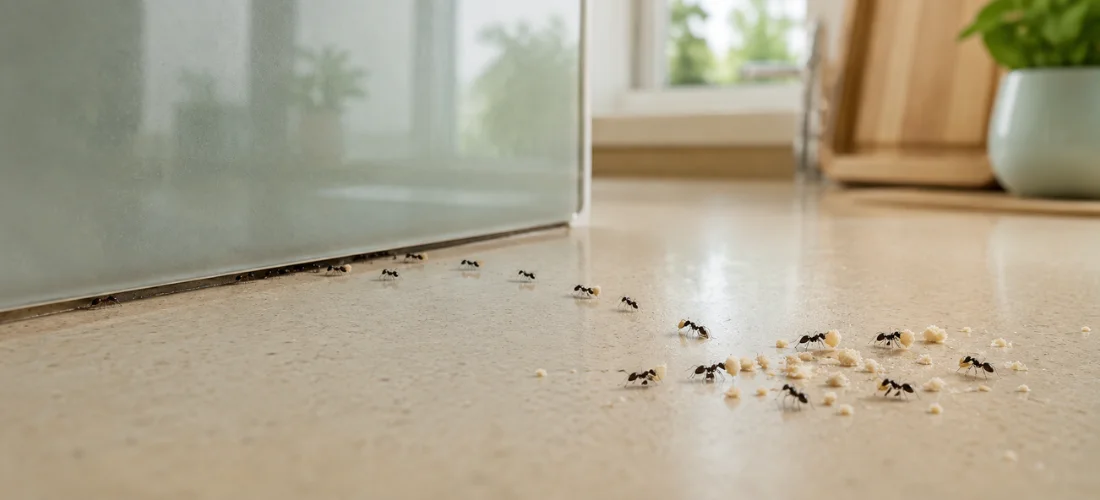
Once established, trails may appear along baseboards, countertops, window frames, plumbing lines, or cabinet edges. These routes are not random. Workers leave chemical signals that guide others to the same location, which is why activity can continue even after the area has been wiped clean.
Common attractions include crumbs beneath appliances, spilled drinks, pet bowls, grease around cooking areas, and poorly sealed pantry items. Hidden food sources are especially important because even a small amount can support repeated activity.
Water is another major factor. A dripping pipe, condensation, or a wet area beneath a sink can make the home attractive. Outdoor colonies may also move inward after heavy rain or during dry weather.
Access is often surprisingly easy. Workers can pass through narrow cracks around foundations, doors, utility lines, vents, and window frames. Tree branches touching the roof, gaps beneath siding, and poorly sealed cable openings can provide additional routes into the building.
In some cases, the colony remains outside and sends workers indoors. In others, satellite nests may develop inside wall voids, insulation, damaged wood, or other protected spaces. Knowing which situation exists influences the treatment method and the time needed to gain control.
Warning Signs of an Ant Infestation Brampton Homeowners Should Not Ignore
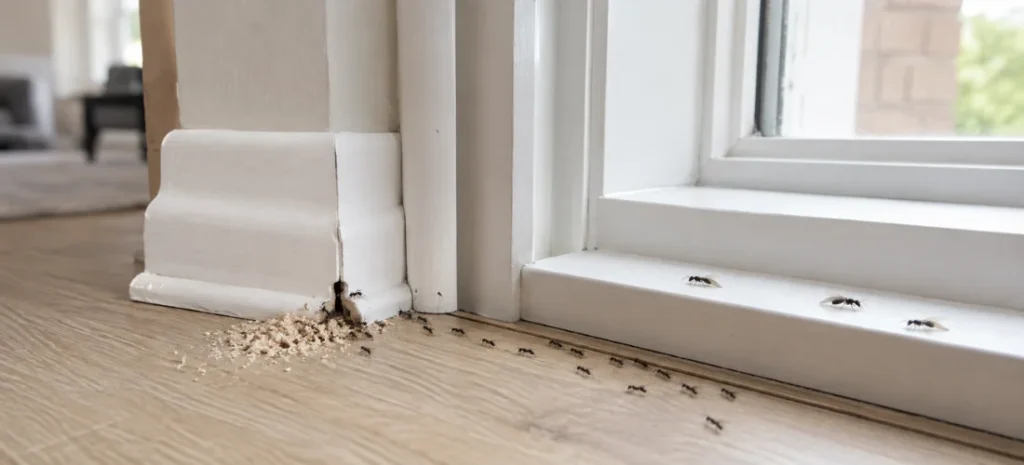
One isolated insect does not always mean a serious problem, but repeated sightings deserve attention. Consistent activity in one room suggests that workers have established a dependable route.
- Watch for organized movement along walls, cabinet seams, plumbing penetrations, or exterior brickwork. A line that reappears after cleaning is a stronger warning than occasional wandering activity. Pay attention to where the movement begins and ends rather than treating only the visible section.
- Small piles of fine debris near wood, trim, or wall openings can indicate excavation by carpenter species. Larger black workers indoors, particularly during colder months, may point to activity within the structure. Wood damage should never be diagnosed from appearance alone, but it warrants a prompt inspection.
- Winged reproductive insects may gather near windows or lights when a mature colony releases swarmers. Because they can be confused with termites, identification is essential before treatment.
- Ant infestation in more than one room can mean that workers are travelling through hidden building pathways or that multiple colonies are present nearby. Repeated appearances after store-bought spraying also suggest that the main colony has not been affected.
Start With Correct Identification
Different species behave differently, prefer different environments, and respond to different control methods. A product that works for one species may fail against another. In some situations, using a repellent spray can scatter workers and make the problem harder to trace.
Carpenter species are generally larger and are often associated with damp or damaged wood. Pavement species commonly establish colonies beneath slabs, driveways, patios, and foundation edges. Small yellow or light-brown species may form large, complex colonies and can require a carefully planned baiting program.
Take a clear photograph or safely collect a sample in a sealed container. Note its size, colour, activity time, location, and attraction to sweet or greasy material.
A professional inspection can confirm the species and determine whether the activity comes from outdoors or from within the building. That distinction prevents wasted treatment and reduces the chance of merely shifting the problem to another area.
Find the Source Before Treating the Symptoms
Follow visible activity without immediately disturbing it. Inspect behind appliances, under sinks, around dishwasher connections, beside door thresholds, and along basement utility penetrations.
Outside, check foundation edges, patio joints, garden borders, stacked firewood, and areas beneath planters. Inspect utility connections and places where vegetation touches the building.
Indoor activity does not guarantee that the colony is indoors. Treating the wrong location can leave the reproductive members untouched. Once the source and travel pattern are understood, control measures can be placed where workers are most likely to carry treatment back.
A Practical Step-by-Step Ant Control Plan
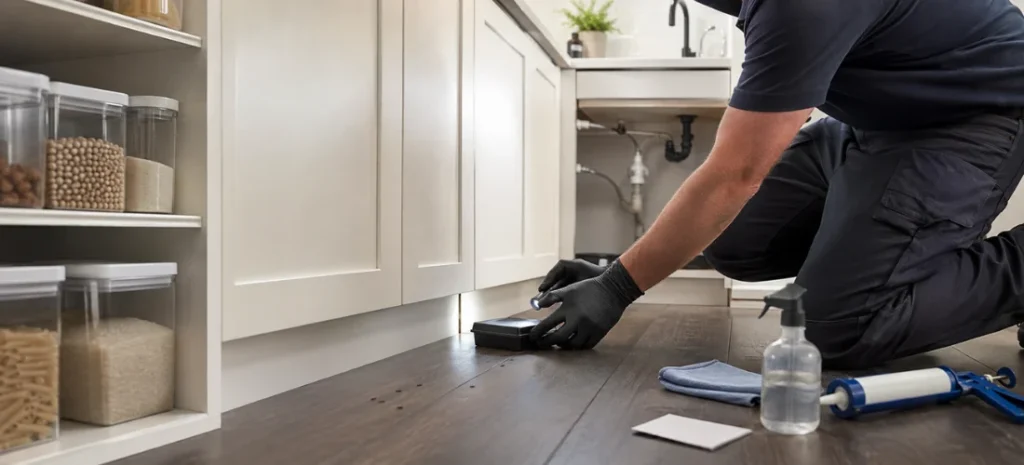
1. Remove Accessible Feeding Opportunities
Clean counters and wipe spills promptly. Vacuum beneath appliances and dining furniture. Store pantry goods in tightly sealed containers rather than bags or loosely closed boxes.
Rinse recyclable containers before indoor storage. Empty waste bins regularly and clean residue from the lid and base. Feed pets at scheduled times when possible, then remove leftovers and wipe the surrounding floor.
2. Correct Moisture Problems
Repair leaking taps, pipe connections, and appliance hoses. Dry the sink and surrounding counter overnight, and improve ventilation in damp bathrooms, laundry rooms, and basements. Replace water-damaged material when necessary.
Outdoors, direct drainage away from the foundation and avoid overwatering soil beside exterior walls. Keep gutters and downspouts working properly. Moisture correction supports pest prevention and helps protect the building itself.
3. Clean Active Routes Properly
Use warm soapy water to wipe the surfaces where workers travel. This helps remove the chemical signal guiding others. Clean beyond the visible section because the route may extend under cabinet lips, along trim, or behind an appliance.
Cleaning alone will not eliminate the colony. It should be combined with exclusion and an appropriate treatment strategy. Avoid repeatedly disturbing an active route if bait has just been placed nearby, as workers need time to collect and share it.
4. Seal Entry Points
After activity has declined and key routes are identified, seal accessible gaps with a suitable material. Check door sweeps, window seals, foundation joints, siding edges, and openings around pipes.
Trim branches and shrubs away from exterior walls and the roofline. Move firewood, cardboard, and construction material away from the foundation. Exclusion is most effective when combined with sanitation and colony control rather than used as the only response.
5. Use Baits Carefully
Baits can be effective because workers carry the active material back and share it. Placement, formulation, and patience matter. Position products near active routes while following every label direction, and keep them inaccessible to children and pets.
Do not spray repellent products around a bait station. Sprays may stop workers from reaching it or redirect activity elsewhere. A temporary increase near the placement can mean workers have discovered the material, so avoid removing it too quickly.
6. Monitor the Result
Record where and when activity occurs. Check the same locations over the following days and replace products only as the label allows. A simple monitoring log can reveal whether the issue is declining, shifting, or returning under certain weather conditions.
If there is no meaningful improvement, reconsider the identification, placement, and source. Applying more of the same product without understanding why it failed can increase exposure without improving control.
Common DIY Mistakes That Cause Recurring Problems
The most common mistake is killing only the visible workers. These individuals represent a small part of the colony. A quick-contact spray may create an immediate result while leaving the reproductive members and hidden population unaffected.
Another mistake is using several products at once. Mixing approaches can contaminate bait, repel workers, or create avoidable safety concerns. Never combine pesticides, apply more than the label permits, or use an outdoor product indoors.
Sealing every opening before the colony is addressed can also redirect activity into another room. Exclusion matters, but timing is important. First determine how the insects are moving and whether treatment needs continued access to a route.
Some homeowners stop monitoring as soon as sightings decline. A quiet period does not always confirm elimination. Continue checking high-risk locations and correct the conditions that supported the original problem.
When Ant Removal Brampton Requires a Professional
Professional help is appropriate when activity persists despite careful sanitation and correctly used bait, when the species cannot be identified, or when movement appears in several parts of the property. It is also advisable when there may be structural involvement or a colony in an inaccessible area.
A qualified technician should inspect the interior and exterior, identify contributing conditions, and explain the method. Treatment may combine targeted baiting, void applications, exterior control, and monitoring.
A tailored ant control Brampton plan should match the identified species, colony location, and conditions found on the property rather than rely on a standard spray application.
Ask what preparation is required, how occupants and pets should be protected, what results to expect, and when follow-up will occur. A credible provider should offer more than a quick perimeter spray. The service should address entry routes, conducive conditions, and evidence of colony activity.
How to Keep the Problem From Returning?
Prevention should become part of normal property maintenance. Inspect exterior seals in spring and autumn, especially after freeze-thaw cycles. Replace worn door sweeps and repair damaged screens before insect activity increases.
Keep pantry goods protected and clean hard-to-reach kitchen areas regularly. Check beneath sinks and around appliances for leaks. Avoid leaving pet meals out overnight, and rinse drink containers before placing them in recycling bins.
Maintain a clear strip around the foundation where possible. Prune vegetation, reduce damp organic material against the structure, and move stacked items away from exterior walls. Check patios and walkways for activity that could eventually extend toward the building.
After treatment, monitor the original locations as well as nearby rooms. Note changes following rain, landscaping work, or warm weather. Early detection makes a new problem easier to manage before it becomes established.
Invaders Canada can help homeowners and commercial property owners to keep their spaces protected from pests. We offer ant control services according to your specific house size, infestation severity, and overall requirements.
Our team of experts can help you handle different types of infestations while offering long-term prevention guidance. Contact us today for further details.
Conclusion
Lasting ant control Brampton residents can depend on comes from treating the cause, not repeatedly killing what appears on the surface. Correct identification, careful inspection, sanitation, moisture correction, exclusion, and properly selected treatment all contribute to a durable result. DIY measures can work when the issue is limited and the source is understood. If activity continues, spreads, or may involve the structure, arrange a professional assessment. The earlier the cause is identified, the easier it is to protect the property and prevent another cycle.
FAQs
How long does professional ant treatment take to work?
Results depend on the species, colony size, treatment method, and property conditions. Some activity may decline within days, while a complex issue may require several weeks and a follow-up visit. Your technician should explain the expected timeline before treatment begins.
Is ant treatment safe for children and pets?
Registered products can be used safely when label directions and professional precautions are followed. Keep children and pets away from treated areas for the advised period, and never move or open secured bait stations. Tell the technician about household sensitivities beforehand.
Why does ant activity sometimes increase after baiting?
A short-term increase can happen when workers discover the bait and recruit others to collect it. This may be part of the transfer process. Avoid disturbing the placement, and contact the provider if activity keeps rising or moves to new rooms.
Can I prevent an indoor problem with regular cleaning alone?
Cleaning reduces attractants and makes the property less inviting, but it cannot always stop activity by itself. Entry-point maintenance, moisture control, outdoor upkeep, monitoring, and appropriate treatment may also be necessary.
When is the best time to schedule an inspection?
Schedule one when repeated activity appears, winged insects emerge indoors, DIY treatment fails, or possible structural damage is noticed. Early spring is also a useful time for preventive inspection because many colonies become more active as temperatures rise.