Summary:
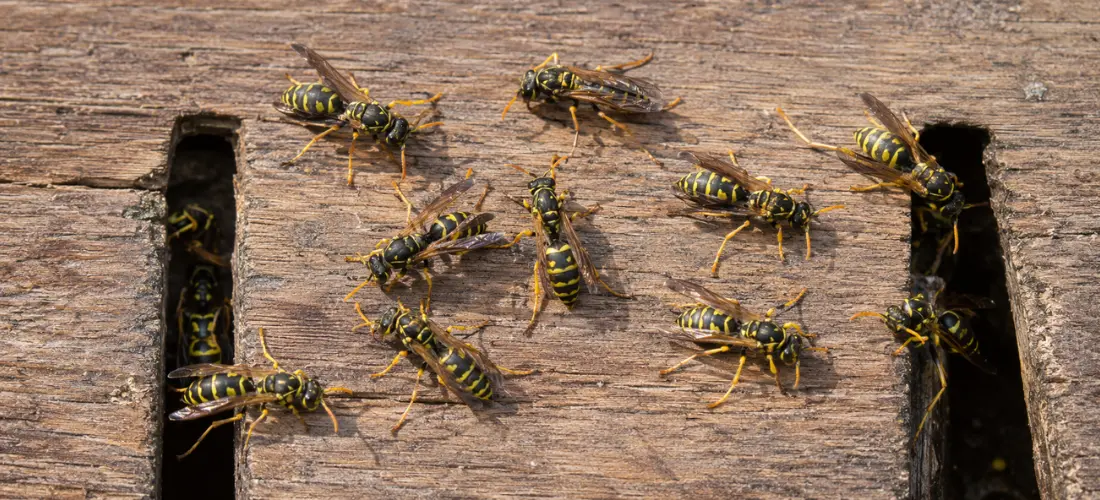
Wasps in summer become more noticeable because warm weather accelerates their development, increases food availability, and allows each colony to expand rapidly. By late summer, thousands of workers may be searching for sugary food, defending mature nesting sites, and moving closer to homes, gardens, bins, and outdoor dining areas.
A quiet outdoor space can suddenly become much busier when temperatures rise. You may notice striped insects inspecting roof edges, hovering around drinks, entering small openings in walls, or repeatedly visiting the same area. This increase in wasps in summer is not random. It follows a predictable annual life cycle influenced by temperature, food, rainfall, shelter, and colony growth.
Understanding this cycle helps homeowners distinguish normal outdoor activity from a developing infestation. It also explains why problems often feel worse toward the end of the warm period, even when no insects were visible around the property during spring. Recognizing the early warning signs makes it easier to prevent close encounters and arrange safe treatment before the problem grows.
Why Are Wasps in Summer More Common?
The main reason is colony growth. Most social species begin the year with a single fertilized queen. After surviving winter in a sheltered location, she emerges when conditions become warmer, finds a protected nesting site, constructs the first cells, and lays her initial eggs.
At first, the queen handles every task herself. She gathers building material, hunts insects, feeds the larvae, protects the site, and continues laying eggs. Once the first generation develops into adult workers, they take over food collection, construction, and defence.
This transition allows the queen to focus almost entirely on reproduction. Worker numbers can then rise rapidly. A structure that contained only a few individuals during spring may hold hundreds or even thousands later in the year, depending on the species and local conditions.
Warmer temperatures also increase insect movement and metabolism. More daylight gives workers additional time to forage, while gardens provide prey, water, plant material, nectar, and protected places to build. These combined conditions make the warm months the most productive part of the wasp season.
The Annual Wasp Life Cycle
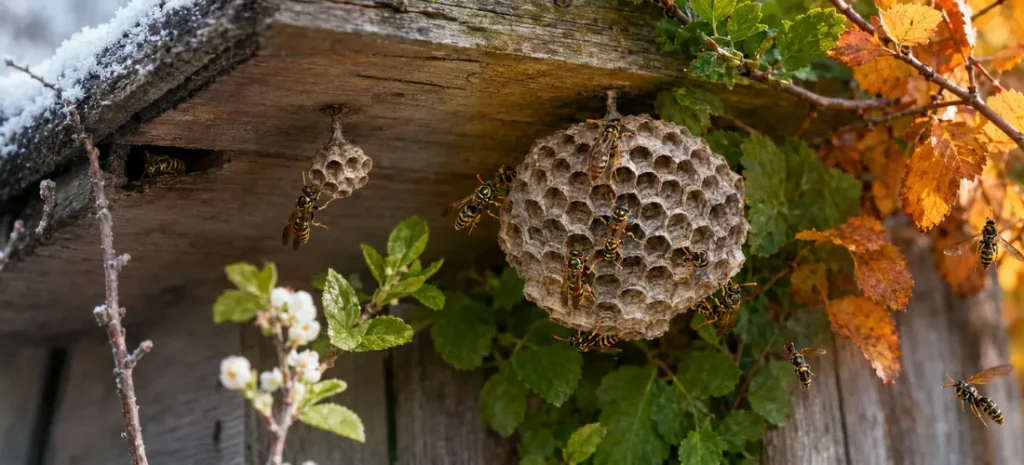
The number and behaviour of these insects change considerably throughout the year. The following table explains what normally happens during each stage.
| Time of year | Typical colony stage | Common behaviour | What property owners may notice |
|---|---|---|---|
| Winter | Most workers and old queens have died | Fertilized queens remain dormant in sheltered spaces | Little or no visible activity |
| Early spring | A queen begins a new structure | She gathers wood fibres, builds cells, and collects food | One large individual repeatedly visiting an eave, shed, or roof gap |
| Late spring | The first workers emerge | Construction and food collection accelerate | Regular flights along one route |
| Early to mid-year | The population expands | Workers hunt insects and feed developing larvae | Increased activity around gardens and buildings |
| Late warm period | The population reaches its peak | Workers seek more sugar and defend the mature site | Frequent visits to bins, fruit, drinks, patios, and barbecues |
| Autumn | The social structure breaks down | New queens mate while workers become less organised | Unpredictable scavenging and increased contact with people |
The precise timing varies by region, species, and weather. A prolonged warm spring can allow queens to establish earlier. In contrast, cold temperatures, heavy rain, or a shortage of prey can delay development or cause a young colony to fail.
Seven Reasons Activity Increases During Warm Weather
1. The Population Has Had Time to Grow
A nest does not begin with hundreds of workers. It expands gradually as each generation matures and supports the next. By the middle or end of the warm period, several generations may be active.
This creates a multiplication effect. More workers can gather more food and building material, which supports more larvae and further expansion. Homeowners often think the insects arrived suddenly, but the colony may have been growing unnoticed for weeks inside a roof, wall void, tree, shed, or underground cavity.
2. Warm Temperatures Support Flight and Foraging
These insects rely on external temperatures to support their activity. Warm conditions allow them to fly efficiently, search larger areas, gather resources, and return to the nesting site repeatedly.
Cold, wind, and heavy rain restrict flight. This is why activity may appear unusually intense on a calm, sunny day after several wet or cool days. Workers are taking advantage of favourable conditions to catch up on feeding and construction.
Extreme heat can change the pattern. Individuals may seek shade and water or become more active during cooler mornings and evenings instead of the hottest part of the day.
3. Food Is Abundant
During the colony’s growth stage, workers hunt flies, caterpillars, aphids, spiders, and other small creatures. This protein is taken back to developing larvae.
Gardens, orchards, compost areas, farms, and landscaped properties can provide an abundant hunting environment. This ecological role is beneficial because social wasp species help control many insects that damage plants.
Problems arise when natural resources and human food overlap. Uncovered meat, pet food, rubbish, recycling residue, and outdoor meals provide easily accessible alternatives that require less effort than hunting.
4. Food Preferences Change Later in the Year
Early in the cycle, workers are strongly focused on collecting protein for the young. In return for being fed, larvae produce a sugar-rich secretion that adult workers consume.
As the colony matures and fewer larvae require feeding, that internal source of energy declines. Workers begin searching elsewhere for carbohydrates. They are attracted to ripe fruit, juice, soft drinks, desserts, ice cream, syrups, alcohol, and food residue in bins.
This change explains why summer wasps can become particularly disruptive at picnics and outdoor dining areas. They are not necessarily targeting people. They are investigating concentrated and easily accessible energy sources.
5. Suitable Nesting Locations Are Readily Available
Residential properties offer shelter from rain, wind, predators, and extreme temperature changes. Common locations include:
- Beneath roof eaves and decking.
- Inside attics, lofts, and wall voids.
- Around sheds and garages.
- Within dense shrubs or hollow trees.
- Inside abandoned animal burrows.
- Beneath porches and outdoor stairs.
- Around vents, fascia boards, and utility openings.
Some species create visible paper structures, while others remain concealed underground or inside buildings. Hidden sites are especially difficult to identify because the only external clue may be a steady stream of insects entering and leaving through a small opening.
The presence of nests does not always mean immediate removal is necessary. A distant structure that poses little risk may sometimes be left undisturbed. Location, species, accessibility, and the health needs of occupants should guide the decision.
6. Warm, Dry Weather Improves Survival
Weather during spring and early summer can significantly affect the number of mature colonies later in the year. Mild conditions help overwintering queens survive and establish successfully. Dry periods also give them more opportunities to gather material and food.
Prolonged rain can have the opposite effect. It limits foraging, damages exposed structures, reduces prey availability, and may flood underground sites. Cold snaps can also kill vulnerable queens or slow early development.
This is why numbers can vary dramatically from one year to the next. A property may experience few problems one year and considerable activity the following year without any major structural change.
7. Human Activity Creates More Encounters
People spend more time outdoors during warm weather. Gardens, swimming pools, patios, parks, festivals, barbecues, and outdoor restaurants bring people into the same spaces where workers are foraging.
Open cans, uncovered plates, overflowing bins, fallen fruit, scented cosmetics, and sugary spills create additional attraction. Therefore, the apparent increase is partly biological and partly behavioural: there are more insects outside, and people are more likely to encounter them.
This overlap makes wasps in summer one of the most noticeable seasonal pests around homes and commercial properties.
Are Wasps More Aggressive in Late Summer?
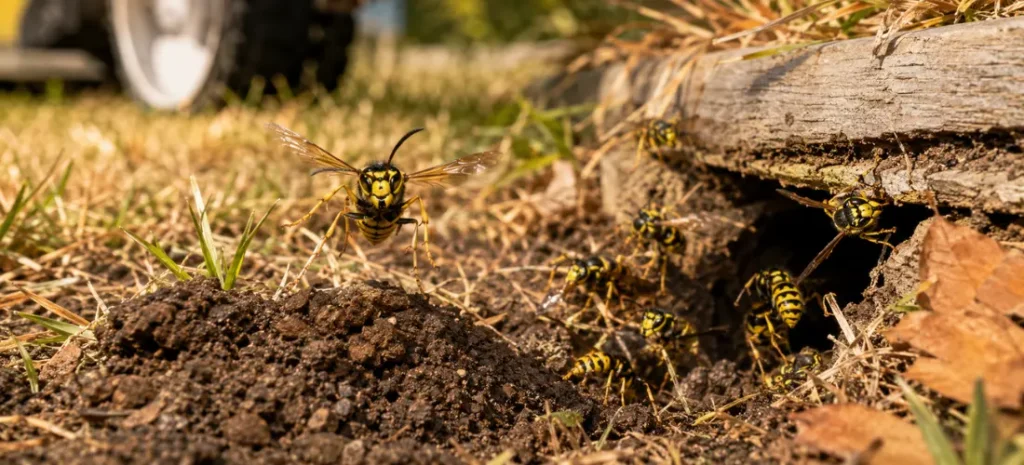
They can appear more persistent and defensive, but “aggressive” is often an oversimplification.
Away from the nesting site, a worker investigating food is usually interested in the resource rather than the person holding it. Swatting, crushing, trapping, or making sudden movements can increase the chance of a defensive response.
Close to the colony, the risk is different. Workers are programmed to protect the queen, young, and structure. Vibrations from mowing, hedge trimming, construction, slamming doors, or walking near an underground entrance may be interpreted as a threat.
Late-season populations are larger, so disturbing a mature site can trigger a response from more defenders. Some species, including yellowjackets and hornets, may respond more forcefully than relatively less defensive paper wasps. Unlike a honey bee, an individual wasp can sting repeatedly.
How to Tell Whether Activity Is Normal or a Sign of a Nest?
Seeing one individual near a flower, bin, or drink does not prove that a colony is located on your property. Repeated, directional movement is a more useful warning sign.
Look for:
- Multiple individuals following the same flight path.
- Regular entry through a crack, vent, roof gap, or hole in the ground.
- A visible paper structure under an eave or branch.
- Scraping or faint buzzing inside a wall or ceiling.
- Persistent activity around a shed, attic, deck, or shrub.
- Workers carrying food or building material toward one location.
- Defensive behaviour when someone approaches a particular area.
Observe from a safe distance. Do not block an entrance to test whether it is active. Sealing an occupied wall opening can force workers farther into the building as they search for another exit.
How to Reduce Wasp Activity Around Your Property?
Keep Food and Drinks Covered
Serve outdoor food in covered containers and clear leftovers promptly. Use cups or bottles that allow you to see the opening before drinking. An insect hidden inside a can poses a serious sting risk around the mouth or throat.
Manage Bins Properly
Use tightly closing lids and keep rubbish bags sealed. Rinse recycling containers to remove juice, soda, beer, and food residue. Clean spills around the bin rather than allowing sticky material to build up.
Pick Up Fallen Fruit
Overripe pears, apples, plums, and other fruit provide a concentrated sugar source. Collect fallen produce regularly and remove damaged fruit from trees where practical.
Seal Potential Entry Points
Inspect fascia boards, soffits, vents, siding, window frames, screens, and utility penetrations. Seal suitable gaps during the inactive part of the year. Never close an opening when insects are actively travelling through it.
Check Quiet Structures Regularly
Inspect sheds, playhouses, garages, lofts, outdoor furniture, and storage boxes during spring. A small early structure is easier for a qualified technician to assess than a mature one containing a large population.
Reduce Standing Water
Repair leaking taps, empty unnecessary containers, and maintain pools and water features. Workers may visit reliable water sources during hot, dry conditions.
Stay Calm During an Encounter
Do not wave your arms or attempt to crush an insect against your body. Move away slowly and cover the food. If several individuals appear together or begin following you, leave the area and enter a building or vehicle.
What Not to Do?
Avoid striking a mature structure, spraying an unidentified entrance, pouring fuel into a ground opening, lighting a fire beneath an aerial structure, or using a hose to knock it down.
These methods can scatter defenders, expose people and pets to chemicals or fire, damage the building, and leave the queen alive. Working from a ladder creates another hazard because a defensive response can cause a fall.
Commercial aerosol products may be appropriate for certain small, accessible situations when the label permits their use. However, species identification, structure size, access, and escape routes must be considered first. Protective clothing alone does not make wasp nest removal safe.
When Should You Call a Pest Professional?
Professional wasp control is the safer choice when:
- The entrance is inside a wall, roof, chimney, or ceiling.
- The structure is underground or difficult to locate.
- Activity is close to a doorway, school, workplace, or play area.
- Someone nearby has a known venom allergy.
- The site is high enough to require a ladder.
- Workers react defensively when people approach.
- A previous treatment failed.
- The species or treatment method is uncertain.
A technician can identify the insect, trace its entry point, evaluate the size and position of the colony, select an appropriate treatment, and advise when an opening can be sealed.
Do not remove the structure immediately after treatment unless instructed. Some workers may still return, and the treatment may need time to reach individuals within concealed areas.
Invaders Canada is an expert pest extermination company that offers services to both homeowners and property owners.
Whether you want to inspect your property for the sudden increase in wasps in summer or want to keep your property pest-free, we can help. Contact us for further information.
Conclusion
To conclude, the increase in warm-weather activity is primarily a natural result of rapid colony development, favourable flying conditions, abundant resources, and changing feeding behaviour. Human routines also create more opportunities for contact around gardens, waste areas, and outdoor meals.
Early observation and simple sanitation can prevent many encounters. However, repeated traffic into a structure, defensive behaviour, or activity near frequently used areas should be taken seriously. A qualified technician can assess the situation without exposing occupants to the risks associated with disturbing a mature colony.
FAQs
What month is wasp activity usually highest?
Activity often peaks in late July, August, or early autumn, but timing depends on the local climate, species, and spring weather. Warmer regions may experience an earlier or longer peak.
Will a wasp nest disappear on its own?
Most social wasp structures become inactive when cold weather arrives. Workers and the old queen die, while newly fertilized queens shelter elsewhere. Waiting may be inappropriate if the structure creates an immediate safety risk.
Why do wasps keep returning to the same spot?
The location may provide food, water, building material, or a protected cavity. Repeated directional flights may also indicate an active entrance nearby.
Does killing one wasp attract more?
Crushing an individual near its colony may release alarm chemicals and provoke defensive behaviour. It is safer to move away calmly instead of swatting or crushing it.
Can I seal a hole if wasps are flying through it?
No. Closing an active entrance may trap workers inside a wall and force them into living areas. Have the colony assessed and treated before permanently sealing the opening.