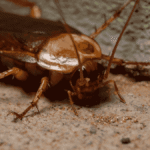
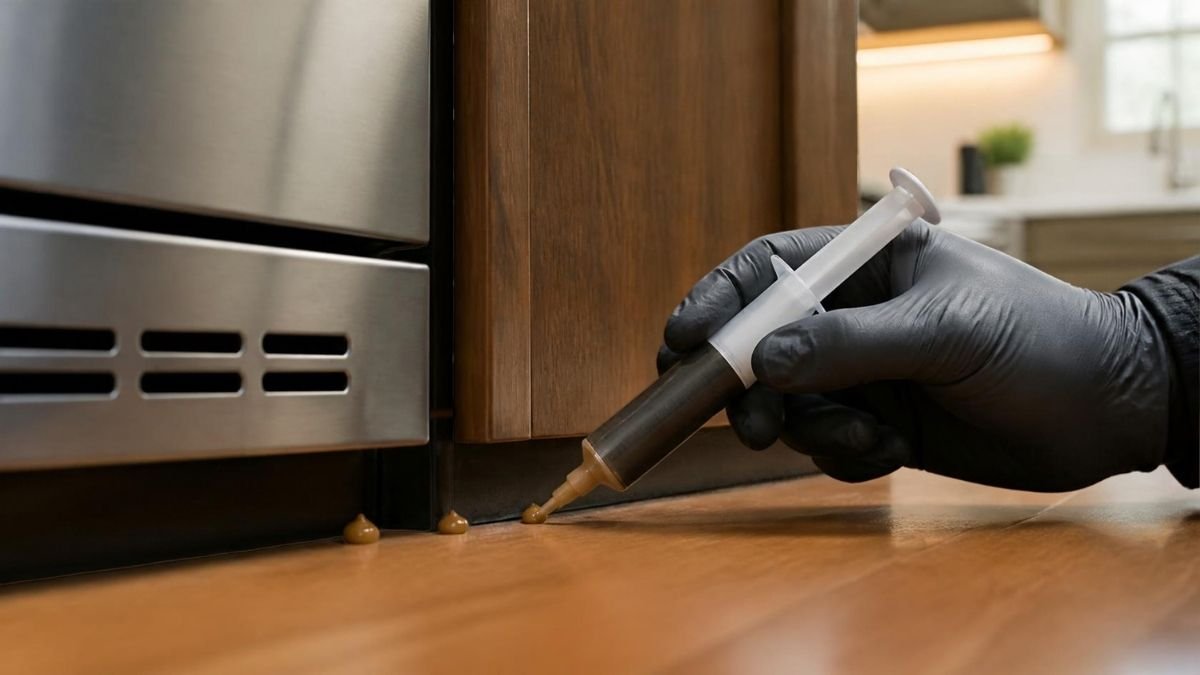
Cockroach gel bait is a soft, food-like paste mixed with a slow-acting insecticide. Roaches eat it, crawl back to their hiding spots, and the poison can spread to other roaches through droppings and dead bodies. Applied in the right places and left undisturbed, gel bait can cut down a kitchen infestation within a few weeks. Applied in the wrong places, or next to a spray, it often does very little.
This guide is written for homeowners and tenants across Toronto and the GTA who want to know what gel bait does, where to put it, what usually goes wrong, and how to make sure the product you buy is legal and suitable for home use in Canada.
What Is Cockroach Gel Bait and How Does It Work?
Gel bait combines two things: a tasty food base (sugars, fats, and proteins that roaches like) and an insecticide that works slowly. The slow part matters. A roach that dies on the spot cannot carry anything back to the nest. A roach that feeds, wanders home, and dies a few hours later can.
That return trip is the whole point. Young roaches tend to stay in the harbourage and feed on what adults leave behind, including droppings and regurgitated bait. Adults that fed on the gel can pass small amounts of the active ingredient to nestmates this way, which is why a handful of well-placed dots can affect roaches you never see. This is often called the secondary kill or colony transfer effect.
Gel bait is most useful against German cockroaches, the small, fast, light brown species behind most indoor infestations in Ontario apartments, condos, and townhouses. If you are not sure what you are dealing with, our guide to the types of cockroaches in Ontario shows how to tell them apart, because the species affects how far the problem has spread.
Why Gel Bait Can Work Better Than Sprays Indoors
Roaches are nocturnal and hide in tight, warm, dark gaps. A spray treats the surface you can see, and it mostly reaches the roaches that happen to be walking across it. Many sprays also repel roaches, which pushes survivors deeper into walls and into neighbouring rooms.
Gel bait works the other way around. It lets roaches come to the product, on their own schedule, and it reaches the hidden insects through the transfer effect. Because the gel can be applied in tiny amounts on vertical surfaces, hinges, and the undersides of cabinets, you can place many small bait points near where roaches actually shelter instead of relying on a few bulky stations.
Gel is not a magic fix, though. Roaches can be picky, and some populations develop an aversion to certain bait formulas. Gel also dries out over time and becomes less appealing. That is why placement, cleanliness, and patience matter as much as the product.
Where to Place Gel Bait in Your Home
Think like a roach. They want warmth, moisture, food, and tight cover. In most homes in the GTA, that points to the kitchen first, then the bathroom, then anywhere along the same plumbing and wiring routes.
High-priority spots
- Behind and under the fridge, especially near the motor and the back edge.
- Under and beside the stove, including where gas or electrical lines enter the wall.
- Inside the cabinet under the kitchen sink, near pipe openings and corners (keep gel out of any spot where water drips onto it).
- Hinges, corners, and undersides of cabinets and drawers.
- Under or behind the dishwasher, microwave, and toaster oven.
- Behind kickboards and along baseboards where you see droppings or smear marks.
- Bathroom vanities and the gap around pipes under the sink.
Droppings that look like ground pepper, shed skins, and a musty smell are all clues about where roaches are living. If you are still working out how big the problem is, our post on cockroach infestation signs and prevention walks through what to look for and where.
How to Apply Cockroach Gel Bait Step by Step
- Clean first. Wipe counters, degrease the stovetop, empty crumb trays, and take out garbage. Gel bait has to compete with every other food source in the room.
- Read the label. Confirm the product lists cockroaches, note the approved sites, and follow any directions about children and pets.
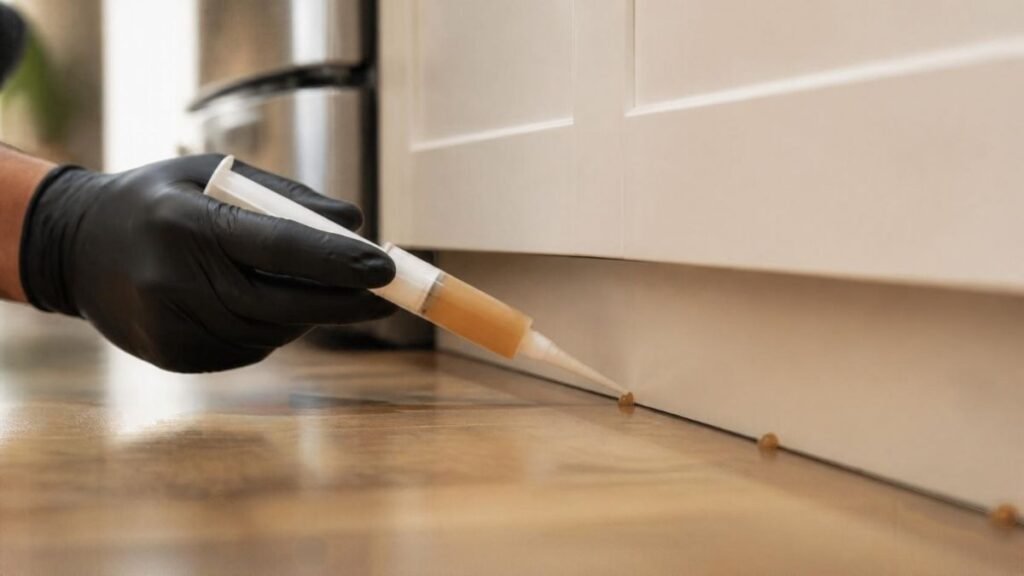
- Apply small dots. Most products call for pea-sized or smaller dots. Many small placements work better than a few big blobs, and oversized globs are wasted.
- Space them out. A common guideline is a dot every metre or so along roach routes, with extra dots near confirmed hiding spots.
- Choose protected spots. Cracks, crevices, hinges, and the insides of cabinets keep the bait out of sight and away from curious hands and paws.
- Leave it alone. Do not spray, fog, or wipe the area. Dead roaches near the bait are a good sign, and removing them too early can interrupt the transfer effect.
- Check weekly. Replace dots that are eaten, shrunken, dry, or crusty. Add a few more where you still see activity.
- Judge progress at two to four weeks. Fewer sightings and less bait being eaten are good signs. Egg cases that were already laid can still hatch, so a few small nymphs early on do not necessarily mean the bait has failed.
Mistakes That Make Gel Bait Fail
Most disappointing results trace back to a short list of errors. If you have tried gel before and still see roaches, check this list first. It also overlaps with the reasons people ask why cockroaches keep coming back even after they have tried several products.
- Spraying near the bait. Repellent residues can make roaches avoid the gel. Pick one approach per area.
- Leaving food out. Pet bowls, crumbs, grease, and open pantry items outcompete the gel.
- Using too little, in too few places. A single tube-tip of gel under one cabinet will not reach a colony that is living behind three appliances.
- Placing bait where it gets wet or dirty. Moisture and grease change how appealing it is.
- Not refreshing it. Old, dried gel is less attractive. Replace it when it looks hard or cracked.
- Giving up too soon. Delayed-action bait is slow by design.
- Ignoring the neighbours. In apartments and condos, roaches travel through shared walls and plumbing, so treating one unit can leave the source untouched.
That last point is a big one in Toronto’s multi-unit buildings. Our post on why cockroaches return after treatment in apartments in Toronto explains how roaches move between units and what to do about it.
How Does Gel Bait Compare With Other Methods?
| Method | Best for | Main drawback |
|---|---|---|
| Gel bait | Hidden German cockroaches in kitchens and baths | Needs sanitation, patience, and refreshing |
| Bait stations | Light activity and child-resistant placement | Fewer placement points per pack |
| Aerosol sprays | Quick knockdown of roaches you can see | Can repel roaches and scatter them |
| Foggers | Rarely recommended for cockroaches | Does not reach cracks and voids well |
| Professional treatment | Established or multi-unit infestations | Costs more and needs preparation |
Is Cockroach Gel Bait Safe Around Kids and Pets?
Gel baits are designed for crack and crevice use, which keeps most of the product out of reach. Even so, the ingredients are insecticides, and ingesting them can be harmful to children and pets. Safe use depends on where you put the gel and how carefully you follow the label.
- Place gel inside cracks, hinges, and behind or under appliances, not on open counters, floors, or low shelves.
- Choose enclosed bait stations in rooms where small children or pets roam freely.
- Keep the syringe and any leftover product in its original container, stored out of reach.
- Wash your hands after handling bait, and keep gel away from food prep surfaces and pet dishes.
- Check with your vet or a doctor if you suspect someone has eaten the bait, and keep the product label handy.
How to Check That a Gel Bait Is Legal and Suitable in Canada
This step gets skipped far too often. Pesticides sold in Canada need a registration under the Pest Control Products Act, and Health Canada notes that importing, selling, or using an unregistered pesticide is a violation of that Act, as is using a registered product in a way the label does not allow. Health Canada also advises buyers to look for a pest control product (PCP) registration number on the label.
In practice, that means a few quick checks before you buy or use any gel:
- Look for a registration number on the label (it is usually written as “Reg. No.” followed by digits and “P.C.P. Act”).
- Make sure the label lists cockroaches and the area where you plan to use it.
- Read the directions about who may use it. Some professional-class gels carry label wording that limits use to certified applicators, so they are not meant for general household purchase.
- Be cautious with products shipped from outside Canada through marketplace sellers. A product that works well in another country may not carry a Canadian registration.
You can look up registered products and read the full label through the Health Canada pesticides and pest management page. If a gel does not have a Canadian registration number, it is better to leave it on the shelf.
When Gel Bait Is Not Enough
Gel bait can handle light to moderate problems when it is used carefully. It struggles when the population is large, when roaches are coming in from neighbouring units, or when the conditions that feed them (moisture, food, clutter) stay the same.
Consider calling a licensed professional if you notice any of these:
- Roaches in daylight, which often signals crowded hiding spots.
- Activity in several rooms, not just the kitchen.
- No clear drop in sightings after three to four weeks of careful baiting.
- An apartment, condo, or rowhouse where neighbours are also seeing roaches.
- Family members with asthma or allergies, since roach droppings and shed skins can aggravate them.
A professional can identify the species, find the harbourages, and combine bait with other tools, including products and techniques that are not sold to the public. Our cockroach control service is built around that kind of inspection-first approach for homes and buildings across the GTA.
Bottom Line
Cockroach gel bait works because roaches eat it, carry it home, and spread it through the nest. It tends to do best when you clean first, place small dots near where roaches really shelter, keep sprays away, and give it a few weeks. It tends to do worst when it is used as a one-time fix in a dirty kitchen or in a building where the neighbours have the same problem.
Before you buy anything, check for a Canadian registration number and read the label. If the problem is spreading, comes back after treatment, or sits in a shared building, a licensed pest professional can often save you time and repeat purchases.
FAQs
How long does cockroach gel bait take to work?
You may see dead roaches within a few days, with a clear drop in activity by the second week. Heavier infestations can take a month or more. Keep checking the dots and replace any that are eaten or dried out.
Can I use cockroach spray and gel bait at the same time?
It is usually best not to. Many sprays repel roaches, and residue near the gel can make them avoid it. If you want to use both, keep the spray on separate surfaces and away from every bait point.
Is it legal to buy cockroach gel bait online and ship it to Ontario?
Only products registered under Canada’s Pest Control Products Act are allowed to be sold and used here. Look for the registration number on the actual label, and be cautious with imported products or listings that do not show one. Some professional gels are also limited to certified applicators.
Why do I still see roaches after using gel bait in my Toronto apartment?
Roaches can travel between units through walls, plumbing, and electrical openings, so new ones may keep arriving. Competing food, moisture, and sprays used near the bait can also reduce results. Talk to your landlord or property manager, since a building-wide approach is often needed.
Should I remove dead cockroaches after using gel bait?
It helps to leave them for the first week or two, since other roaches may feed on them and pick up the active ingredient. After that, vacuum or sweep them up, keeping your hands away from the bait itself and washing them afterward.