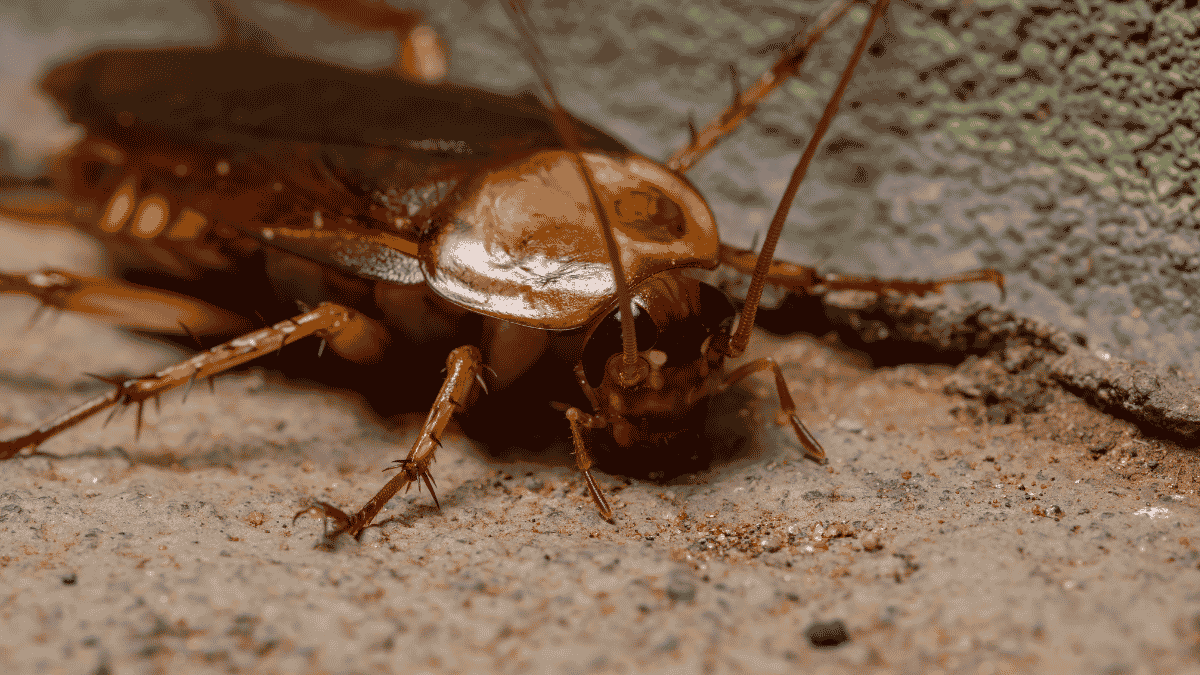
An American cockroach is the big, reddish-brown roach people often describe as “too large to be real.” Adults usually measure about 3 to 4 cm, and they carry a pale, yellowish band around the back of the head. If you just spotted one in your basement, kitchen or bathroom, the short answer is this: it is a genuine household pest, and even a single sighting is worth a closer look, because a roach this size usually points to a moisture source, an entry route, or both.
This guide is written for homeowners and renters in the GTA who found a large roach and want to know what it is, whether it is dangerous, and what to do next. We focus on identification first, since the right response depends on knowing which species you are dealing with.
How can you tell an American cockroach from other roaches?
Size is the quickest clue, but it should not be the only one. Check three things together: length, colour pattern, and wings.
Size and colour
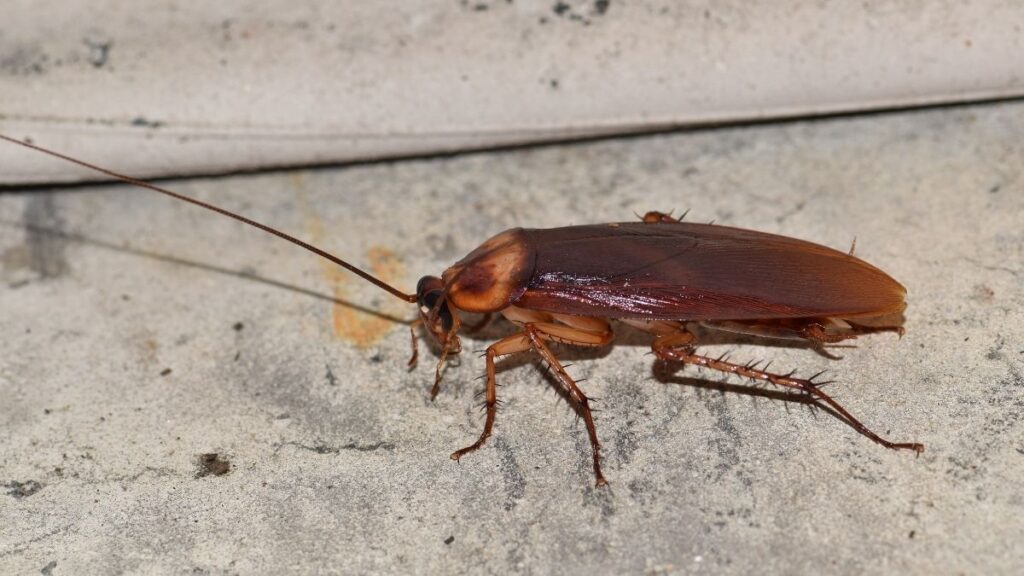
American cockroaches are the largest of the common house-infesting roaches in Canada. Most adults fall somewhere between 3 and 4 cm long, and some individuals grow a little longer. The body is flat and oval, reddish-brown to mahogany, with a lighter yellow-tan outline around the shield-like plate behind the head (the pronotum). Many people notice a figure-eight style pattern on that plate, though it can be faint on some insects. Two long antennae and six spiny legs complete the picture.
Nymphs (young roaches) look similar in colour but are much smaller, and they have no wings. A small reddish-brown roach in the same area as a large one is often a juvenile of the same species, which is worth keeping in mind if you only find the little ones.
Wings and movement
Adults of both sexes have fully developed wings that reach the end of the body or slightly past it. They mostly glide rather than fly, and you are more likely to see that on warm, humid days or when they are disturbed. They also run fast and tend to bolt for the nearest dark gap when a light comes on.
American vs. German cockroach
The German cockroach is the species most homeowners in Ontario actually end up with, so it helps to rule it out. The two behave very differently, and so does the treatment approach.
| Feature | American cockroach | German cockroach |
|---|---|---|
| Typical adult size | About 3 to 4 cm | Roughly 1 to 1.6 cm |
| Colour | Reddish-brown with a pale band behind the head | Tan to light brown with two dark stripes behind the head |
| Common hiding spots | Basements, drains, boiler rooms, crawl spaces | Kitchens and bathrooms, close to food and water |
| How often found indoors in Canada | Common, but less than German cockroaches | Considered the most common urban species |
If what you found does not match either column, you may be looking at an Oriental or brown-banded cockroach. Our guide to the types of cockroaches in Ontario shows how all four common species compare side by side.
Where do American cockroaches live in and around homes in GTA?
American cockroaches are native to Africa and the Middle East and spread worldwide through shipping. In Canada, they are generally tied to warm, protected spaces such as houses, warehouses, greenhouses and city sewers, according to The Canadian Encyclopedia, which lists only a handful of cockroach species as established here. Our cold winters make it hard for them to survive outdoors year-round, so most indoor sightings trace back to heated buildings or the sewer system.
They prefer warm, damp, dark places, with temperatures somewhere around 21 to 27 °C (70 to 80 °F) being ideal for them. In a typical property in GTA, that translates into a few predictable spots:
- Basements and crawl spaces, especially near floor drains, sump pits and laundry areas
- Boiler rooms, utility closets and spaces around water heaters
- Under and behind kitchen sinks, dishwashers and bathroom vanities
- Parking garages, loading areas and garbage rooms in condos and apartment buildings
- Restaurants, bakeries and grocery stores, where warmth, moisture and food are all available
They commonly enter through gaps around pipes, under doors without weatherstripping, through basement windows, and up through drains. They can also arrive inside boxes, grocery bags, or secondhand furniture.
How does the American cockroach life cycle work?
Understanding the life cycle explains why a single treatment rarely feels like the end of the story. Cockroaches go through three stages: egg, nymph and adult.
- Egg: The female produces a dark brown egg case (ootheca), roughly 8 mm long, holding around 16 eggs. She usually glues or drops it in a sheltered spot near food and moisture. Eggs commonly hatch in about 24 to 60 days, depending on temperature.
- Nymph: Nymphs are wingless and shed their skins repeatedly as they grow. Development is slow. Some sources report an average of around 600 days from egg to adult, and the range is wide because warmth and food make a big difference.
- Adult: Adults can live for roughly a year or more, with females often outliving males. Over her lifetime, a female may produce somewhere around 150 young or more under good conditions.
The practical takeaway is that American cockroaches reproduce more slowly than German cockroaches, but they overlap generations. You can have eggs, nymphs and adults sharing the same hiding place at once, which is why a one-time spray does not usually solve the problem on its own.
Are American cockroaches dangerous?
They are not venomous, and they rarely bite. The concern is hygiene and allergies. American cockroaches feed on almost anything, including garbage, decaying matter and food crumbs, and they often move through drains and sewers before wandering across your counters. Bacteria and other microorganisms can hitch a ride on their legs and bodies, which can contaminate food, dishes and prep surfaces. Cockroaches in general are known to contaminate and spoil food, and they can carry disease-causing bacteria.
The other issue is allergens. Cockroach droppings, shed skins and saliva contain proteins that can trigger allergy symptoms in some people, and they may aggravate asthma, particularly in children. If someone in your household has asthma and symptoms seem to worsen at home, that is a good reason to deal with roaches promptly and to mention it to your doctor.
The good news is that early action changes the picture a lot. Our guide to cockroach infestation signs and prevention covers the early warning signs in more detail, so you can act before the numbers grow.
What are the signs of an American cockroach problem?
Because these roaches are nocturnal and hide during the day, you often notice evidence before you see the insect itself.
Look for:
- Live roaches at night. Seeing one in the open during the day can mean hiding places are crowded, although it can also simply mean one wandered out.
- Droppings. American cockroach droppings are larger than those of smaller species. They tend to be cylindrical, with blunt ends and ridges along the sides, and they are often mistaken for mouse droppings.
- Egg cases. Small, dark, purse-shaped capsules in corners, behind appliances or under cabinets.
- Shed skins. Pale, papery casings left behind as nymphs grow.
- A musty odour. Larger populations can produce a stale, greasy smell, especially in closed spaces such as basements and cabinets.
A simple way to confirm activity is to place a few sticky monitoring traps along walls, near drains and behind appliances for a week or two. Traps are best treated as a detection tool rather than a full solution, since they rarely remove an established population by themselves.
What can you do yourself right now?
You can take sensible steps today that make your home much less welcoming, whether you end up needing a professional or not. Think in terms of water, food and access.
- Fix moisture first. Repair leaking taps and pipes, run a dehumidifier in damp basements, and ventilate crawl spaces. Water is often the limiting factor for this species.
- Keep floor drains supplied with water. In spare bathrooms and basement floor drains, run water now and then so the trap does not dry out and open a path from the sewer.
- Seal entry points. Use silicone-based caulk around pipes, gaps near baseboards and cracks in foundation walls. Add door sweeps or weatherstripping to exterior and garage doors.
- Control food and garbage. Store pantry items and pet food in sealed containers, wipe crumbs and spills quickly, and use garbage bins with tight lids.
- Clear outdoor harbourage. Move firewood piles, leaf litter and stacked debris away from the foundation.
- Vacuum cracks and corners. Vacuuming can remove egg cases and shed skins. Empty the bag or canister outdoors afterward.
For store-bought products, read the label carefully and look for a Pest Control Products Act registration number. Many cockroach products work best as gel baits placed in hidden areas, while broad spraying may scatter roaches into new spaces rather than solving the root cause.
Our overview of DIY pest control explains where home methods help and where they tend to fall short.
When should you call a professional?
Consider professional help if you are seeing roaches repeatedly, finding egg cases or nymphs, or noticing activity in more than one room. It also makes sense to call sooner if you live in a condo, townhouse or apartment, since roaches can travel between units through shared walls, plumbing and drains. In those buildings, treating only your own unit may not break the cycle, which is a common reason roaches come back. We explain this in detail in our post on why cockroaches return after treatment in apartments in Toronto.
A licensed technician should begin with an inspection to confirm the species and find where they are living and entering. From there, the plan usually combines sanitation advice, exclusion work, and targeted products such as gel baits or dusts applied in cracks and voids. Health Canada’s Pest Management Regulatory Agency also publishes a pest note on effective control of cockroaches, which is a useful starting point if you want to see the federal guidance for yourself.
If you are weighing your options, you can see how our cockroach control service works, including what an inspection and follow-up visits typically involve.
Bottom Line
An American cockroach is easy to recognise once you know what to look for: a large, reddish-brown roach with a pale band behind the head and fully developed wings. It is not a major disease threat on its own, but it can contaminate food, trigger allergies, and signal a moisture or access problem that needs attention.
Start with identification, fix the water and entry issues you can reach, and bring in a professional if sightings continue, if you share walls with neighbours, or if you are finding egg cases and young roaches.
FAQs
Do American cockroaches live in Ontario?
Yes, although mostly indoors and in sewers rather than in open outdoor spaces. Ontario’s cold winters limit how well they survive outside, so they tend to settle in heated buildings, basements, restaurants and utility areas. They are generally less common than German cockroaches.
Can American cockroaches fly?
Adults have wings and can glide short distances, especially in warm, humid conditions or when startled. They are not strong fliers, and most people see them running rather than flying. Finding one in a room does not mean it flew in from far away.
Is one large roach in my Toronto condo a sign of an infestation?
Not necessarily, but it deserves attention. In multi-unit buildings, a single roach can wander in from drains, shared walls or a neighbouring unit. Check under sinks, around floor drains and behind appliances, and tell your property manager if you find more, since coordinated treatment tends to work better.
Do American cockroaches bite?
They can, but bites are rare. The larger concern is food contamination and allergens rather than injury. If a bite does occur and the skin becomes red, swollen or painful, clean the area and speak with a health professional.
Why do I keep finding American cockroaches in my basement in winter?
Basements stay warm and damp compared with the outdoors, and floor drains or sump pits can connect directly to the sewer system. As temperatures drop, roaches may seek out heated buildings. Fixing moisture, keeping drain traps filled, and sealing gaps around pipes are the most useful first steps.