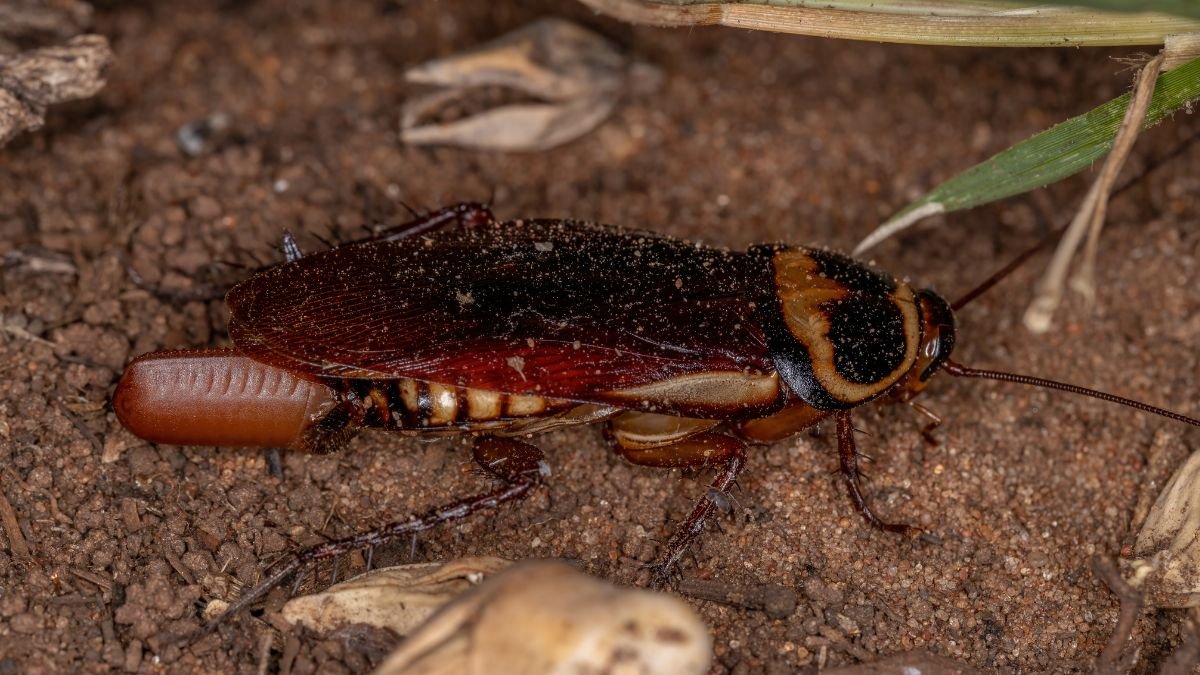
Cockroach eggs are sealed inside a protective capsule called an ootheca. A German cockroach egg case is brown, about 8 mm long and usually holds 30 to 40 eggs. If you find one, remove it, check the hiding places nearby and watch for live cockroaches over the next few weeks.
What do cockroach eggs look like?
You will almost never see individual eggs. Female cockroaches package them in a hardened capsule, and that capsule is what turns up behind a fridge or inside a cabinet. It is small, usually brown, and shaped like a tiny purse or bean with a ridged edge.
The German cockroach is the species most Toronto-area renters and homeowners deal with indoors, so it makes sense to start there. According to University of Florida entomology research, a German cockroach egg case measures about 8 mm long, 3 mm high and 2 mm wide, and a typical case holds 30 to 40 eggs. That is roughly the size of a grain of long rice, so it is easy to mistake for crumbs or a seed.
Other species leave different cases. If you are not sure which cockroach you have, our guide to the types of cockroaches in Ontario covers all four household species side by side.
| Species | Approximate case size | Colour | How the case is handled |
|---|---|---|---|
| German | About 8 mm | Light to medium brown | Female carries it until just before hatching |
| Brown-banded | Roughly 6 mm | Light brown | Glued to furniture, ceilings or dark corners |
| American | Roughly 10 mm | Brown, darkening to black | Carried briefly, then cemented to a sheltered surface |
| Oriental | Roughly 10 mm | Dark red-brown to blackish | Deposited in debris or food in sheltered spots |
Intact cases and hatched cases
An intact case feels firm and looks sealed. A hatched case is usually split along one edge, looks hollow and may be paler or flatter. Finding only empty cases tells you cockroaches were active at some point, but it does not prove how large the problem is today. One empty case could be old. Several fresh cases in the same room is a different story.
Is it an egg case or cockroach droppings?
This is the question most people are really asking when they search. Both can look like small dark specks near cabinets and baseboards, so check three things.
- Shape: an egg case is a defined capsule with a ridged, slightly curved edge. Droppings from small cockroaches look more like ground pepper or coffee grounds, with no consistent shape.
- Texture: a case is firm and holds its shape if you nudge it with a tissue. Droppings smear when you wipe them with a damp cloth.
- Pattern: droppings gather in corners, along edges and under sinks. Cases are tucked into crevices, seams and cardboard folds.
If you cannot tell, take a clear photo next to a coin or ruler for scale. It helps a technician identify the species without having to guess. Seeing droppings is one of several common signs of a pest infestation, and cockroach activity in a kitchen often overlaps with other kitchen pests, so it pays to look at the whole room.
Where do cockroaches lay their eggs?
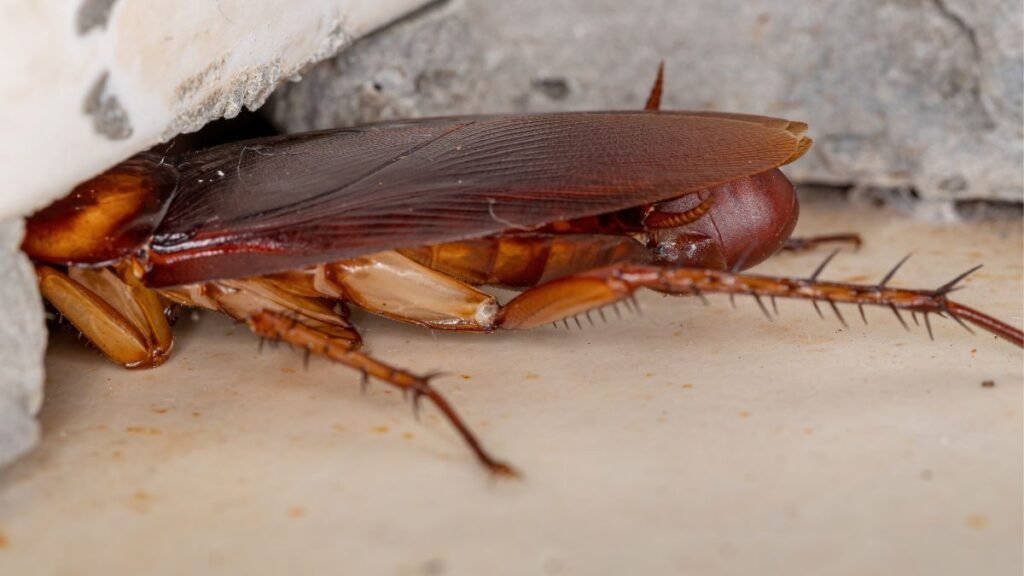
Cockroaches look for warm, dark, tight spaces close to food and water. The exact spot depends on the species, but these are the places worth checking first:
- Cabinet hinges, corners and the joints where shelves meet the wall
- Behind and underneath the fridge, stove and dishwasher
- Under kitchen and bathroom sinks, around plumbing penetrations
- Inside small appliances such as toasters and microwaves
- Cardboard boxes, grocery cartons and stored paper bags
- Furniture seams, closet corners and the undersides of drawers
German females tend to keep the case attached to their body, so you may spot a cockroach dragging a small capsule rather than finding a loose one. Brown-banded cockroaches work differently and glue their cases to surfaces, including furniture and ceilings, which is why they sometimes show up in bedrooms and living rooms. Cases can also arrive on shipping cartons, used furniture and bags, which is one reason apartment buildings see repeat problems.
For a broader checklist of where pests settle in, see our guide to hidden places pests live in your home.
How long do cockroach eggs take to hatch?
It depends on the species and on temperature. For German cockroaches, incubation is commonly described as roughly a month. Because the female carries the case until shortly before the nymphs emerge, the clock does not start when you discover it. A case you find may be days from hatching or already empty.
It also helps to separate two timelines that often get mixed together. Incubation is how long the eggs take to hatch. Development is how long the nymphs take to grow into breeding adults. The University of Florida research notes that German nymphs finish development in about 60 days at room temperature, with the full life cycle running about 100 days. Species such as the American cockroach generally take longer, with eggs that can need two months or more to hatch.
In practice, that means a heated apartment in the GTA can support steady cockroach reproduction through winter. It also explains why a single treatment may not be the end of the story. Insects that hatch after the first visit can restart the cycle, which is why follow-up matters. We explain this pattern in more detail in why cockroaches keep coming back.
How do you get rid of cockroach eggs?
Removing the visible cases is a useful first step, but it works best alongside cleaning and monitoring. Health Canada’s cockroach guidance says regular vacuuming removes food sources, cockroaches and egg cases, and recommends destroying whatever the vacuum collects by placing the bag in soapy water. It also notes that pesticides alone are unlikely to solve the problem unless the living environment changes as well, and that any product you choose should carry a Pest Control Products number and be used exactly as the label directs.
A simple removal routine
- Photograph first. Take a picture of any case before you touch it, with something for scale.
- Vacuum the area. Use a crevice attachment along cabinet edges, appliance gaps and baseboards.
- Dispose of the contents safely. Seal the vacuum bag or canister contents in a bag, soak or crush them, and put the bag in an outdoor garbage bin right away.
- Clean the surfaces. Wipe down shelves, drawers and floors to remove grease and food residue.
- Cut off food and water. Fix leaks, store dry food in sealed containers and take garbage out daily.
- Monitor. Place sticky traps near where you found the case, and check them weekly for nymphs or adults.
A few things are best skipped. Do not use flame to destroy cases, do not mix household chemicals, and do not assume any spray will reliably reach eggs inside a sealed capsule. Cases are tough by design, and the capsule is part of the reason sprays have a limited effect on eggs.
When should you call a pest professional?
One old, empty case in a clean kitchen is not a reason to panic. These situations are different:
- You keep finding new cases after cleaning
- You see live nymphs (small, wingless and often dark) in the daytime
- You find cockroaches in more than one room or in a neighbouring unit
- You live in a multi-unit building, where the problem can move through shared walls and pipes
Tenants should tell the property manager in writing as soon as possible so the building can be treated consistently, and our guide to pest control for rental properties explains how that process usually works.
If you are in the GTA and want a technician to locate the source and set up follow-up visits, our cockroach control service covers homes, apartments and commercial spaces.
Bottom Line
A cockroach egg case is a small, firm capsule, about 8 mm long for the German cockroach, and it can hold dozens of eggs. Finding one is a prompt to act, not a verdict on your home. Photograph it, vacuum and dispose of it properly, clean the area, and monitor for nymphs over the following weeks. If cases or live insects keep appearing, that is the moment to bring in a professional rather than repeating the same cleanup.
FAQs
Should I destroy cockroach eggs?
Yes, remove them, but do it carefully. Vacuum the case, then seal and discard the contents right away so nothing hatches in the bag. Avoid crushing cases by hand, since that can spread debris and leave residue on surfaces.
How many cockroaches hatch from one egg case?
A German cockroach case typically holds 30 to 40 eggs, though not every egg necessarily hatches. Other species produce fewer eggs per case, but they also lay cases repeatedly, so numbers can build quickly.
Can cockroach eggs hatch after the mother dies?
They can, if the case has already been formed and dropped or attached. A German female carries her case until just before hatching, so a case dropped when she dies may or may not survive. That is why finding a dead cockroach does not mean the problem is over.
Can sprays kill cockroach eggs?
Not reliably. The capsule shields the eggs, so household sprays often miss them. Physical removal, sanitation and follow-up monitoring for newly hatched nymphs are more dependable than expecting a spray to reach the eggs.
How common are cockroach infestations in Toronto apartments?
Cockroaches are a regular concern in multi-unit buildings across the GTA because they travel through shared walls, plumbing and stored cartons. If you find egg cases in an apartment, notify your landlord or property manager promptly so neighbouring units can be checked.