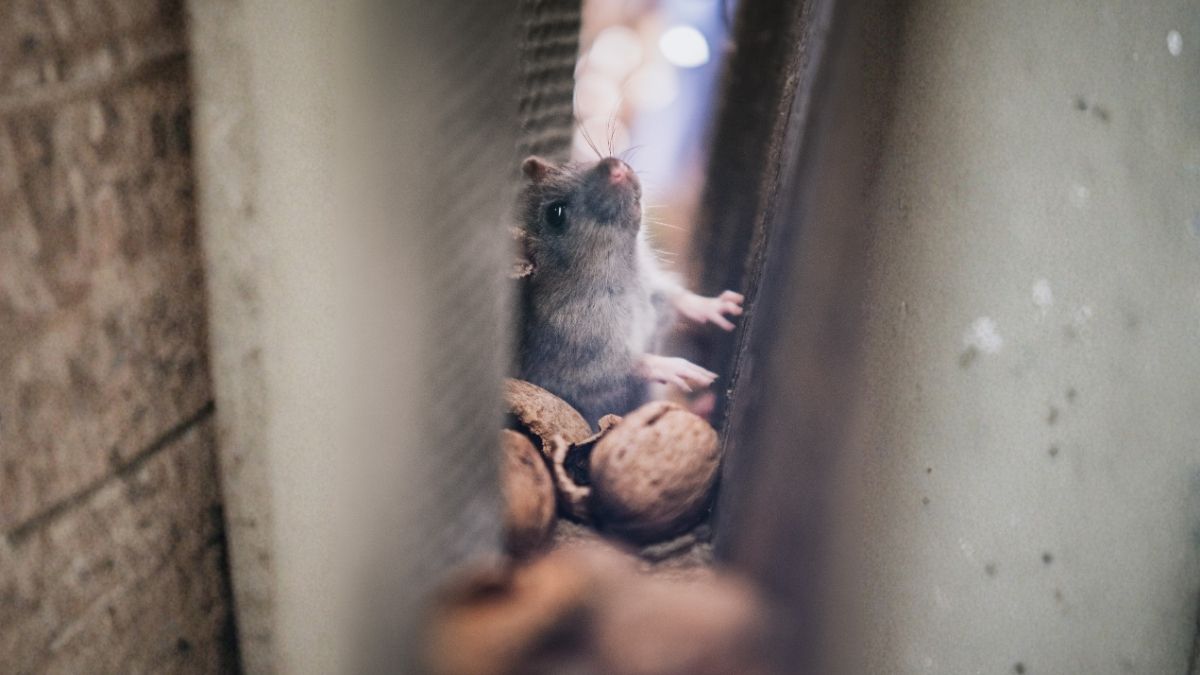
Scratching, squeaking, or scurrying inside a wall almost always means mice in walls have found a route through a gap near the foundation, a vent, or a utility line. The sounds are usually loudest at night, tend to run along one section of wall rather than the whole house, and often show up alongside droppings, gnaw marks, or a faint musty smell nearby.
This guide breaks down what causes mice in walls, how to tell wall activity apart from mice in attic or mice in basement spaces, and what to do next based on patterns common to GTA homes.
Why Do Mice Move Into Wall Voids?
Wall cavities offer mice everything they look for in a shelter: darkness, insulation for warmth, and a private route between the outside and a kitchen or pantry. A standard stud wall has a gap of roughly 3.5 to 5.5 inches between the drywall and the exterior sheathing, more than enough room for a mouse that can flatten its body and squeeze through an opening about the size of a dime.
In most of Canada, indoor mouse activity peaks around the first hard frost, usually in September or October, as outdoor populations look for somewhere warmer to spend the winter. That seasonal push is a big reason GTA homeowners tend to notice mice in walls right as the weather turns, even in homes that were pest-free all summer.
Mice rarely stick to one hiding spot once they’re inside. The same gaps that lead into a wall void often connect to other places pests commonly hide around a home, including attic insulation, basement utility penetrations, and the backs of kitchen cabinets.
Signs of Mice in Your Walls
A wall infestation usually shows up through sound and physical evidence rather than an actual sighting, since mice avoid open rooms whenever they can. Watch for:
- Scratching in walls at night, usually light and fast, between dusk and early morning
- Small, dark, rice-shaped droppings along baseboards or wherever a wall meets the floor
- Gnaw marks on baseboards, door trim, or anything chewed down to bare wood
- A faint musty or ammonia-like smell that gets stronger near one section of wall
- Greasy smudge marks low on the wall where mice repeatedly brush the same surface
If the sounds are heavier, the droppings run closer to 12 to 20mm rather than 6mm, or the noise seems to come from lower down near the foundation, a rat rather than a mouse may be responsible. The signs overlap enough that our rat control guide for GTA homeowners is worth a look if anything sounds off. For a broader checklist that covers pests beyond rodents, see our guide to common signs of a pest infestation.
Mice in the Walls vs Attic vs Basement vs Kitchen: How to Tell Where They Actually Are
Mice rarely stay in exactly one part of a house, but the sounds, timing, and evidence usually point toward wherever they’re currently nesting or feeding. Here’s how the four most common locations tend to differ:
| Location | What You’ll Hear | What You’ll See | Why They’re There |
|---|---|---|---|
| Walls | Scratching or light scurrying at night, moving along one section of wall | Droppings near baseboards, faint grease marks, occasional squeaking | Wall voids give a warm, hidden travel route between floors |
| Attic | Rustling or mice ceiling sounds overhead, especially after dark | Disturbed insulation, mouse droppings, shredded nesting material | Attics stay warm, quiet, and undisturbed most of the year |
| Basement | Movement near the floor or behind stored items | Droppings near utility penetrations, gnawed boxes, gaps around pipes | Basements offer foundation-level access and clutter to nest in |
| Kitchen | Faint scratching behind cabinets or appliances, mostly overnight | Droppings in drawers, chewed food packaging, gaps behind appliances | Kitchens supply food within a short distance of a nest |
Wall activity and attic activity are the two easiest to mix up, since both produce sound after dark. The general rule is that mice ceiling sounds directly overhead, especially paired with disturbed insulation, point to the attic, while noise that stays level with one room and moves sideways rather than overhead usually means the wall cavity itself.
Mouse droppings in the attic also tend to cluster in one spot near the nest, while droppings along a wall are more scattered along a travel route. If the noise moves between floors over the course of a night, mice are likely using the wall void to connect an attic nest with a kitchen food source, a pattern common in older GTA homes with continuous wall cavities running from basement to roofline. If you’re trying to find a mice nest yourself before calling anyone in, start in whichever area matches the pattern above, since nests are usually within a few feet of the heaviest concentration of droppings.
Can Mice Be in the Walls but Nowhere Else in the House?
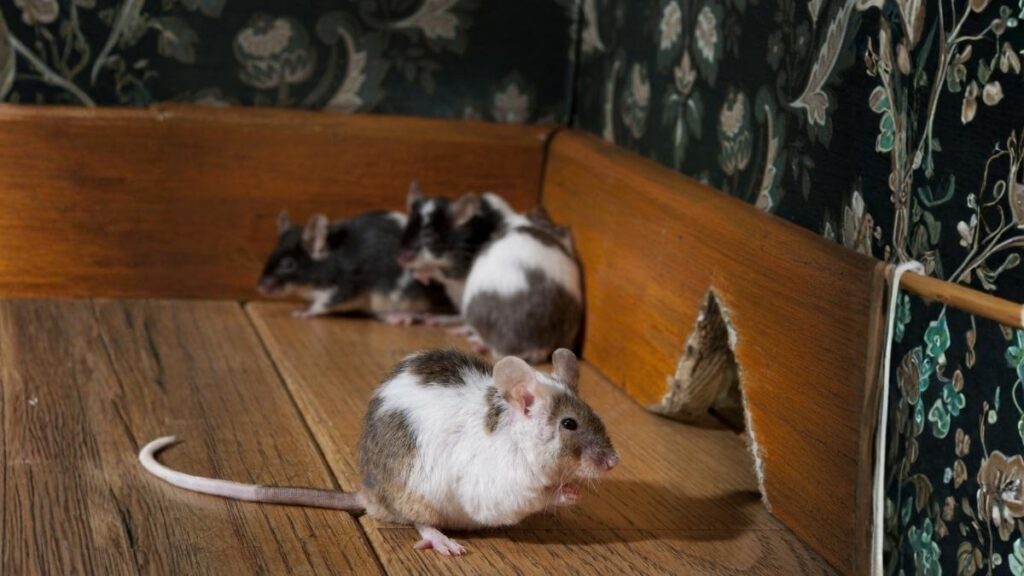
Yes. Mice can live and travel inside a wall void for weeks without ever entering an open room, particularly when the wall connects to an attic or basement where they already have food and nesting material. That said, wall activity is usually an early sign rather than the full picture. Once a colony is established, most homeowners eventually notice droppings or gnaw marks somewhere more visible, such as a pantry or a garage.
House Mice vs Deer Mice: Why the Difference Matters in Canada
Two species account for most home invasions in Canada: the house mouse and the deer mouse. The distinction matters more than it might seem. House mice are almost always the species behind mice in walls, kitchens, and basements in urban and suburban homes, and they don’t carry hantavirus.
Deer mice show up less often inside city and suburban walls, but they’re more common in garages, sheds, cottages, and homes near open fields or wooded lots on the edges of the GTA. Attic activity is where the two overlap most: rodents in attic spaces across the region can be either house mice or deer mice, depending on how close a property sits to open land.
Deer mice are the primary carrier of Sin Nombre hantavirus in Canada, a rare but serious respiratory illness spread through contact with droppings, urine, or nesting material. The Public Health Agency of Canada recommends wearing a properly fitted respirator and avoiding dry sweeping or vacuuming when cleaning up heavy rodent droppings, since disturbing them can release virus particles into the air.
For a typical case of mice in walls in a home in Toronto or GTA, the mouse involved is almost certainly a house mouse, and hantavirus isn’t a realistic concern. The extra precaution mainly applies to sheds, cottages, and outbuildings that have sat closed up for a season.
What to Do If You Hear Mice in the Walls
Once wall activity is confirmed, the sequence matters as much as the individual steps. Sealing every gap before removing the mice inside can trap them in the cavity, which leads to a far worse smell problem than the scratching ever was.
- Confirm the location first. Use the comparison above to narrow down whether the activity is in the wall itself, the attic, or the basement, since that changes where traps and bait should go.
- Set traps or bait stations before sealing anything. Place snap traps or bait stations near the spots with the most droppings or noise, and give them several days to work before closing off any gaps.
- Be careful with poison. Health Canada restricts the strongest rodenticides, known as second-generation anticoagulants, to licensed pest control operators and requires any consumer product to sit inside a tamper-resistant station, partly because poisoned mice often die inside the wall itself.
- Seal entry points only after activity stops. Once trapping shows no new activity for about a week, close the exterior gaps mice were using with steel wool or metal flashing, materials mice can’t chew through as easily as caulk or foam.
- Clean droppings safely. Ventilate the area, avoid dry sweeping, and use gloves and a disinfectant before disposing of anything contaminated.
When to Call a Professional
A DIY approach can work for a single mouse caught early, but a few situations call for a professional rather than another round of store-bought traps:
- Scratching or droppings continue after two to three weeks of trapping
- Activity seems to move between the walls, attic, and basement rather than staying in one place
- There’s a persistent smell suggesting a mouse died somewhere inside a wall or ceiling cavity
- The home has had repeat infestations, which usually means an entry point still hasn’t been found
Invaders Canada’s rodent control service covers exactly this kind of case: inspecting the interior and exterior to confirm whether activity is coming from the walls, attic, or basement, then combining targeted baiting with exclusion work so the same gap doesn’t let another mouse in next fall.
Homeowners across Toronto and the wider GTA can book a free inspection through our Toronto pest control team.
FAQs
Will mice leave the walls on their own?
Rarely. A wall void gives mice warmth, shelter, and a way to travel undetected, so most colonies stay and grow rather than move out without intervention.
How do I know if it’s mice and not squirrels in the walls?
Squirrels are active during the day and move with heavier, slower footsteps, while mice are almost entirely active at night and sound lighter and faster.
Is the smell from a dead mouse in the wall dangerous?
It’s unpleasant rather than dangerous in most cases, though a strong, lingering odour is worth having inspected, since it can sometimes point to a larger hidden problem.