Summary:
“Effective rat control in Mississauga requires more than setting a few traps. You must identify activity early, remove accessible food and water, close entry points, and address the surrounding conditions that attract rodents. If droppings, gnaw marks, nighttime noises, or ground holes continue appearing, arrange a professional inspection before the problem spreads further through the property.”
A rat problem can begin outside and remain unnoticed until an animal enters the basement, garage, ceiling, or kitchen. Once inside, it can contaminate surfaces, damage stored belongings, chew building materials, and create an unpleasant environment. Mississauga offers plenty of conditions that support rodent activity. Efficient rat control in Mississauga involves controlling their activities in both residential and commercial spaces.
They can take shelter in different spaces and areas, including crawlspaces, trees, attics, ceilings, and underground areas. Professional identification of the evidence, securing the building, and removing attractants are part of a complete response. Knowing the right signs, risks of delaying the treatment, and investing in preventive measures can help homeowners keep their spaces safe.
Why Do Rat Problems Develop Around Mississauga Properties?
A rodent does not enter a home or business at random. It is usually searching for one or more of three essentials: food, water, and shelter. A property becomes more appealing when these resources are easy to reach and remain available consistently.
Common outdoor attractants include:
- Unsecured garbage and recycling.
- Fallen fruit, nuts, or vegetables.
- Spilled birdseed.
- Pet food left outdoors.
- Open or damaged compost containers.
- Grease residue around commercial bins.
- Standing water.
- Clutter beside walls or fences.
- Overgrown vegetation.
- Gaps beneath decks and sheds.
Weather and nearby construction can also affect activity. Excavation, landscaping, demolition, sewer work, and building renovations may disturb established nesting locations. Rats then search nearby properties for safer shelter.
A sighting does not necessarily mean a property is dirty. Even a well-maintained building may offer access through an unnoticed foundation gap, utility opening, damaged vent, or poorly sealed door. The key is to determine what allowed the problem to develop and correct that condition.
Common Signs of Rat Activity
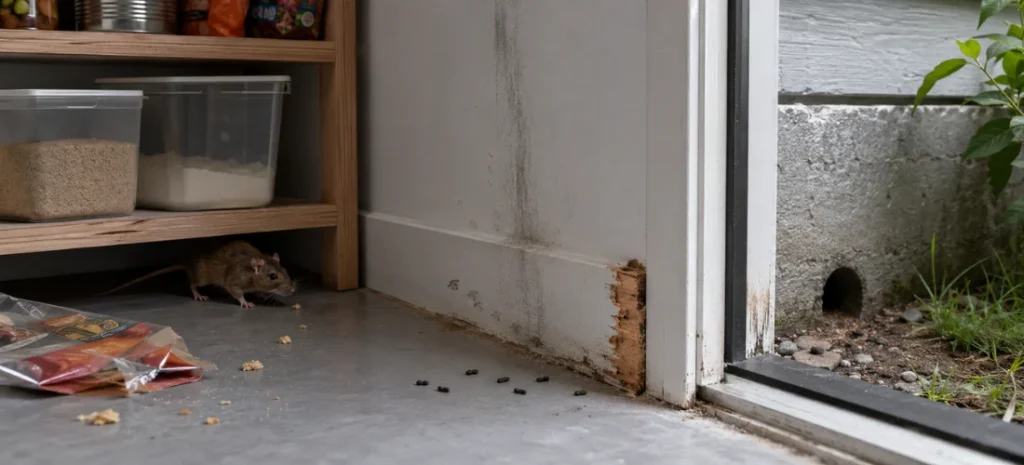
Rodents are cautious and generally active when a property is quiet. As a result, homeowners may find indirect evidence long before seeing a live animal.
1. Droppings
Droppings are among the clearest warning signs. They may appear in cupboards, beneath sinks, behind appliances, beside stored goods, or along walls.
Fresh droppings tend to look darker and shinier. Older material becomes dry and dull. Finding droppings in several rooms can indicate that the animal is travelling extensively or that more than one area is affected.
For effective rodent control, do not sweep or vacuum contaminated material while it is dry. Disturbing it may release particles into the air. Keep people and pets away from the area until it can be cleaned using appropriate protective measures.
2. Gnaw Marks
A rat’s teeth continue growing, so regular gnawing is necessary. Look for damage on:
- Wooden doors and frames.
- Plastic storage containers.
- Cardboard packaging.
- Baseboards.
- Insulation.
- Flexible pipes.
- Electrical wiring.
- Food packages.
New damage is often lighter in colour than the surrounding surface. Repeated chewing in one location may also point toward an entry route or a regular travel path.
3. Scratching or Movement at Night
Scraping, squeaking, or scurrying sounds may come from walls, ceilings, attics, crawlspaces, or beneath floors. These noises are often more noticeable late at night or early in the morning.
Sound alone cannot confirm which animal is present. Mice, squirrels, raccoons, and other wildlife may produce similar noises. The location, timing, droppings, entry damage, and tracks must be considered together.
4. Grease Marks and Travel Routes
Rodents often travel close to walls rather than crossing open rooms. Oils and dirt from their bodies can leave dark smudges along baseboards, pipes, beams, or wall openings.
Repeated tracks may also flatten insulation or leave pathways through dusty storage areas. A light layer of flour placed near a suspected route can reveal footprints, but it should not be used where children or pets might disturb it.
5. Holes Around the Yard
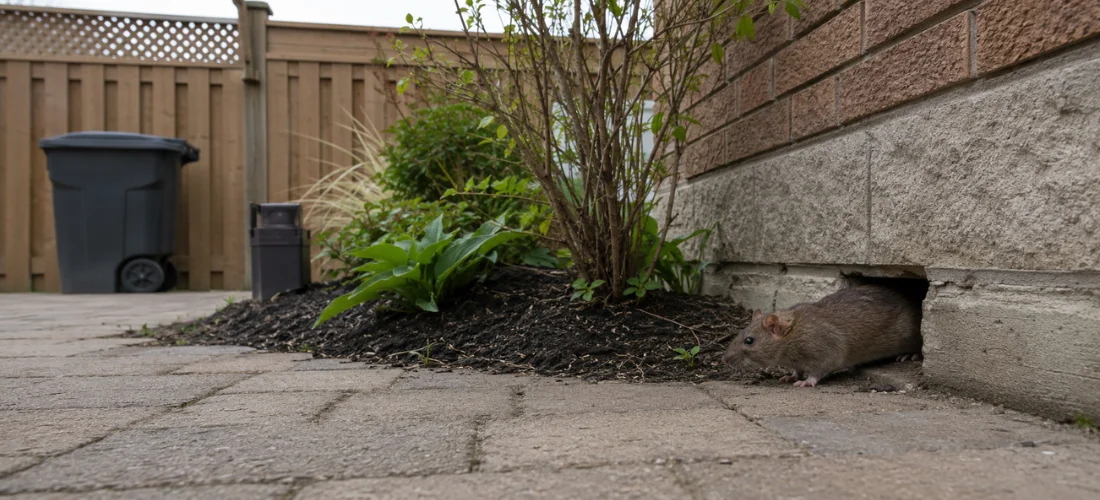
Outdoor holes near foundations, fences, compost areas, decks, or sheds may indicate nesting activity. Active burrows often have smooth openings, compacted soil, or a visible path leading toward a food source.
Do not immediately block an active opening without investigating where it leads. Trapping an animal inside a structure can create additional damage or odour problems.
6. Damaged Food and Packaging
Chewed corners, torn bags, scattered crumbs, and unexplained spills can indicate feeding activity. Inspect lower cupboards, pantries, garages, basements, and storage rooms carefully.
Discard any product that may have been contacted by a wild rodent. Packaging that looks intact may still be contaminated on its exterior.
7. Unusual Pet Behaviour
Dogs and cats may stare at appliances, scratch at walls, or become unusually interested in a cabinet or floor opening. This behaviour does not prove an infestation, but it can help narrow down the area that requires inspection.
8. Daytime Sightings
A single daytime sighting deserves attention. It may occur because the animal was disturbed, is searching for food, or faces competition for resources. Rather than estimating the population from one sighting, inspect the property for additional evidence.
Quick Rat Activity Assessment
| Evidence | What It May Indicate | Recommended Response |
|---|---|---|
| One outdoor sighting | Nearby movement or an external food source | Inspect the yard and remove attractants |
| Fresh droppings indoors | Recent interior activity | Restrict access and inspect immediately |
| Gnawed packaging | An accessible feeding location | Discard affected goods and secure storage |
| Scratching in walls | Movement inside a concealed space | Locate possible access points |
| Holes beside structures | Possible nesting location | Avoid disturbing the opening before assessment |
| Damaged wires or pipes | Active chewing and a property risk | Arrange urgent inspection and repairs |
| Repeated daytime activity | Disturbance, food pressure, or established activity | Seek professional evaluation |
| Activity after trapping | Entry routes or additional animals remain | Reassess the complete control plan |
Risks and Damage Concerns Related to Rat Infestations
Health Risks Associated With an Infestation
Wild rodents can introduce harmful organisms through droppings, urine, saliva, nesting material, and parasites. Exposure may occur when contaminated materials are handled improperly or when particles are disturbed during cleaning.
People with respiratory conditions, weakened immune systems, or other health vulnerabilities should avoid handling contaminated materials. Children and pets should also remain away from affected spaces. If someone becomes unwell after meaningful exposure, contact a healthcare professional and explain the circumstances.
Property Damage and Fire Concerns
Health concerns are only part of the problem. Gnawing can affect insulation, wood, stored goods, flexible plumbing components, and wiring. Damaged electrical cables may increase the possibility of short circuits, equipment failure, or fire.
A licensed electrician should evaluate any suspected wiring damage. Delaying rat removal Mississauga services can therefore increase both treatment needs and repair costs.
Why Should Outdoor Activity Not Be Ignored?
Homeowners sometimes assume an outdoor sighting is harmless because the animal has not entered the building. However, repeated activity close to a home suggests that suitable resources are already available.
Finding rats in garden Mississauga properties may be connected to fallen produce, compost, birdseed, dense ground cover, or shelter beneath structures. Correcting these conditions early can reduce the chance of movement toward garages, basements, and kitchens.
Inspect the entire lot rather than focusing only on the place where the animal appeared. Its feeding area, nesting site, and travel route may be in different locations.
How to Prevent Rat Activity?
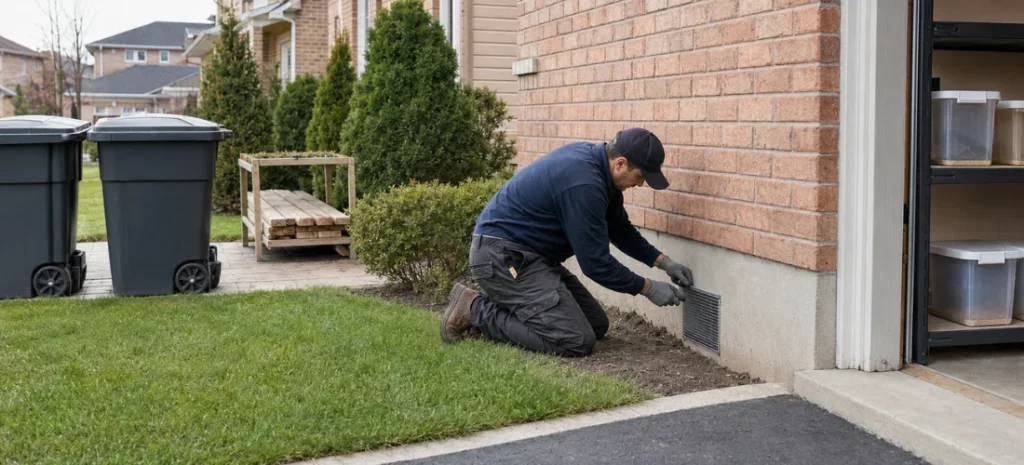
Prevention works best when food, water, shelter, and building access are addressed together. Fixing only one condition may reduce activity temporarily without solving the underlying problem.
Secure Garbage and Compost
Store household food waste in durable containers with fitted lids. Clean residue from the outside of bins and replace damaged containers.
Keep compost systems in good condition and follow local collection rules. Commercial properties should regularly inspect dumpsters, waste rooms, loading areas, and grease storage locations.
Control Birdseed and Outdoor Feeding
Seeds that fall beneath a feeder can support unwanted activity. If evidence appears, remove the feeder and clean the ground beneath it.
Remove bird feeders when rodents are present and use wildlife-resistant garbage containers. Avoid leaving pet bowls outdoors overnight. Store animal feed in sealed, chew-resistant containers.
Maintain the Yard
Cut long grass, trim dense vegetation, and remove unnecessary clutter. Raise stored lumber and similar materials off the ground and keep them away from exterior walls. Pick up fallen fruit regularly. Repair leaking outdoor taps and eliminate standing water where practical.
Inspect the Building Exterior
Examine the foundation, siding, roof edges, soffits, windows, doors, vents, and utility penetrations. Pay particular attention to areas hidden behind vegetation, stored items, stairs, and decks.
Seal suitable openings with durable, rodent-resistant materials. Foam used by itself is usually vulnerable to chewing. Materials should also remain compatible with ventilation, drainage, fire-safety, and building requirements.
This process is commonly called exclusion and should follow a careful inspection so an animal is not sealed inside.
Review Drainage and Utility Areas
Check damaged drain covers, uncapped pipes, sump areas, floor drains, and openings around water or gas lines. Plumbing or sewer defects should be assessed by the appropriate qualified professional.
Keep mechanical rooms, utility closets, and storage spaces uncluttered so new evidence can be spotted quickly.
Improve Indoor Storage
Transfer dry goods into rigid containers with secure lids. Avoid keeping food in cardboard boxes or thin bags in basements and garages.
Clean crumbs and spills beneath refrigerators, ovens, shelving, and vending equipment. Rotate stored stock and inspect rarely moved items.
When to Call a Professional?
Contact a rat exterminator when activity continues despite sanitation and building repairs, when evidence appears in multiple areas, or when the affected space is difficult to reach.
Choosing the right exterminator is also appropriate when:
- Droppings continue appearing after cleanup.
- Chewed wiring or plumbing is discovered.
- Activity occurs inside walls or ceilings.
- The suspected nesting location cannot be accessed safely.
- A commercial food or storage area is affected.
- Children, pets, or vulnerable occupants increase treatment risks.
- Previous trapping attempts have failed.
A thorough inspection should identify evidence, likely entry points, travel routes, attractants, and conditions around the exterior. The proposed treatment should explain how the current activity will be controlled and how future access will be reduced.
Invaders Canada is a professional pest control extermination company that offers services to homeowners and property owners alike.
Whether you want a simple inspection or extermination of the rats on your property, our team of experts can help. We use a combination of advanced and IPM techniques and strategies. You can contact us today for further information.
Conclusion
To conclude, successful rat control in Mississauga depends on early detection and a complete response. Remove accessible resources, inspect the building carefully, secure vulnerable openings, and monitor for new evidence. When activity is persistent, widespread, or located inside concealed spaces, professional assessment is usually the safest and most reliable next step.
FAQs
What is the first sign of a rat problem?
Fresh droppings, nighttime scratching, gnawed packaging, and greasy marks along walls are common early warnings that require closer inspection.
Can a clean home still develop an infestation?
Yes. A clean property may still provide water, shelter, or access through a small structural opening near utilities, doors, vents, or foundations.
Should I seal an entry hole immediately?
Not always. Confirm whether an animal remains inside first. Premature sealing can trap it within a wall, attic, basement, or crawlspace.
Are store-bought traps enough to solve the problem?
They may control limited activity, but they will not correct accessible food, nesting conditions, structural damage, or hidden entry points.
How often should I inspect my property?
Check seasonally and after construction, severe weather, landscaping, or waste-storage changes. Inspect sooner if you notice droppings, damage, sounds, or sightings.