Summary:
“Pest control for restaurants in the GTA means running Integrated Pest Management (IPM) year-round: scheduled inspection, physical exclusion, sanitation support, and targeted treatment, backed by the written records Ontario’s Food Premises Regulation requires. A single confirmed sighting during a Toronto Public Health inspection can lead to a closed placard the same day, so the goal is to never let an inspector find one in the first place.”
Running a restaurant anywhere in the GTA, from a Queen West bistro to a Scarborough buffet, means dealing with tight margins, staff turnover, and constant deliveries. It also means operating in one of the pest industry’s highest-risk environments. Warm equipment, food residue, standing water in drains, and a steady stream of incoming boxes give rodents, cockroaches, and flies exactly what they need to establish a colony inside walls, under equipment, or behind a prep line, often well before anyone on staff notices.
For a Toronto, Mississauga, Brampton, Vaughan, Markham, Scarborough, Etobicoke, or Oakville operator, the stakes go way beyond. A pest sighting during a routine or complaint-driven inspection can mean a public DineSafe posting, a costly emergency callout, and a hit to a reputation that took years to build.
This post covers what GTA regulators expect, the pests most likely to show up in a commercial kitchen, and the IPM approach that keeps a restaurant compliant without disrupting service.
What Do DineSafe and Ontario Regulation 493/17 Require From Restaurants?
Every food premise in Ontario operates under Ontario Regulation 493/17 (Food Premises), made under the Health Protection and Promotion Act. The pest control section of that regulation is direct on two points: a food premise must be protected against pests entering and kept free of the conditions that let pests breed or take shelter, and the operator must keep records of every pest control measure taken, retained for at least a year.
Whether the work is done in-house or by a licensed contractor, that documentation obligation sits with the restaurant operator, not the pest control company.
In Toronto, compliance with the regulation is what the city’s DineSafe program inspects for and discloses publicly. Toronto Public Health inspects thousands of food premises across the city each year, and every visit ends in a green pass, a yellow conditional pass, or a red closed notice, posted at the door and searchable online.
A yellow placard usually means an infraction was found that needs correcting within a set timeframe. A red placard means the health inspector judged the risk severe enough that the premise cannot keep serving food until it’s resolved, and an active pest infestation is one of the conditions that can justify one.
Peel Public Health and York Region Health Services apply the same underlying provincial regulation with their own local disclosure processes.
The takeaway here for a GTA operator is that pest control isn’t a discretionary line item. It’s a documented, ongoing program that has to survive an unannounced inspection at any point in the year.
How Often Should Restaurants Be Inspected?
| Restaurant Type | Risk Level | Recommended Frequency |
|---|---|---|
| Fast food / buffet / high-volume kitchen | High | Monthly professional inspections |
| Casual dining / mid-volume prep | Medium | Every 6 to 8 weeks |
| Low-volume / café / limited prep | Lower | Quarterly, with ongoing self-monitoring |
| Any establishment (post-renovation or after detection) | Urgent | Immediate + follow-up within 2 weeks |
The Pests Most Likely to Show Up in a Commercial Kitchen in GTA
Understanding which pests target local establishments is the first step toward prevention.
German Cockroaches
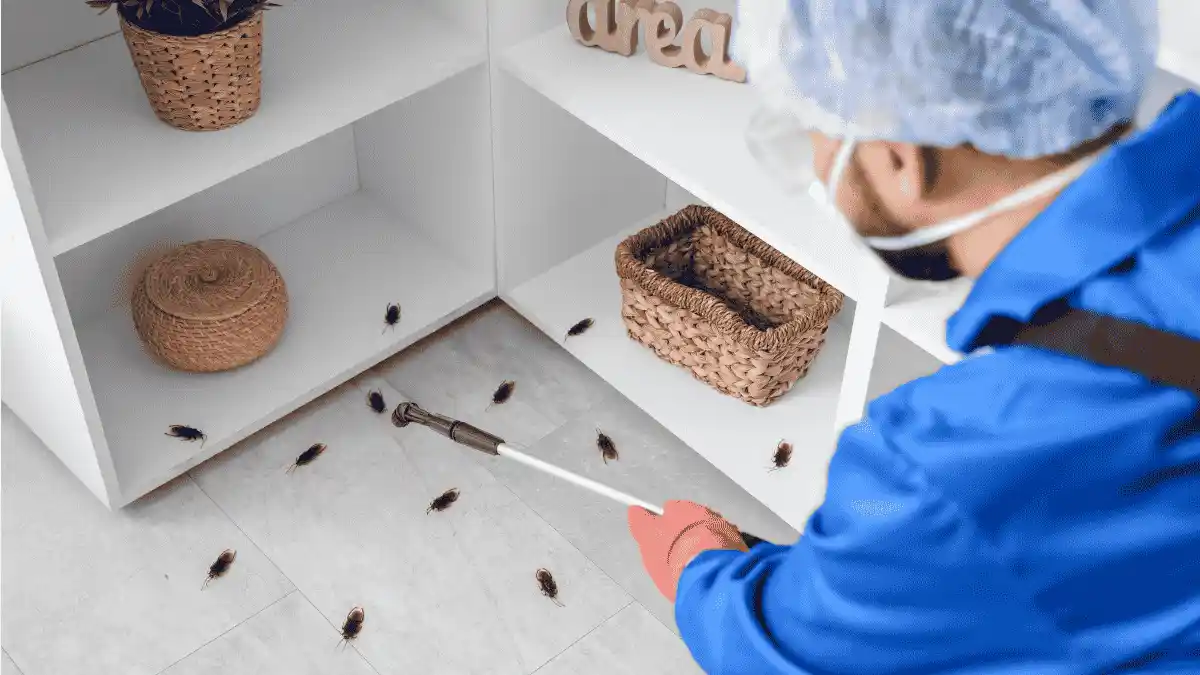
German cockroaches are the species most commercial kitchens across the GTA actually deal with. They favour the warmth around equipment motors, the inside of hollow table legs, and electrical boxes near cooking lines, and they reproduce fast enough that a handful of roaches can become an established colony within weeks. Because they’re nocturnal and stay hidden during service hours, a daytime sighting is usually a sign the population has already outgrown its hiding spots.
A targeted German cockroach extermination service that maps harborage points rather than just spraying visible areas is the only way to actually break the cycle.
Rodents: Mice and Rats
Mice and rats are drawn to dry storage rooms, drop ceilings, and the loading docks where deliveries come in, especially once the weather turns colder and they look for a way indoors. Gnaw marks on packaging or wiring, droppings along baseboards, and grease trails near walls are the usual first signs, often noticed by kitchen staff long before an inspector would see them.
Because Ontario restricts the use of toxic rodenticide inside active food premises, a proper rodent exclusion service leans on physical sealing and trap placement rather than baiting the kitchen floor.
Drain Flies and Fruit Flies
Drain flies breed in the organic slime that builds up inside floor drains and under beverage lines, while fruit flies gather around exposed produce, recycling bins, and bar areas. Both are a strong indicator that a cleaning gap exists somewhere in the kitchen, and both can become a repeat problem if the drain itself isn’t treated, not just the visible flies above it.
Stored-Product Insects and Ants
Beetles, moths, and weevils often arrive already inside flour, rice, or grain deliveries and can spread through a stockroom before anyone notices activity. Ants are usually chasing grease or sugar residue and will exploit any container that isn’t fully sealed. Both pests move quietly through dry storage, which is exactly why regular stockroom checks matter as much as kitchen-floor sanitation.
How Integrated Pest Management Protects a Restaurant Kitchen
IPM is the framework most GTA public health units and licensed pest control operators point to because it treats the underlying conditions, not just the pests visible on a given day.
It generally works in four connected steps.
- Inspection and monitoring comes first: a technician walks the full premise, places numbered monitoring devices in known trouble spots, and logs findings so activity can be tracked over time instead of guessed at during each visit.
- Exclusion follows, sealing the cracks, gaps around pipes, and door thresholds that let pests in from the start, since a kitchen that keeps getting new pests through the same gap will keep needing treatment.
- Sanitation support addresses the food, water, and clutter that let a small population turn into an established one, and this is where staff habits matter as much as anything a technician does.
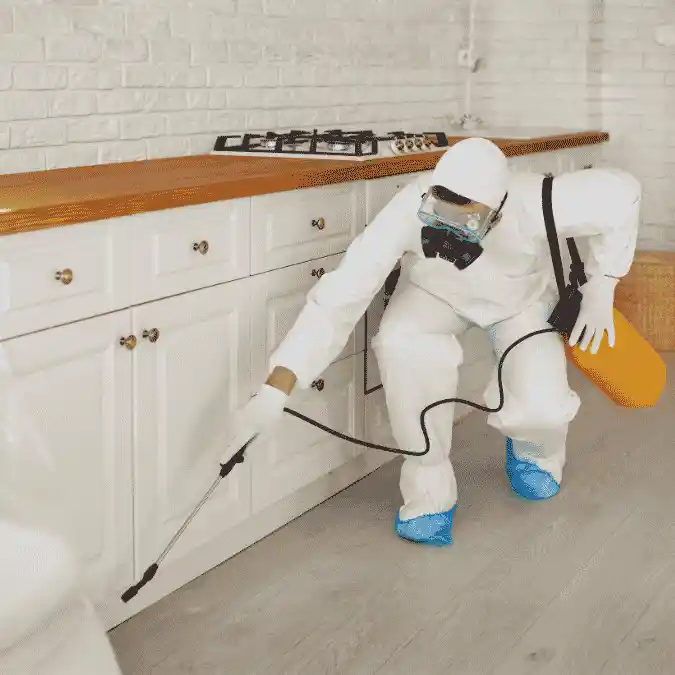
- Treatment, when it’s needed, is targeted rather than broad: gel baits placed directly at harborage points, growth regulators that interrupt breeding cycles, and any pesticide application performed within its label instructions by a technician licensed under Ontario’s Ministry of the Environment, Conservation and Parks.
Every visit under this model gets documented, which is what satisfies the record-keeping requirement in Section 13 of the Food Premises Regulation and gives an operator something concrete to show an inspector on request.
Why Spray-and-Pray Treatments Don’t Hold Up in Commercial Kitchens
A can of store-bought spray or a scattering of sticky traps might clear the roaches visible on a counter, but it does nothing for the colony living inside a wall void or under a walk-in cooler. German cockroaches in particular have shown resistance to some common over-the-counter chemicals, which means repeated untargeted spraying can end up selecting for the hardest population to remove rather than solving the problem.
Broad perimeter spraying near food prep surfaces also raises a straightforward food-safety concern that a licensed operator is trained to avoid, since any product used in an active kitchen has to stay within its approved application zones. Perhaps most importantly, killing the pests you can see does nothing to stop the ones still breeding out of sight. Without a plan that closes entry points and disrupts the breeding cycle, the same infestation tends to reappear within a few weeks, just as costly to deal with the second time.
Discreet, Same-Day Service Across the GTA
A pest sighting in a dining room during service is an operational emergency, not something that can wait for the next scheduled visit.
Invaders Canada runs unmarked service vehicles specifically so a treatment doesn’t turn into a conversation at the front of house, and scheduling can shift to after-hours or overnight slots so a kitchen doesn’t lose prep time to a daytime visit. Same-day dispatch is available across Toronto, Mississauga, Brampton, Vaughan, Markham, Scarborough, Etobicoke, Oakville, and the surrounding GTA, including franchise locations managing pest programs across multiple sites, such as a group with restaurant rodent control needs in Mississauga alongside other GTA units.
When comparing commercial pest control providers for a food service account, a few questions tend to separate a genuine IPM partner from a company that only sprays on a schedule: is the technician licensed under Ontario’s pesticide framework, does every visit come with a written service report you can hand to an inspector, is the treatment plan built around IPM rather than chemical application alone, and can the provider actually respond within hours rather than days if something is spotted mid-shift.
Cost is a fair question too, and it varies by kitchen size, pest pressure, and visit frequency; a general breakdown of GTA pest control pricing is a useful starting point before requesting a site-specific quote.
“Most of the restaurant calls we get aren’t first-time infestations. They’re a kitchen that had a spray-only service for years and finally saw the same roaches come back for the third time. Once we map where they’re actually breeding instead of just where they’re seen, that cycle usually stops.” — Ali, Field Technician, Invaders Canada
Protect Your DineSafe Rating Before It’s Tested
An inspector doesn’t call ahead. The restaurants that pass without a second thought are the ones running a documented pest program year-round, not the ones scrambling after a sighting. Invaders Canada provides Ministry of Environment-licensed, IPM-based pest control for restaurants across the GTA, with a written report after every visit and same-day response when something can’t wait.
Ready to protect your DineSafe rating? Book a free commercial pest audit and get a written plan before an inspector finds a reason to write one for you.
FAQs
Is pest control legally required for restaurants in Ontario?
Yes. Ontario Regulation 493/17 requires every food premise to be protected against pest entry and kept free of conditions that allow pests to breed, and operators must keep records of every pest control measure for at least a year, whether the work is done in-house or by a contractor.
What happens if a Toronto restaurant fails a DineSafe inspection because of pests?
An active infestation can result in a yellow conditional pass with a correction deadline, or a red closed notice if the inspector considers the risk severe. Both outcomes are posted publicly, at the premise and on the searchable DineSafe website.
How much does commercial pest control cost for a GTA restaurant?
Pricing depends on kitchen size, current pest pressure, and how often the site needs visits, so an accurate number really needs a site inspection. As a starting point, most GTA restaurants land somewhere between a monthly maintenance plan for lower-risk operations and a more frequent schedule for high-volume kitchens.
How often should a GTA restaurant schedule professional pest control?
High-volume kitchens and buffets generally benefit from monthly visits, casual dining operations can often work on a six-to-eight-week schedule, and any restaurant should request an inspection immediately after a sighting or a renovation, regardless of its usual schedule.
Can rodenticide be used inside a restaurant kitchen in Ontario?
Toxic rodenticide bait is generally kept out of active food premises. Licensed technicians rely on mechanical traps and exclusion work inside the kitchen itself, reserving any registered rodenticide products for exterior perimeter placements where food contact isn’t a risk.