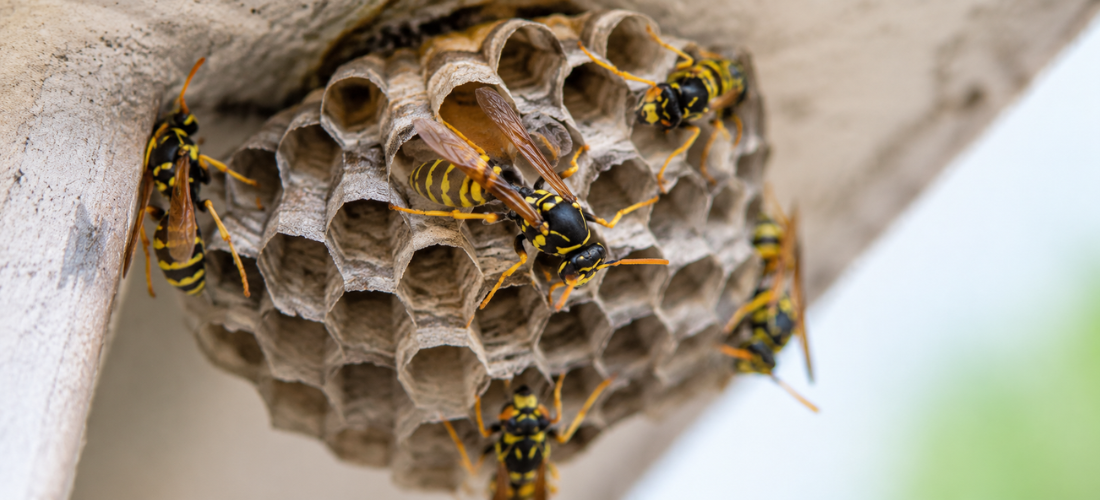
If you find an active wasp nest near your home, doorway, deck, garage, roofline, loft, or business entrance, the safest option is to call a professional, especially when the nest is large, hidden, hard to reach, or close to people. Professional wasp nest removal GTA services are recommended when there is a clear sting risk, repeated wasp activity, children or pets nearby, or any chance that the nest is inside a wall, attic, soffit, or eaves.
Wasps are a common warm-weather pest problem across the Greater Toronto Area. When wasps repeatedly fly around your home, roofline, deck, garage, balcony, or business entrance, wasp nest removal GTA service becomes important. At first, one or two wasps near the yard may not seem serious.
But when you start seeing them flying in and out of the same spot, gathering near food areas, or entering gaps around the property, there may already be an active nest nearby. Wasp nest removal is not just about removing an ugly nest from the outside of a building. It is about controlling a defensive insect colony that may react aggressively when disturbed. Professional extermination services help ensure long-term safety and prevention.
Why do Wasp Nests Become a Serious GTA Home Problem?
Wasps usually build nests in sheltered spaces where the colony can grow with less disturbance. Around GTA homes, these spaces often include eaves, soffits, roof edges, wall gaps, sheds, garages, fences, decks, tree branches, attic vents, lofts, and porch ceilings. Some nests are fully visible, while others are hidden inside building cavities.
The main issue is not always the nest size. The bigger concern is the location. A small active nest above a doorway can create more risk than a larger nest in a low-traffic area. Wasps may become defensive when people walk too close, slam doors nearby, use lawn equipment, move garbage bins, or try to spray the nest without proper protection.
The sting risk becomes more serious when the nest is close to daily movement. This includes front entrances, side doors, children’s play areas, patios, outdoor dining spaces, driveways, balconies, commercial entry points, and shared condo areas. People with allergies, seniors, pets, and young children are more vulnerable because they may not react quickly or safely if wasps swarm.
In the GTA, dense neighbourhoods can also make the problem feel worse. Detached homes, semi-detached houses, townhomes, and commercial units often sit close together. A nest on one property may affect nearby walkways, shared fences, parking areas, or neighbouring yards. That is why fast inspection matters when wasps keep returning to the same area.
Common Places Wasps Build Nests Around GTA Properties
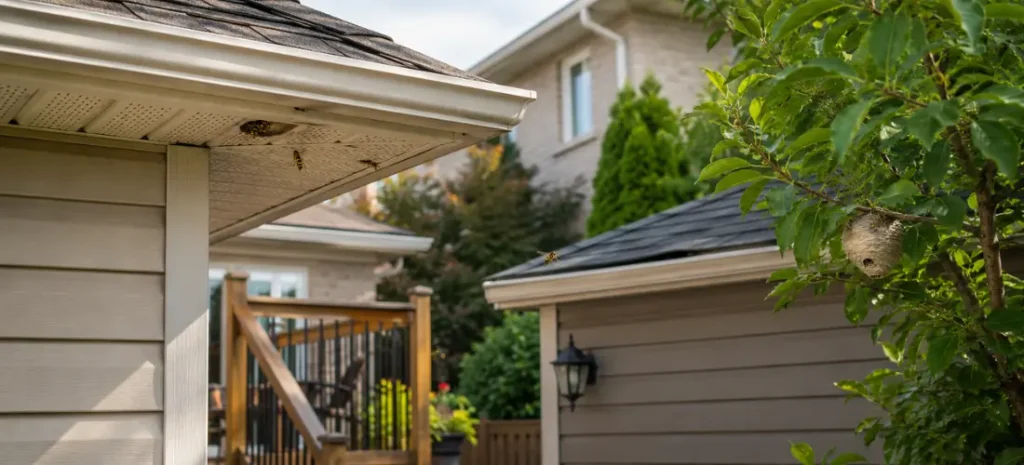
Wasps choose nesting areas based on shelter, warmth, access, and safety. Many GTA homeowners first notice activity before they see the actual nest. Watching the flight path can help identify the source. If wasps keep entering and exiting one specific hole, crack, or roofline gap, there is likely a nest or nesting activity behind that point.
The most common nesting areas include:
- Eaves and soffits are one of the most common spots because they provide overhead protection from rain and direct disturbance. Wasps may build visible paper-like nests under roof edges, or they may enter gaps and create hidden nests behind panels.
- Lofts and attics can also attract wasps when there are openings near vents, rooflines, or damaged exterior materials. A hidden nest in a loft is more difficult to treat because the actual nest may not be visible from outside.
- Wall voids are another high-risk location. If wasps are entering a crack in brickwork, siding, stucco, or around utility openings, the nest may be inside the wall. This is usually not a DIY situation because blocking the hole too early can push wasps deeper indoors.
- Sheds, garages, and decks create quiet sheltered spaces. Wasps may build under deck boards, inside storage sheds, around garage frames, or near outdoor equipment that is not moved often.
- Trees and shrubs may hold visible aerial nests. These can be risky when they are close to walkways, gardens, seating areas, or children’s play zones.
When to Monitor vs When to Call a Professional?
Not every wasp sighting requires urgent treatment. A few wasps passing through a garden may simply be foraging. But regular activity around one location usually means the nest should be inspected.
| Situation | Risk Level | Recommended Action |
|---|---|---|
| One or two wasps occasionally seen in the yard | Low | Monitor activity and remove food attractants |
| Wasps entering the same roofline, wall gap, or soffit | High | Call a professional inspection service |
| Visible nest near a doorway, deck, balcony, or patio | High | Arrange professional wasp nest removal |
| Nest inside lofts, attics, walls, or eaves | High | Do not seal the hole; call a wasp exterminator |
| Nest far from people and not causing activity near the home | Low to moderate | Monitor unless activity increases |
| Multiple people stung or wasps becoming aggressive | Urgent | Avoid the area and call professionals |
| Business entrance, restaurant patio, school, or shared property affected | High | Schedule professional wasp control GTA service |
Clear Signs You Need Professional Wasp Nest Removal GTA
You should call a professional for wasp nest removal if wasps are repeatedly flying to and from the same spot. This is one of the clearest signs of an active nest. A single wasp may be random, but steady movement in one area usually means a colony is nearby.
You should also call if the nest is above shoulder height, inside the roofline, under eaves, inside lofts, or hidden behind siding. Hard-to-reach nests are dangerous because you may need a ladder, an awkward spraying angle, or close contact with the nest. That combination increases the risk of falls and stings.
Another sign is aggressive behaviour. If wasps begin circling, chasing, or reacting when people walk near the area, the colony may be defending its nest. Disturbing a nest can cause colony members to attack, and pest control professionals commonly advise leaving nests undisturbed until they can be assessed properly.
Professional help is also important when someone in the household has a known allergy or past serious reaction to stings. Even if the nest looks small, the health risk is not worth taking.
For commercial properties, professional treatment should be considered earlier. A wasp nest near a storefront, patio, warehouse door, school, clinic, rental property, or customer walkway can create liability concerns and disrupt normal operations.
Why DIY Wasp Nest Removal Can Go Wrong?
DIY wasp nest removal often looks simple online, but real properties are rarely that straightforward. The nest may be higher than expected, the colony may be larger than visible, or the spray may not reach the correct area. If the nest is inside a wall or eaves, spraying the outside may only affect some wasps while leaving the main colony active.
The biggest DIY mistake is blocking the entry hole too early. Homeowners sometimes seal a crack after seeing wasps entering it. This can trap the colony inside and force wasps to find another way out, sometimes into living areas, basements, lofts, or interior walls.
Another common mistake is treating at the wrong time of day. Wasps are often more active during daylight. If an active nest must be removed, it should be done in the evening when wasps are least active, but be aware that removal can be dangerous.
DIY attempts can also fail when homeowners cannot identify the insect correctly. Bees, wasps, hornets, and yellowjackets need different handling. Bees may require a different approach, especially if they are honey bees. Wasps and hornets may be more defensive around nests. Correct identification matters before treatment begins.
What Does a Professional Wasp Exterminator Do?
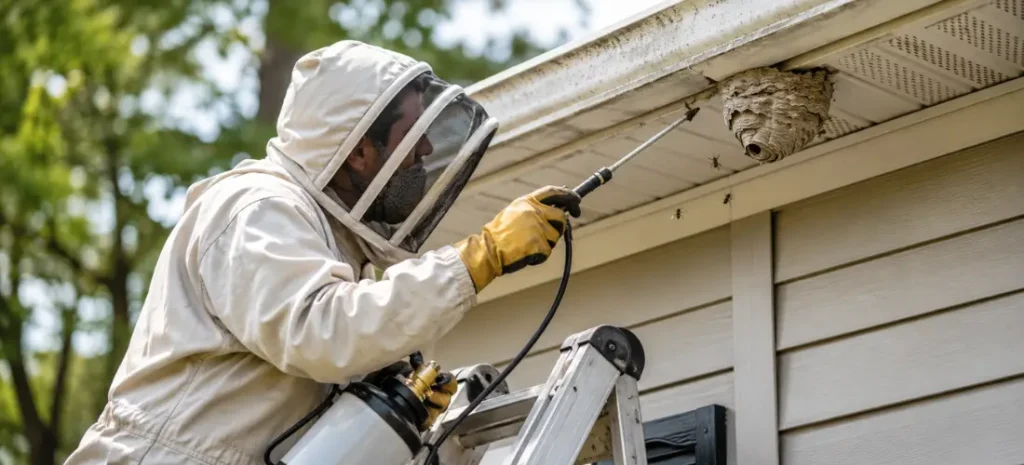
A professional wasp exterminator starts by identifying the insect, the nest location, and the activity level. This matters because the treatment plan for a visible paper nest under an eave is different from a hidden nest inside a wall void or loft.
The technician usually checks the flight path first. This helps confirm whether the nest is exposed, hidden, or entering through a structural gap. For hidden nests, the goal is not just to spray randomly but to treat the active entry area in a way that reaches the colony.
Professional exterminators also use protective equipment and proper application methods. They understand how wasps may react when disturbed, where to stand, how to approach the nest, and when physical removal is appropriate. In many cases, the nest may be treated first and removed later when activity has stopped.
A professional visit may include:
- Inspection of visible activity and entry points.
- Identification of wasps, hornets, bees, or other stinging insects.
- Treatment of the active nest or nesting entrance.
- Advice on whether the nest should be physically removed.
- Guidance on sealing gaps after activity has stopped.
- Prevention recommendations for eaves, vents, lofts, sheds, decks, and exterior cracks.
The key benefit is not only removing the current nest. It is reducing the chance of repeated activity in the same area.
Timing Matters for Wasp Control in the GTA
Wasp activity usually becomes more noticeable as the colony grows through the warmer months. Early activity may involve nest building and foraging. Later in the season, more workers may be present, and the nest may become more defensive.
For homeowners, the best time to act is when repeated activity is first noticed. Waiting until wasps are entering the house, swarming around outdoor meals, or blocking an entrance makes the problem more stressful and potentially more dangerous.
Even if a visible nest appears inactive, it should be assessed carefully before removal. Some old nests may not be reused, but that does not mean every quiet-looking nest is safe to handle. Recent homeowner guidance from pest experts also notes that not every nest needs removal, but active nests in high-traffic areas or hidden locations should be treated with more caution.
For GTA properties, the most practical rule is this: if the nest affects how people use the space, call for inspection. This includes patios, porches, front steps, side paths, garages, balconies, garden seating areas, and commercial entrances.
How to Reduce Wasp Activity After Removal?
After wasp nest removal, prevention becomes the next step. Wasps are attracted to shelter, food, sweet drinks, exposed garbage, fallen fruit, and protein sources. They may also return to areas with suitable nesting gaps if those openings are not repaired.
- Start by inspecting eaves, soffits, vents, siding gaps, loose trim, damaged screens, deck spaces, shed corners, and garage frames. Seal small gaps only after activity has fully stopped. If you seal too soon while wasps are still active, you may create an indoor problem.
- Keep outdoor garbage bins tightly closed. Rinse food containers before placing them in recycling. Clean up sugary spills, fallen fruit, pet food, and outdoor dining leftovers. For restaurants, cafes, and commercial kitchens, outdoor waste control is especially important.
- Trim shrubs and trees away from the building where possible. This improves visibility and makes it easier to notice early nest building. Check quiet areas regularly, especially sheds, play structures, patio umbrellas, deck railings, and fence corners.
- For long-term wasp control GTA prevention, homeowners should also schedule seasonal exterior inspections. Small early nests are easier to manage than large hidden colonies later in the season.
Should You Remove a Wasp Nest Yourself?
You may be able to monitor a very small, exposed nest in a low-risk area if it is far from people and not causing problems. But removal becomes risky when the nest is active, high, hidden, or close to daily activity.
Call professionals when:
- The nest is near doors, windows, patios, decks, balconies, or walkways.
- Wasps are entering eaves, soffits, lofts, walls, or roofline gaps.
- The nest is large or difficult to reach.
- You are unsure whether it is wasps, bees, hornets, or yellowjackets.
- Someone nearby has allergies or a high sting risk.
- The property is commercial, rented, shared, or used by customers.
- There has already been a sting incident.
This approach is safer and more realistic than trying to solve every wasp problem with store-bought spray. Professional treatment helps protect the people using the property and reduces the chance of wasps spreading into harder-to-control spaces.
Invaders Canada is a professional pest control company that helps homeowners and property owners keep their spaces pest-free.
Whether you need wasp nest removal GTA services or any other pest removal services, our team of experts and professionals can help. You can reach out today for further details.
Conclusion
To conclude, wasp nest removal GTA services are most important when the nest is active, close to people, hidden in the structure, or difficult to reach safely. A few wasps in the garden may not be an emergency, but repeated activity around eaves, lofts, soffits, decks, doors, garages, or wall gaps should not be ignored. The safest decision is based on location, activity, and sting risk. If the nest is away from people and not causing problems, monitoring is enough. If the nest is near your home’s daily living areas or business traffic, a professional wasp exterminator is the better choice.
FAQs
When should I call a professional for wasp nest removal in the GTA?
You should call a professional when the nest is active, close to doors or walkways, hidden in eaves or lofts, high above the ground, or near children, pets, customers, or anyone with a sting allergy. Professional help is also recommended if wasps are entering walls, soffits, rooflines, or attic spaces.
Is wasp nest removal dangerous?
Yes, wasp nest removal can be dangerous because wasps may defend the nest aggressively when disturbed. The risk is higher with large nests, hidden nests, ladder work, tight spaces, and nests near high-traffic areas. Professional treatment reduces the chance of stings and improper removal.
Can I seal the hole where wasps are entering?
No, not while wasps are still active. Sealing the entry point too early can trap wasps inside and push them into interior spaces. The nest should be treated first, activity should stop, and then gaps can be sealed as part of prevention.
Do wasps come back after nest removal?
Wasps usually do not return to a properly treated inactive nest, but new wasps may build in the same area if shelter, gaps, food sources, and nesting conditions remain. Prevention should include sealing exterior gaps, cleaning food waste, managing garbage, and checking eaves, sheds, decks, and loft areas.
What is the difference between wasp control and wasp nest removal?
Wasp nest removal focuses on treating or removing the active nest. Wasp control is broader and may include inspection, insect identification, treatment, entry-point advice, prevention, and follow-up recommendations. For GTA homes, the best results usually come from both removal and prevention.