To ensure a safe work environment and maintain product integrity, a professional pest control warehouse is necessary. Warehouse management faces various inventory protection challenges in ensuring advanced regulatory compliance. Warehouses are necessary spaces for businesses to store their products, from raw materials to finished products.
But the massive size and complicated layout of the warehouses make them susceptible to pest infestations. In such situations, relying on professional pest extermination services helps keep such spaces safe. Learning complete details related to pest control in warehouses and other storage areas can make a massive difference.
Different Types of Pests in Warehouses
Warehouses can face pest infestations by different types of pests. Every pest can lead to different types of issues. Learning about the pests helps warehouses take suitable measures to keep their inventory and goods safe.
- Stored Product Insects (SPIs)
Warehouse beetles and weevils are primary feeders that bore into grains, cereals, and dried goods. They ruin massive quantities of bulk stock. The larvae of Indian-meal moths and flour moths spin webs in stored food products, grains, and pet food. Booklice and mites are usually popular as secondary pests. They thrive in high-humidity areas. They feed on mold and spoiled products.
- Rodents
Rodents are one of the most common pests found in warehouses. They are attracted to the massive availability of food and shelter, which large storage spaces offer. Rodents can chew on packaging materials, electrical wiring, and structural components. They can cause significant damage. They can also contaminate products with their droppings and pose health risks to employees and customers.
- Birds
Different types of birds, including pigeons and sparrows, can also cause issues in the warehouse environment. They can enter through open spaces or damaged roofs. Then, nest in rafts or on shelves. Bird droppings can destroy the product’s quality, along with machinery. Their nesting can block ventilation systems and create additional problems for warehouse operations.
- Insects
Another category that proves annoying for the warehouses is insects. Cockroaches and ants are especially annoying in warehouses because of their attraction to food products and moisture. Insects can cause massive damage to the inventory, especially beetles that feed on grains and stored products. Cockroaches can spread diseases, lead to an unhygienic environment in the warehouses, and become the primary health concern in warehouses.
- Termites
They are less common than rodents and insects, but termites can cause massive structural damage if they remain uninspected. If your warehouse is manufactured with wood framing or pallets, then it’s highly vulnerable to termite infestations. They can weaken the building’s foundation and compromise your stored goods’ safety.
- Usual Annoying Pests
Flies are drawn to floor drains, trash receptacles, and loading docks. Such insects can spread foodborne diseases. Different animals like raccoons, squirrels, and bats also require the warmth and shelter of massive industrial buildings. They can cause extreme structural damage.
Why are Warehouses Easily Affected by Pests?
Warehouses are easy targets for pests because they offer a perfect survival and thriving spot for them. There are various reasons pests are invading your warehouses.
- Simple Entry Points
Warehouses are usually open and large spaces with higher ceilings, making the detection of pests difficult. During open loading docks, the docks are usually left open for shipments. This gives easy access to pests indoors.
Big warehouses usually have cracks and gaps in foundations. The poorly sealed doors and damaged vents prove welcoming mats for tiny pests. Pests and their eggs are usually transported directly into the facility inside the shipping containers, corrugated boxes, and wooden pallets.
- Smooth Hiding Spots
In a big warehouse, stacks of boxes, dark corners, and high, hard-to-reach ceiling spaces offer safe and undisturbed nesting areas to pests. Corrugated cardboard boxes are also a favorite nesting material for rodents. In contrast, stored product pests can easily burrow into food packaging.
- Massive Availability of Food Sources
In a warehouse, food ingredients, grains, pet food, and paper products are unlimited food sources for rodents and other pests. The leaky pipes, damp corners, and condensation in warehouse ceilings also offer a continuous supply of moisture. Pests need that to survive. Plus, most warehouses are temperature-regulated. They offer a warm environment that pests need during the harsh and cold outdoor conditions.
- Difficulty in Detecting Pests
The massive size of the warehouses makes it impossible for the pests to monitor every area. It’s nearly impossible for the staff. This simple aspect allows pests to grow their populations before they are detected. Pests primarily function at night and in hidden spots. It means they can thrive out of sight for longer periods.
Preventive Measures for Better Storage Pest Control
An effective pest control warehouse plan combines prevention, monitoring, sanitation, and professional treatment. Implementing different measures helps in controlling pest activities better.
- Conduct Regular Inspections
Regular inspections are beneficial for identifying pest risks before infestations become severe. You can check the entry points, loading docks, storage racks, drainage systems, hidden corners, utility rooms, etc. Monthly inspections help avoid long-term, expensive pest risks.
- Seal Entry Points
Even small openings allow pests to enter. You need to seal wall cracks, door gaps, roof openings, vent spaces, utility penetrations, etc. Installing weather stripping and door sweeps improves inventory protection.
- Improve Warehouse Sanitation
Cleanliness is one of the strongest pest prevention tools. You need to keep your warehouses clean to avoid pest infestations. You should clean sills instantly. Remove trash daily, keep breakrooms clean, eliminate standing water, and remove dust from storage zones. A clean warehouse makes it harder for pests to survive.
- Organize Inventory Properly
Improper storage encourages pest activity. For better pest control, businesses must keep pallets elevated, leave space between the inventory and walls, rotate stock regularly, remove damaged goods quickly, and avoid overcrowded storage. Proper organization improves visibility and inspection access.
- Install Pest Monitoring Systems
Monitoring tools help detect infestations early. Common warehouse pest monitoring methods include rodent bait stations, glue traps, insect light traps, monitoring devices, etc. Tracking activity trends helps prevent larger outbreaks.
- Manage Outdoor Areas
Warehouse exteriors matter just as much as interiors. Maintain landscaping by trimming vegetation, removing standing water, cleaning dumpsters, and keeping loading zones clean. Outdoor pest control reduces indoor infestations.
Why Choose Professional Pest Control Warehouse Services?
Although preventive measures are essential, professional pest control in warehouses is necessary to avoid severe infestations and long-term, expensive treatments. You can protect your warehouses from pest infestations in various ways with professional pest control services.
- Integrated Pest Management (IPM)
IPM is a thorough pest control approach. It combines sealing hidden entry points, preventive measures, monitoring, and targeted treatments. This strategy is ideal for long-term pest control by considering the root causes of infestations and eliminating the use of chemicals.
- Regulatory Compliance
Warehouses must follow strict hygiene and health codes, such as FDA and ISO standards. Professional pest control experts offer certified documents to simplify your passing of the facility inspections and prevent heavy fines.
- Inventory Protection
Different pests like rodents and other insects ruin packaging. They contaminate organic materials and chew through electric wiring. Professional pest control experts personalise preventive treatments to help you protect your stored goods from expensive and unnecessary measures.
- Smooth and Targeted Extermination
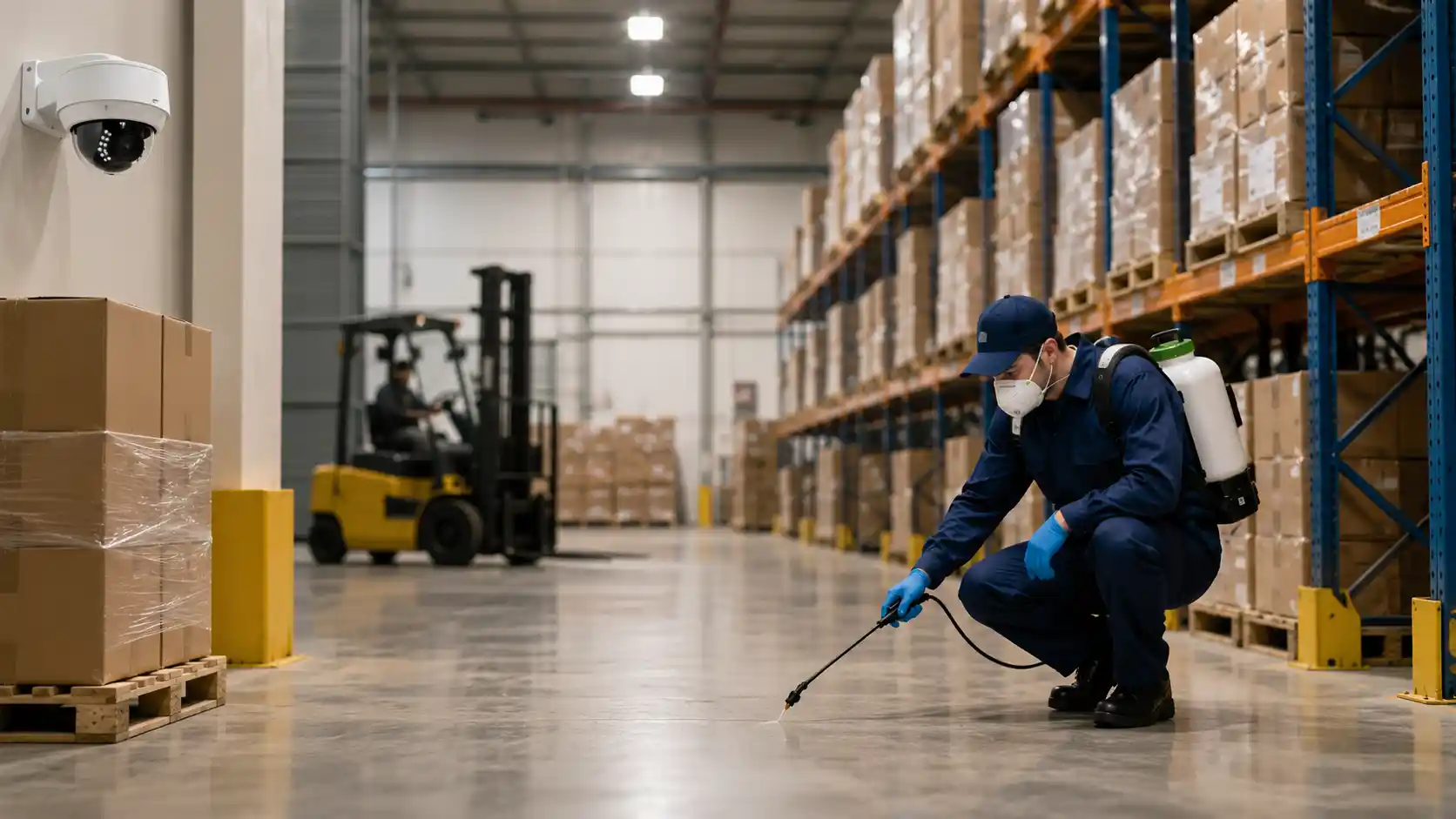
Warehouses have complicated and vast layouts. Licensed professional pest control technicians use industrial-grade equipment and formulations. These solutions are usually unavailable to the public. Such measures ensure discreet extermination without affecting your daily logistical operations.
- Long-Term Cost Saving
DIY pest control solutions look affordable in the beginning. But they are ineffective treatments and can lead to continuous infestations. Professional pest control handles the infestation from its sources. They protect the warehouse management from expensive facility repairs and damaged product margins.
- Ongoing Monitoring
Pest control professionals can set up monitoring systems throughout your warehouse. It helps in detecting early signs of pest infestations. It helps warehouses to ensure early management before the pest infestation can spread.
How to Choose the Right Professional Pest Control Service for Warehouses and Storage Spaces?
Selecting the right professional pest control expert can make a massive difference in handling infestations in warehouses. You can keep your storage spaces protected from adverse conditions and infestations by hiring such professionals.
1. Look for Commercial Warehouse Experience
Choose a pest control company that has proven experience handling warehouses, storage facilities, and industrial spaces. Large buildings with loading docks, inventory racks, and high product movement require specialized treatment methods. Experienced professionals understand common warehouse pests and know how to prevent recurring infestations effectively.
2. Evaluate Their Inspection and Prevention Process
A reliable pest control provider should offer more than just spraying treatments. Ask whether they conduct detailed inspections, identify entry points, monitor pest activity, and create preventive strategies. A company focused on long-term prevention will provide better inventory protection and reduce future pest risks.
3. Check for Customized Pest Management Plans
Every warehouse has different storage conditions, products, and pest risks. Avoid companies that use a one-size-fits-all approach. The right provider should create a customized pest control warehouse plan based on facility size, industry requirements, and seasonal pest challenges.
4. Verify Licensing, Certifications, and Safety Standards
Always choose a licensed and certified pest control service that follows local regulations and safety standards. This is especially important for food storage, pharmaceutical, and retail warehouses. Safe treatment methods help protect employees, products, and business operations from unnecessary risks.
5. Read Reviews and Ask About Ongoing Monitoring
Customer reviews and testimonials can reveal how reliable a pest control company is. Also, ask if they provide ongoing monitoring, routine inspections, and emergency response services. Continuous storage pest control support ensures small pest problems are detected before they turn into costly infestations.
Investing in the best professional pest control service is essential. That’s where Invaders Canada truly stands out. We are a professional company in Canada with complete experience. We offer pest control services to residential and commercial spaces. Make your warehouse spaces safe from pests with us.
Conclusion
To conclude, pest control warehouse is a necessary service for businesses. Pests can damage your spaces and lead to severe infestations if left untreated. Investing in preventive measures is essential, but DIY treatments can offer limited time comfort. Then, the recurring pest infestations cause severe damage. You can prevent such outcomes by choosing our reliable pest control services at Invaders Canada. Contact us for further details.
FAQs
What is pest control warehouse management?
Pest control warehouse management refers to the process of preventing and eliminating pests in storage facilities and warehouses. It includes inspections, sanitation, pest monitoring, exclusion methods, and professional treatments to protect inventory and maintain a clean environment.
What pests are commonly found in warehouses?
Warehouses commonly attract pests such as rodents, cockroaches, ants, flies, birds, and stored-product insects like beetles and moths. These pests can damage packaging, contaminate products, and create health and safety risks.
How often should a warehouse schedule pest control services?
Most warehouses benefit from monthly pest control inspections and treatments. However, food storage and high-risk facilities may require bi-weekly or more frequent services for better inventory protection and compliance.
How can warehouses prevent pest infestations?
Warehouses can reduce infestations by sealing entry points, maintaining cleanliness, storing products properly, removing standing water, inspecting shipments, and using professional storage pest control services for regular monitoring.
Why is pest control important for inventory protection?
Pests can contaminate products, chew through packaging, and destroy stored materials, leading to financial losses and customer complaints. Effective pest control warehouse services help ensure proper inventory protection and reduce operational disruptions.