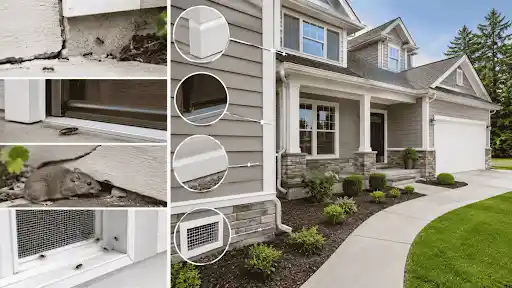
Quick Summary: Pests get into the homes in GTA through gaps as small as a dime. Cracked foundation mortar, unscreened weep holes, worn door sweeps, damaged roof vents, and utility lines that were never resealed after installation are the main culprits. Mice need only a quarter-inch opening, rats a half-inch, and most insects can slip through a hairline crack. Finding and closing these specific gaps, not just treating the pests already inside, is what actually keeps a house closed, free from pests.
Finding a cockroach on the kitchen counter or hearing a scratch inside a wall at 2 a.m. raises the same question for almost every homeowner in the GTA: how did it get in?
Pests rarely walk through an open door. They exploit specific, measurable gaps in a home’s exterior, and in the Greater Toronto Area those gaps show up for predictable reasons. Century-old brick homes in Cabbagetown and Old East York develop mortar decay and settling cracks. Suburban builds across Brampton, Mississauga, and Etobicoke lose their soffit seals to wind and age. Condos and townhomes in Markham, Vaughan, and Oakville share plumbing chases that let pests travel between units.
This guide walks through where pests actually get into GTA homes, the exact gap sizes involved, and how to seal them before an infestation takes hold.
How Small a Gap Do Pests Actually Need?
| Pest Type | Minimum Entry Gap Size | Primary Vulnerable Area | Recommended Sealing Material |
|---|---|---|---|
| House Mouse | ~1/4 inch (dime-sized) | Door sweeps, weep holes, utility penetrations | Steel wool packed with 100% silicone, or galvanized mesh |
| Norway Rat | ~1/2 inch (quarter-sized) | Foundation cracks, garage door corners, drains | Heavy-gauge steel mesh, concrete patch |
| Pavement / Carpenter Ants | Hairline crack (under 1/16 inch) | Window frames, exterior siding seams, doors | Exterior-grade polyurethane sealant |
| Cockroaches | 1/16 inch (credit-card thickness) | Pipe chases under sinks, shared condo walls | Caulk, foam gaskets around wall plates |
| Wasps & Hornets | 1/8 inch | Soffits, roof vents, siding edges | Stainless steel vent screens, sealant |
Where Do Pests Get In at Ground Level and the Foundation?
Most entry points start at the bottom of the house, where the foundation meets the soil and where the coldest, wettest conditions in Southern Ontario do the most damage over time.
Foundation and mortar cracks: Winters in the GTA put concrete and brick through repeated freeze-thaw cycles. Water seeps into a hairline crack, freezes, expands, and widens the opening by a fraction of a millimetre each cycle. After a few winters, a cosmetic crack can become wide enough for pavement ants or German cockroaches to use as a hallway. A foundation crack often connects directly to a basement rim joist or sill plate, which is one reason it is such a common route for how mice get inside older homes in Toronto.
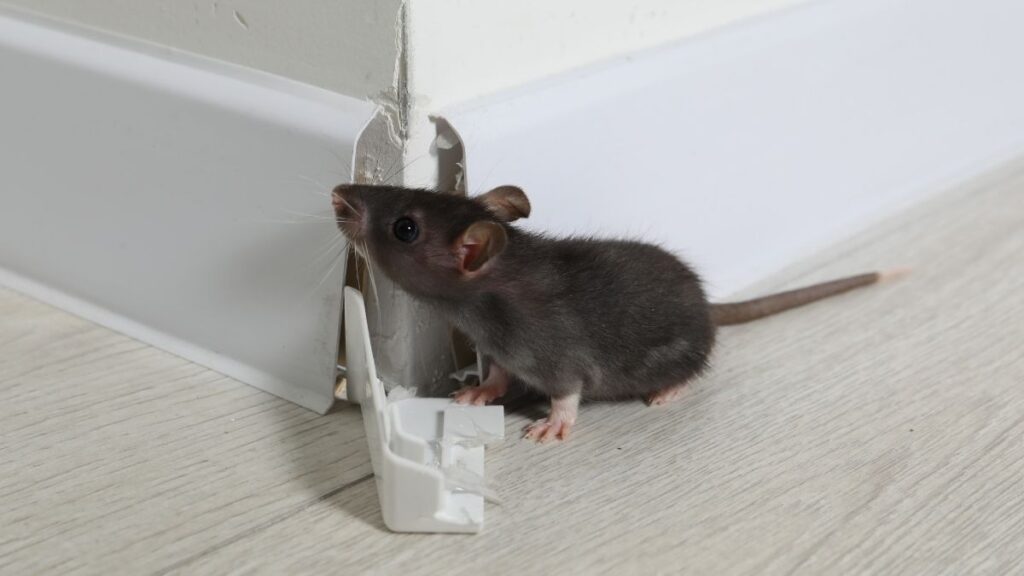
Weep holes: Brick veneer homes across the GTA rely on weep holes, small gaps left in the bottom row of brick, to let moisture drain out from behind the exterior wall. They are supposed to be there. The problem is that most builders never fit them with vent covers, so a house mouse or a wasp queen can use the same gap the wall was designed to breathe through. A weep hole cover that still allows drainage is a fix many people skip entirely.
Basement windows and utility penetrations: Every pipe, gas line, or outdoor spigot that passes through a foundation wall leaves a small gap around it. Builders typically pack these with a bead of caulk that shrinks and cracks within a few years. HVAC lines and hose bibs are especially common offenders, since they get disturbed during servicing and rarely get resealed properly afterward.
Attached garages: The rubber seal along the bottom of a garage door is rated for a few years of GTA weather before it hardens, splits, and lifts off the concrete. Once that seal fails, mice walk straight in, and from an attached garage they are one interior door away from the kitchen. It is one of the more overlooked pest entry points, since homeowners tend to inspect their front door and windows long before they check the garage.
A licensed technician checking for rodent control issues will usually start at these four spots, since they account for a large share of the mouse and rat activity we see across Toronto, Mississauga, and Brampton basements. The City of Toronto’s own rodent prevention guidance tells residents to do exactly this: seal cracks and small holes around the house, garage, or shed before rodents can use them to reach the foundation and walls.
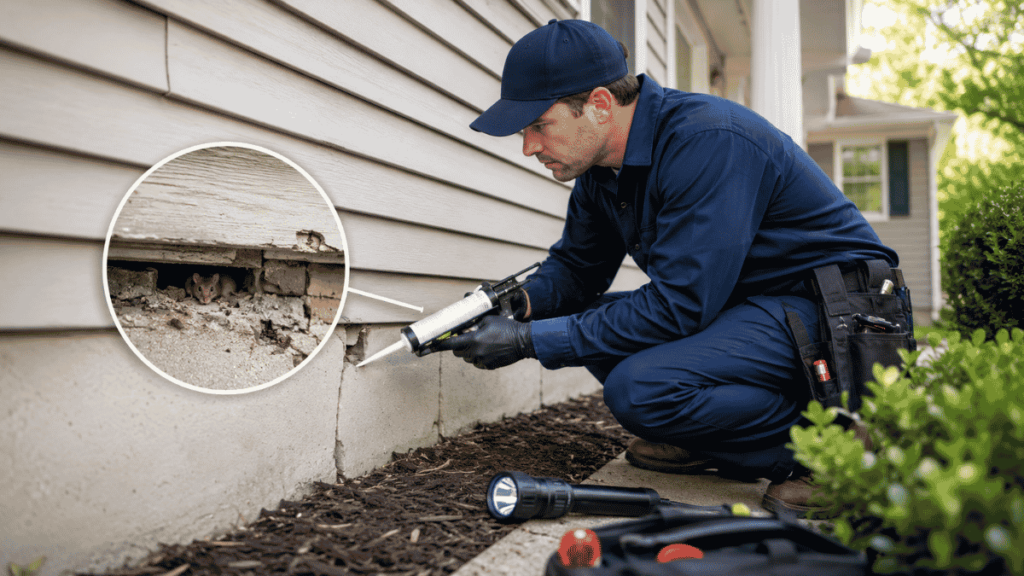
How Do Doors, Windows, and Siding Let Pests Inside?
Above ground, the weak points shift from concrete to hardware, and they fail just as predictably.
Worn weatherstripping and missing door sweeps: The rubber sweep along the bottom of an exterior door compresses every time the door closes. After a few years of daily use, it stops making full contact with the threshold. Even a light gap under a door is enough for pavement ants, carpenter ants, and young mice to walk through, especially on a side or back door that gets less daily traffic and less attention.
Damaged window screens and frames: A torn screen does more than let in mosquitoes. Wasps, flies, and spiders treat a screen gap as an open window, and older aluminum-frame windows common in 1960s and 70s subdivisions across Scarborough and Etobicoke have frames that warp slightly with every temperature swing, widening the gap between sash and frame over a decade of use.
Siding and trim gaps: Vinyl siding is installed with small gaps at the corner posts and J-channels to allow for expansion. Carpenter ants in particular use these gaps as a ladder straight up an exterior wall toward a roofline or attic vent. A property already dealing with carpenter ant activity along its siding usually needs both ant control treatment and a look at where the siding meets the trim, since spraying alone will not close the route they are using to get back in.
A simple way to find these gaps before a pest does is the same one our technicians use on inspections: walk the exterior door by door on a bright afternoon and look for daylight at the threshold, the screen frames, and the siding corners. Any point where light gets through is a point where an insect or a young mouse can get through too.
What Roofline and Attic Gaps Let Pests and Wildlife Inside?
The roofline is the entry point most of us check last and pests use most, since almost nobody inspects a roof edge from a ladder every season.
Soffits, fascia, and eaves: Wind, ice damming, and simple age work soffit panels loose from the fascia board, especially on homes built before the mid-2000s across Brampton, Vaughan, and Markham. Once a panel gaps even a few centimetres, it opens a direct route into the attic for wasps building a paper nest, squirrels looking for a dry cavity, and occasionally raccoons strong enough to pry the gap wider themselves.
Roof and ridge vents: These vents exist to let attic heat and moisture escape, and many are installed without a screen behind the louvres. A ridge vent without mesh is an open door for bats, birds, and rodents, and because attic access is hard to check from the ground, activity here often goes unnoticed until droppings or scratching sounds show up in the ceiling below.
Chimneys and exhaust vents: An uncapped chimney is one of the more common raccoon and squirrel entry points in the GTA, particularly in fall when wildlife searches for winter shelter. Dryer vents and bathroom fan exhausts have the same problem on a smaller scale. Many exit through a flap guard that has rusted stiff or gone missing entirely, leaving a warm, food-scented opening that mice find quickly.
Attic and soffit gaps matter beyond nuisance, too. The Public Health Agency of Canada notes that droppings and nesting material left by wild rodents in enclosed spaces can carry hantavirus, and lists blocking entry openings as the first step in prevention.
A soffit or roof vent gap is also where most wasp control calls from the GTA originate, since a paper nest built inside a soffit cavity over the summer is far harder to reach than one built in the open.
Where Do Pests Travel Once They Are Inside?
Not every entry point sits on an exterior wall. In condos and multi-unit townhomes across Toronto and Mississauga, cockroaches and mice frequently move unit to unit through shared plumbing chases, the vertical channels that carry pipes and cables between floors. A gap around a single pipe fitting on one floor can give a cockroach population access to a dozen units above and below it, which is why a single-unit treatment in a condo building often fails without addressing the shared chase itself.
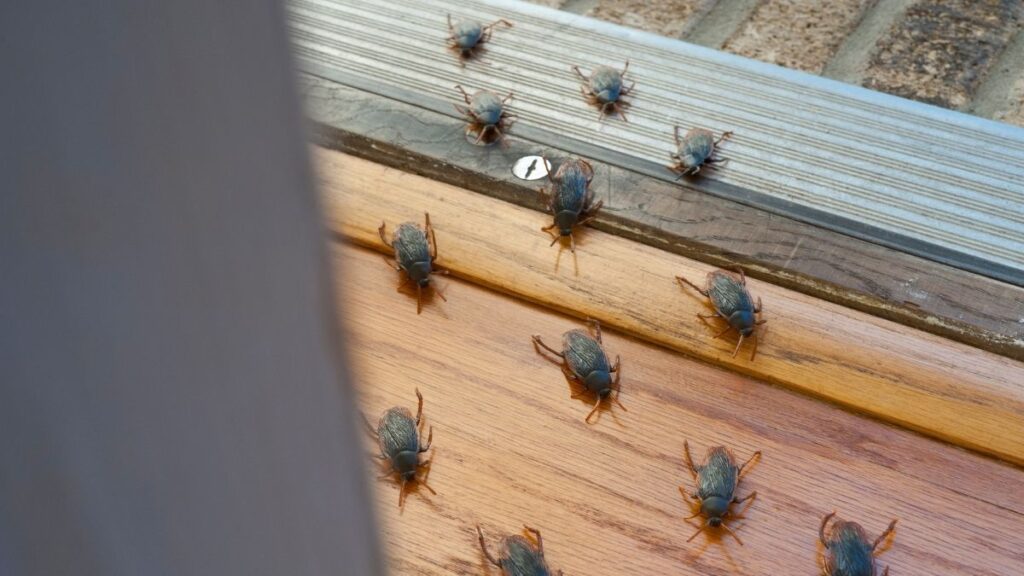
Some pests skip structural gaps entirely and travel as hitchhikers. Bed bugs move in used furniture, luggage, and secondhand clothing. German cockroaches arrive in cardboard boxes and grocery bags. Fleas travel on pets or on secondhand rugs. None of these routes involve a crack or a vent, which is why sealing a home’s exterior, while essential, will not stop every infestation on its own.
When Does DIY Sealing Fall Short?
Caulk and standard expanding foam handle the gaps residents can see and reach, which is genuinely useful work. Their limit shows up with rodents specifically. A house mouse can chew through cured expanding foam in a single session, since the foam offers no resistance once it has hardened. Loose steel wool has the same problem. It slows a mouse down for a night, not permanently.
The materials that actually hold against rodents are different: galvanized or copper wire mesh packed into the gap first, sealed over with silicone or a pest-grade expansion foam, sometimes backed with a foam backing rod for larger openings. Getting this combination right at a roofline, a weep hole, or a utility penetration usually means working from a ladder or a crawl space, which is why most homeowners eventually bring in a professional for anything above ground level or below the basement floor.
A full-perimeter inspection also catches what a homeowner’s visual check tends to miss: a gap behind a shrub, a soffit seam only visible from one angle, a foundation crack hidden by a flower bed. If you are already noticing droppings, gnaw marks, or grease trails, our guide on signs of a pest infestation can help confirm what you are dealing with before you seal anything shut and trap it inside.
Invaders Canada’s pest exclusion services cover same-day inspections across the GTA, checking every ground-level, wall, and roofline gap in one visit rather than treating symptoms one call at a time.
A Season-by-Season Sealing Checklist
| Season | Priority Focus Area | Actions Required |
|---|---|---|
| Spring | Windows, screens, and foundation | Repair torn window screens and inspect the foundation for new cracks after the ground thaws |
| Summer | Decks, eaves, and landscaping | Trim tree branches back at least 6 feet from the house, clear standing water, inspect eavestroughs |
| Fall | Doors, garage, and roof vents | Install heavy-duty door sweeps and seal utility line entry points before cold weather sets in |
| Winter | Attic and basement interior | Check insulation for droppings and inspect furnace and dryer vent flaps for proper closure |
Close the Gaps Before Pests Get in
Pests do not need a door left open. They need a quarter-inch gap at a weep hole, a chewed-through patch of foam at a roofline, or a worn door sweep that has not been replaced in years. Walking the exterior of a home in the GTA once a season, checking the specific spots covered above, catches most of these before they turn into an active infestation.
For gaps that are hard to reach or hard to identify on your own, a licensed technician can find and seal them properly in a single visit. Contact Invaders Canada for a free inspection and a full report on where your home is exposed.
FAQs
How small of a gap can pests use to get into a home?
A house mouse can squeeze through an opening about a quarter-inch wide, roughly the size of a dime. Rats need about a half-inch, and insects like ants and cockroaches can use gaps smaller than a sixteenth of an inch.
Can sealing my home really stop an infestation on its own?
Sealing closes the structural routes pests use, which is a large part of prevention, but it will not stop hitchhiking pests like bed bugs or fleas, and it will not remove pests already living inside. Sealing works best alongside cleanup and, where needed, professional treatment.
What time of year should GTA homeowners check for entry points?
Spring, right after the ground thaws, is the best time to check the foundation for new freeze-thaw cracks. Fall is the priority window for door sweeps and utility line seals, before mice and wildlife start searching for winter shelter.
Are older Toronto homes more prone to pest entry than newer builds?
Yes, generally. Century-old homes in areas like Cabbagetown and Old East York have had more decades of mortar decay and foundation settling, which tends to create more entry points than a home built in the last 10 to 15 years.
Do condo and apartment units need to worry about entry points if there are no exterior walls?
Yes. Interior units can still be exposed through shared plumbing chases, conduit lines, and gaps around pipe fittings that connect multiple units, along with hitchhiking pests carried in on boxes, luggage, or secondhand furniture.

Pest Control for Warehouses and Storage Areas