Quick Summary:
“An ant infestation in your house rarely stays small for long. What starts as a few ants near the kitchen counter can turn into an active colony inside a wall void within weeks. This post explains how to identify the ant species common to Toronto, Mississauga, Brampton, Vaughan, and the rest of the GTA, spot the early warning signs, and remove the whole ant colony for good.”
Homes in GTA tend to see ant activity in three waves each year. The spring thaw pushes outdoor colonies toward warmer, drier spaces. Hot, humid summers bring ants indoors chasing water. Then, as temperatures drop in fall, colonies look for somewhere to overwinter, and a house with an unsealed foundation crack looks like a good option.
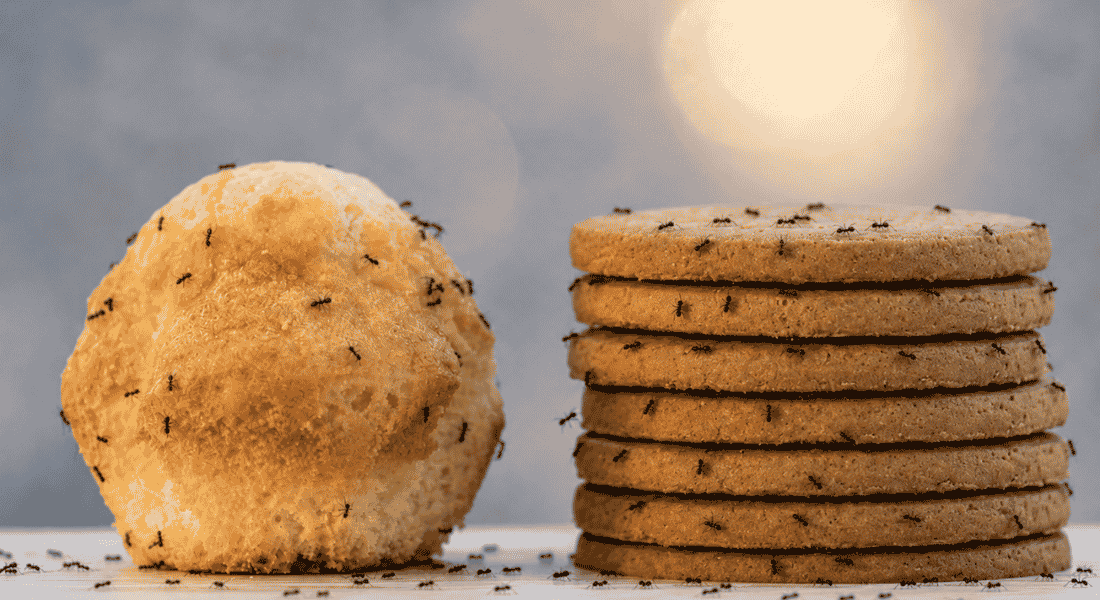
Seeing two or three ants on a countertop once in a while is normal. It gets out of control when the same trail reappears every day, because a repeating trail almost always means a nest is active nearby. Ants that enter a home are following a scent trail laid down by scouts, and that trail leads straight back to food, water, or a colony that’s already growing.
This post covers ant identification, the signs that separate a minor nuisance from a real infestation, what typically draws ants indoors across the GTA, and when a DIY approach stops being enough.
What Ant Species Cause Infestations in Homes in GTA?
Four species account for most indoor ant problems across the Greater Toronto Area: carpenter ants, pavement ants, pharaoh ants, and odorous house ants.
Each one nests and feeds differently, which is why treating them all the same way rarely works.
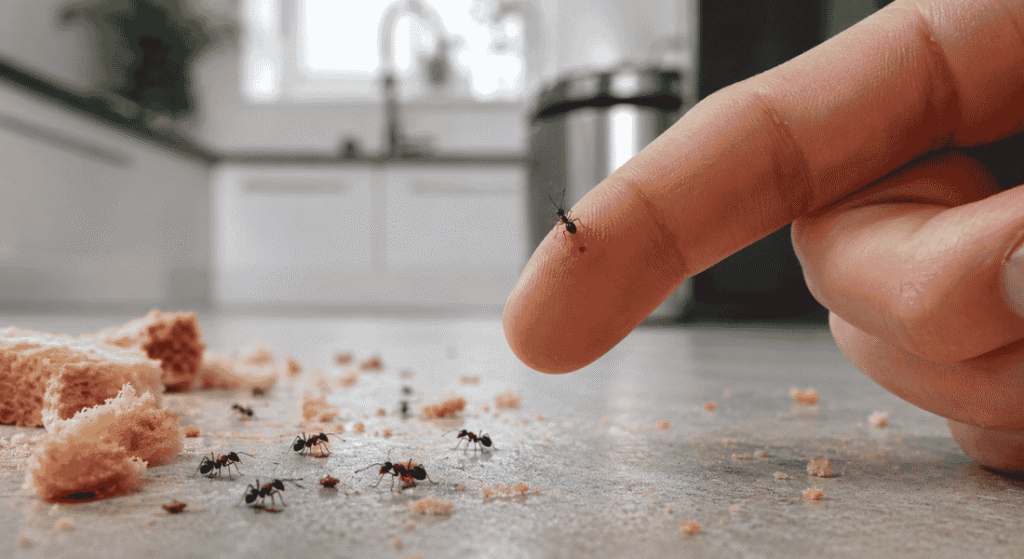
Carpenter ants are the largest species homeowners run into, ranging from 6 to 12 millimetres and usually black or a mix of black and red. They don’t eat wood, but they chew through it to build nesting galleries, favouring moisture-damaged wood around roof decks, window frames, and wall voids. Left alone, ongoing activity can weaken structural framing over time.
Pavement ants are small and dark brown, and they typically nest under slabs, driveway cracks, and basement foundations, conditions common in suburban wood-frame homes across Brampton and Mississauga. They’re more of a nuisance than a structural risk, but their trails can still contaminate food.
Pharaoh ants are tiny, pale yellow to light red, and nest indoors year-round, often inside heated wall voids or behind tile in high-rise condos and multi-unit buildings. Disturbing a pharaoh ant trail with a retail spray is one of the fastest ways to make the problem worse, since the colony can split, or “bud,” into several new nests instead of dying off.
Odorous house ants release a rotten-coconut smell when crushed and often nest near heat sources and damp wall cavities. Colonies can have multiple queens, so a single spot treatment rarely reaches the whole population.
| Ant Species | Size & Colour | Common Nesting Sites | Risk Level | Preferred Food |
|---|---|---|---|---|
| Carpenter Ant | 6–12 mm, black or black/red | Moist wood, wall voids, roof decks | High – structural damage | Sweets, pet food, other insects |
| Pavement Ant | 2.5–3 mm, dark brown | Slab foundations, driveway cracks, basements | Medium – nuisance/food contact | Grease, meats, cheese, sweets |
| Pharaoh Ant | 1.5–2 mm, yellow/light red | Heated wall voids, behind tile, pipe chases | High – buds easily, contamination risk | Proteins, fats, sugary liquids |
| Odorous House Ant | 2.4–3.2 mm, brown/black | Near heat sources, damp wall spaces | Medium – contamination | Sugars, fruit juices, honey |
What Are the Warning Signs of an Ant Infestation in the House?
The clearest sign is a trail that repeats in the same spot day after day, rather than a one-off sighting.
A few other clues can point to a nest before a full trail ever appears:
- Small piles of frass (fine wood shavings) near baseboards or window sills, a carpenter ant warning sign.
- A faint, dry rustling sound inside a wall at night.
- Winged ants (swarmers) appearing indoors, usually in spring, which can mean a colony is mature enough to expand.
- Ants showing up in more than one room at the same time, which often points to an indoor nest rather than a single outdoor colony wandering in.
If two or more of these show up at once, it’s worth treating as an active infestation rather than leaving alone.
What Causes an Ant Infestation in homes in GTA?
Ants move indoors when a home offers food, moisture, warmth, and an easy way in, usually all at the same time.
Moisture is the biggest draw for pavement and carpenter ants specifically. Leaking pipes, damp basements, and condensation around bathroom exhaust fans create the conditions they’re looking for. In older homes in Downtown Toronto, moisture often collects around aging plumbing and single-pane window frames. In newer builds across Vaughan and Markham, it’s more often condensation in a poorly ventilated basement.
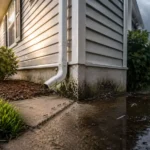
Food and entry points do the rest of the work. Crumbs under appliances, pet food left out overnight, and open sugar or cereal containers give ants a reason to stay once they’ve found a way in. Common entry points include cracks in the foundation, gaps around window and door frames, openings where pipes and wires pass through walls, and torn window screens.
The GTA’s mix of housing stock matters here too. High-rise and mid-rise condos in Etobicoke and North York tend to see pharaoh ants nesting inside plumbing voids and behind bathroom tile, where a shared wall gives a colony a stable, heated environment year-round. Suburban wood-frame homes in Brampton, Vaughan, and Mississauga are more prone to carpenter ants and pavement ants entering through slab cracks, weep holes, and gaps where the foundation meets the siding. A single treatment plan rarely works for both situations.
Seasonal weather plays a role as well. A warm spell after a cold snap, or a stretch of heavy spring rain, often lines up with a jump in indoor ant activity, a pattern that shows up across how weather affects pest activity more broadly, not just with ants.
How a Few Ants Turn Into a Full Infestation
- A scout ant enters the home and finds a food or water source.
- A scent trail forms as the scout leads worker ants back to the same spot.
- A satellite nest develops, often inside a wall void or a damp pocket near plumbing.
- The colony matures, winged swarmers appear, and the hygiene or structural risk increases.
This progression is why waiting a few weeks to act usually makes an infestation harder to clear.
DIY Ant Control or Professional Extermination?
DIY methods can work for a small, recent trail. Once a colony is established inside a wall or under a slab, most off-the-shelf products only treat the ants you can see, not the nest that keeps producing more.
Most retail ant sprays are contact killers. They kill the ants a person can see within minutes, but the chemical also repels the rest of the colony, which can scatter into two or three new nesting sites instead of dying off. That reaction is especially common with pharaoh ants, and it’s one of the most frequent reasons an ant infestation in house that seemed solved comes back within a month.
Baiting takes a slower approach. Worker ants carry a small amount of bait back to the colony, where it eventually reaches the queen. It takes longer to see results, often a week to ten days, but it targets the source instead of just the surface.
In Canada, the active ingredients used in registered ant baits, including spinosad and borate-based formulas, are reviewed and registered federally by Health Canada’s Pest Management Regulatory Agency before they can be sold or applied.
| Feature | Off-the-Shelf Sprays | Professional Colony-Level Treatment |
|---|---|---|
| Target | Kills visible worker ants on contact | Aims to reach the colony and queen at the source |
| Chemical action | Fast-acting contact killer, often repellent | Slow-acting, non-repellent bait carried back to the nest |
| Pharaoh ant risk | Higher risk of budding and colony splitting | Targeted baiting reduces the risk of budding |
| Long-term result | Often temporary, days to a couple of weeks | Can offer longer-term control when paired with sealing and follow-up |
| Licensing | Unregulated DIY application | Applied by exterminators licensed under Ontario’s pesticide rules |
Overusing repellent sprays, sealing an entry point before confirming the nest is empty, and skipping the follow-up inspection are among the most common pest control mistakes that let an ant colony rebuild.
How Does Professional Ant Extermination Work?
A professional ant control treatment typically follows four steps: inspection, species identification, colony-level treatment, and sealing to reduce re-entry.
- Property inspection. A technician checks trails, likely nesting sites, and entry points around foundations, window frames, and utility lines.
- Species identification. Carpenter ants, pavement ants, pharaoh ants, and odorous house ants each respond to a different bait and application method, so getting the species right shapes the whole plan.
- Colony-level treatment. Products registered with Ontario’s Ministry of the Environment, Conservation and Parks are applied at nests, trails, and entry points, targeting the colony rather than only the ants visible on the surface.
- Perimeter sealing. Gaps around foundations, utility lines, and window frames are sealed to reduce the chance of ants, or other pests, finding the same route back in.
This workflow applies across single-family homes in Brampton and Vaughan and condo units in Etobicoke and downtown Toronto alike.
Property managers dealing with recurring ant activity across multiple units often need a broader inspection than a single unit; our commercial pest control team handles that scale of work.
How Do You Prevent Ants From Returning?
Prevention comes down to four things: sanitation, moisture control, sealed entry points, and outdoor maintenance near the foundation.
- Wipe counters and sweep crumbs daily, especially around toasters, pet bowls, and trash bins.
- Store dry goods, pet food, and sweets in airtight containers.
- Fix leaking faucets, damp basement walls, and condensation around bathroom vents.
- Seal cracks around foundations, window frames, and utility penetrations with caulk.
- Trim shrubs and tree branches away from siding, and keep mulch a few centimetres off the foundation.
- Move firewood and stored lumber away from exterior walls.
A dry, sealed, consistently cleaned home gives ants far fewer reasons to move in, though older homes with settled foundations may need more frequent sealing checks than newer builds.
The Bottom Line
Most ant problems in GTA homes start the same way: a food or moisture source, an unsealed entry point, and a nearby colony that finds both. Cleaning up attractants and sealing gaps solves plenty of minor trails. When ants keep coming back after cleaning, show up in more than one room, or you spot frass near wood trim, that usually points to an established colony that DIY methods won’t fully reach.
Invaders Canada has treated ant infestations across Toronto, Mississauga, Brampton, Vaughan, and the rest of the GTA, using species-specific baiting and MOE-registered products. If ants keep returning despite your best efforts, book a same-day inspection and we’ll identify the species, find the nest, and put together a treatment plan for your home.
FAQs
Why do I suddenly have an ant infestation in my house?
A sudden ant infestation in house usually means ants found a new food or moisture source, or an outdoor colony moved in after rain, drought, or a temperature swing. A few scouts can lead a full trail back within days.
Can I get rid of an ant infestation myself?
Small, recent trails often respond to cleaning, sealing entry points, and baiting. Established colonies, especially pharaoh or carpenter ants nesting inside walls, usually need professional colony-level treatment to fully clear.
Are ants in the house dangerous?
Most GTA house ants are more of a nuisance than a health risk. Carpenter ants are the exception, since ongoing activity can point to moisture-damaged wood and, over time, structural concerns.
How long does professional ant treatment take to work?
Baiting typically shows a noticeable drop in activity within a week to ten days, since worker ants need time to carry bait back to the colony. Full elimination depends on colony size and species.
When should I call pest control for ants in the GTA?
Call a professional if trails return after cleaning, ants appear in several rooms, you hear rustling inside a wall, or you suspect carpenter ants near damp or damaged wood.