
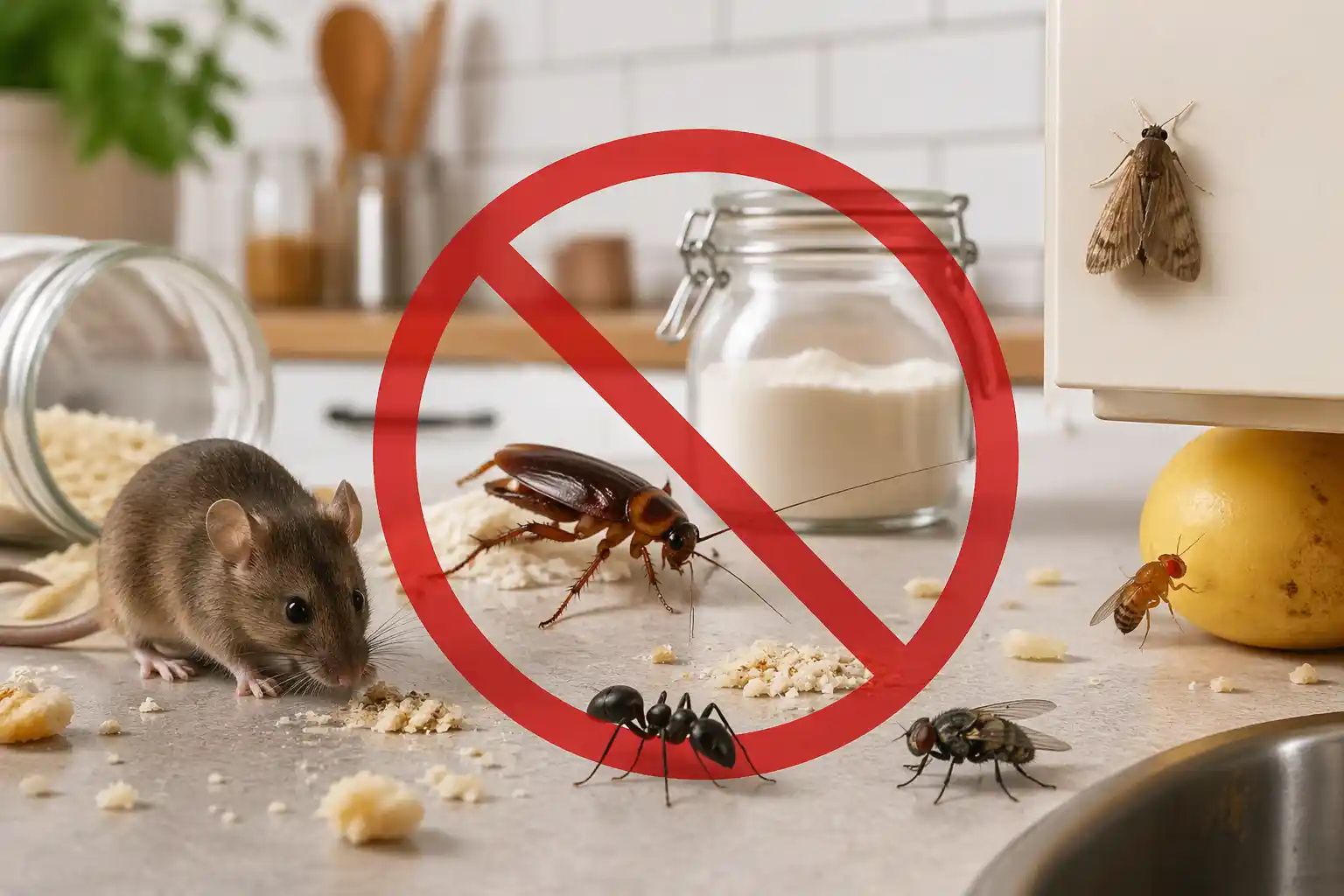
Kitchen pests are one of the most common household problems in Canada, and one of the most overlooked until the damage is done. Cockroaches, mice, ants, pantry moths, drain flies, and fruit flies all find their way into Canadian kitchens through food residue, moisture, and small entry gaps.
Kitchen pests are more than a nuisance. They contaminate food, damage packaging, spread bacteria, and in some cases, trigger serious health risks. In Canada, households across the GTA deal with these pests year-round and many infestations go undetected for weeks.
How to Know You Have Kitchen Pests
Most kitchen pest infestations start small. By the time you actually see a pest, there are usually more hiding nearby. Knowing what to look for means you catch the problem before it grows.
Watch for these warning signs:
- Droppings – small dark pellets near food storage, under sinks, or in corners
- Gnaw marks – chewed packaging, cardboard, or wood edges
- Grease trails or smear marks – dark streaks along walls or pipes, often left by cockroaches
- Egg cases or shed skins – cockroach casings, insect exuviae, or moth webbing in dry goods
- Unusual odours – a musty or oily smell with no obvious source often indicates cockroaches or rodents
- Damaged food packaging – holes in cereal boxes, flour bags, or pasta packets
| 💡 Tip: Inspect the inside of cabinet corners, under the fridge, and behind the stove. These are the first places pests settle and the last places most people check. |
Most Common Kitchen Pests in Canadian Homes
Six types of pests account for the vast majority of kitchen infestations in Canadian homes. Each one behaves differently, hides in different places, and requires a different response. Here’s what you need to know about each one.
| Kitchen Pest | Common Signs | Where They Hide | Best Removal Method |
|---|---|---|---|
| Cockroaches | Droppings, grease trails, musty smell, egg cases | Cabinet hinges, behind fridge, under stove, wall cracks, appliance motors | Gel baits, boric acid, professional cockroach treatment |
| Ants | Visible trails, food contamination, groups near sweet or greasy food | Window gaps, door sweeps, plumbing entry points, foundation cracks | Ant bait stations, seal entry points |
| House Mice & Rats | Droppings, gnaw marks, grease smears, scratching sounds | Behind appliances, inside walls, cabinets, storage areas | Snap traps, seal gaps with steel wool and caulk |
| Pantry Moths | Webbing in food, larvae in grains, flying moths | Pantry shelves, dry food packaging, cereal boxes, pet food bags | Discard infested food, airtight containers, pheromone traps |
| Drain Flies | Small flies near sink, drain activity | Kitchen drains, P-traps, organic buildup inside pipes | Drain brushing, boiling water, enzyme drain cleaner |
| Fruit Flies | Small flies around fruit, bins, drains | Overripe fruit, recycling bins, moist drains | Remove produce, vinegar trap, clean drains regularly |
1. Cockroaches
The German cockroach is the most common species found in Canadian kitchens. It’s small about 13 to 16 mm light brown, and fast. It prefers warm, humid areas close to food and water, which makes the kitchen its ideal environment.
Cockroaches in your kitchen are a direct food contamination risk. They carry bacteria including Salmonella and E. coli on their bodies and in their droppings (called frass). They can trigger allergies and asthma, particularly in children.
Where they hide: inside cabinet hinges, behind the refrigerator, under the stove, inside wall cracks near pipes, and inside appliance motor housings.
How to remove them: Gel baits placed in harborage areas are highly effective for small infestations. Boric acid powder applied to cracks and crevices works as a secondary control. For an active infestation, professional cockroach treatment is the most reliable solution.
2. Ants
Ants in your kitchen follow a simple pattern: one ant finds a food source and leaves a scent trail for the rest of the colony. What starts as a few ants near a spilled drink can turn into hundreds within hours.
The two most common species in GTA kitchens are the odorous house ant (which smells like rotten coconut when crushed) and the pavement ant. Both are drawn to sugary and greasy food residue.
Where they come from: gaps around window frames, door sweeps, plumbing entry points, and cracks in the foundation. Colonies nest outdoors but forage indoors through the smallest openings.
How to remove them: Don’t spray the trailing ants that disperses the colony without eliminating it. Instead, use ant bait stations near the trail so worker ants carry the bait back to the nest. Seal all entry points around pipes and windows.
3. House Mice and Rats
Rodents are among the most damaging kitchen pests. A house mouse can squeeze through a gap as small as 6 mm. Once inside, it gnaws continuously through food packaging, wood, insulation, and electrical wiring.
Rodent droppings are a serious hygiene concern. They contaminate surfaces and food with bacteria and, in rare cases, with Hantavirus a potentially severe respiratory illness spread through dried rodent waste.
Signs of rodent activity: dark droppings (resembling rice grains for mice, larger for rats), gnaw marks on packaging or cabinet edges, and greasy smear marks along walls where they travel.
How to remove them: Snap traps remain the most effective and fastest method for mice. Place them along walls and behind appliances rodents run along edges, not across open spaces. Seal every gap larger than 6 mm with steel wool and caulk. For rats or an active infestation in walls, contact a professional.
4. Pantry Moths
The Indian meal moth is the most common pantry pest in Canada. It’s often brought in through infested dry goods from the grocery store cereal, flour, rice, dried fruit, nuts, or pet food.
You’ll notice fine webbing inside food containers, clumped grains, or small worm-like larvae inside packaging. Adult moths are small, with a distinctive two-toned wing pattern.
How to remove them: Remove and inspect every dry food item in your pantry. Discard anything showing webbing or larvae even sealed packaging. Wipe down shelves with white vinegar. Store all dry goods in airtight hard containers. Pheromone traps can catch adult males and help monitor the infestation.
5. Drain Flies
Drain flies are small, moth-like insects that breed in the organic buildup inside kitchen drains and P-traps. They don’t bite and don’t transmit disease, but a persistent presence means there is decaying organic matter in your plumbing.
How to remove them: Scrub the inside of the drain using a flexible brush to break up the biofilm. Follow with boiling water or an enzyme-based drain cleaner. Don’t rely on bleach it doesn’t reach the buildup on drain walls. Repeat weekly until the population drops.
6. Fruit Flies
Fruit flies are attracted to overripe fruit, fermenting liquids, moist drains, and even the residue inside recycling bins. They reproduce rapidly a female can lay up to 500 eggs in her lifetime, with larvae hatching in under 24 hours under warm conditions.
How to remove them: Remove overripe produce and empty recycling bins daily. Place a DIY trap a small jar with apple cider vinegar and a drop of dish soap near the affected area. Clean drains weekly. Keep counters dry and wipe down the inside of bins.
What Attracts Pests to Your Kitchen
Pests don’t enter your kitchen randomly. They’re looking for three things: food, water, and shelter. Remove those conditions and most kitchen pest problems become far less likely.
The most common attractants are:
- Unsealed food – open cereal boxes, loosely covered fruit bowls, and bulk bin items left in original packaging
- Food residue – crumbs under the stove, grease buildup around burners, and sticky residue on cabinet shelves
- Standing moisture – dripping pipes under the sink, condensation around appliances, or a damp mop left in a corner
- Clutter and hiding spots – stacked cardboard boxes, paper bags, and unused appliances provide harborage for cockroaches and rodents
- Entry points – gaps around plumbing pipes, worn door sweeps, cracks in the baseboard, and unsealed spaces behind appliances
| 💡 Tip: A pest-resistant kitchen is not about being spotless it’s about eliminating the conditions pests rely on. Even a perfectly tidy kitchen can have moisture issues or entry gaps that invite infestations. |
How to Get Rid of Kitchen Pests: Step-by-Step
Use this process for any kitchen pest. Start with the basics and escalate as needed.
Step 1: Identify the pest
Don’t start treatment until you know what you’re dealing with. The right approach for cockroaches is completely different from the approach for pantry moths. Look for droppings, damage patterns, and the pest itself at night with a flashlight if necessary.
Step 2: Remove the food source
Transfer all dry goods to sealed food containers glass or hard plastic with airtight lids. Discard infested items. Empty bins and clean residue from shelves, appliance surfaces, and inside cabinet corners.
Step 3: Eliminate harborage
Remove clutter from under the sink and behind appliances. Cardboard boxes, paper, and dark enclosed spaces are prime nesting spots. The less clutter, the easier it is to monitor activity and apply treatment.
Step 4: Seal entry points
Use steel wool and caulk to seal gaps around plumbing pipes. Check door sweeps and window frames. Even a 6 mm gap is large enough for a mouse or a cockroach to enter.
Step 5: Apply targeted treatment
Match the treatment to the pest: gel bait and boric acid for cockroaches, bait stations for ants, snap traps for mice, enzyme cleaner for drain flies, pheromone traps for pantry moths. Avoid broad-spray insecticides in food areas they disperse pests without eliminating the source.
Step 6: Monitor and repeat
Most DIY treatments require at least 2–3 applications over 2 weeks to break the breeding cycle. Check traps and bait stations every 2–3 days. If activity continues after two weeks, move to professional pest control.
When to Call a Professional
DIY methods work well for early-stage, isolated pest activity. But certain situations need professional intervention:
- You’ve tried DIY treatment for 2+ weeks with no reduction in activity
- You’re seeing cockroaches during the day a sign of a large, established infestation
- You’ve found rodent activity inside walls, not just along surfaces
- Multiple pest types are present at the same time
- There is a child, elderly person, or someone with respiratory conditions in the household
A licensed pest control technician will carry out a full inspection, identify all harborage areas, apply targeted professional-grade treatments, and advise on long-term prevention. In most cases, a professional treatment resolves the issue in one to two visits.
Invaders Canada provides residential and commercial pest control across the Greater Toronto Area get a free quote here.
Keep Your Kitchen Pest-Free
Kitchen pests range from minor annoyances to serious health hazards. The key is acting early before one cockroach becomes a hundred, or a few ants become a colony.
Start with the basics: seal your food, fix moisture issues, block entry points, and keep the space under appliances clear. For active infestations, use the right treatment for each pest type and monitor progress. And when the problem is beyond DIY control, call a professional before it spreads.
Invaders Canada handles cockroach control, ant control, rodent removal, and general pest control across the GTA. Available 24/7, with same-day response for urgent cases.
Frequently Asked Questions
What are the most common kitchen pests in Canada?
The most common kitchen pests in Canadian homes are cockroaches (particularly the German cockroach), house mice, ants, pantry moths, drain flies, and fruit flies. Each is attracted by food residue, moisture, or accessible entry points.
How do I get rid of kitchen pests fast?
Identify the pest first, then remove its food source and apply a targeted treatment gel bait for cockroaches, ant bait stations for ants, snap traps for mice. Generic spray products are less effective and can disperse pests without eliminating them.
Are kitchen pests dangerous?
Yes. Cockroaches and rodents spread bacteria including Salmonella and E. coli through droppings and body contact with food surfaces. Rodents can also transmit Hantavirus. Pantry moths contaminate dry goods. Even fruit flies carry bacteria picked up from rotting organic matter.
How do I stop kitchen pests from coming back?
Store all dry goods in airtight containers, fix any dripping pipes, seal gaps around plumbing and door frames, and clean under appliances regularly. Pests return when conditions are favorable, so prevention helps remove these conditions and the problem doesn’t recur.

Rodent Control Services in Toronto: Stop Mice & Rats