Bed bugs hide in the mattress seams, bed frame joints, and furniture closest to where you sleep, only moving further into the room once an infestation grows. If you’ve noticed bites, small dark spots on your sheets, or a musty smell in the bedroom, the fastest way to confirm what you’re dealing with is a slow, methodical check of these spots, starting at the bed and working outward.
This guide walks through exactly where to look, room by room, and how to tell a bed bug problem apart from other household pests that leave similar marks.
Bed Bugs Stay Close to Where You Sleep or Sit
Bed bugs are flat, wingless, and about the size of an apple seed, which lets them wedge into gaps as thin as a credit card. They don’t fly or jump. Instead, they crawl short distances from a hiding spot to feed, usually at night, then retreat to somewhere dark and undisturbed. That means the highest concentration of activity is almost always within a few feet of a bed, sofa, or chair where someone spends several hours a day. In a light infestation, that’s often the only place you’ll find them. It’s only once numbers grow that they start spreading to nearby furniture, walls, and other rooms.
Knowing that pattern is what makes an inspection efficient. Instead of searching an entire bedroom at random, start at the mattress and move outward in the order below.
Start With the Mattress: Seams, Labels, and Piping
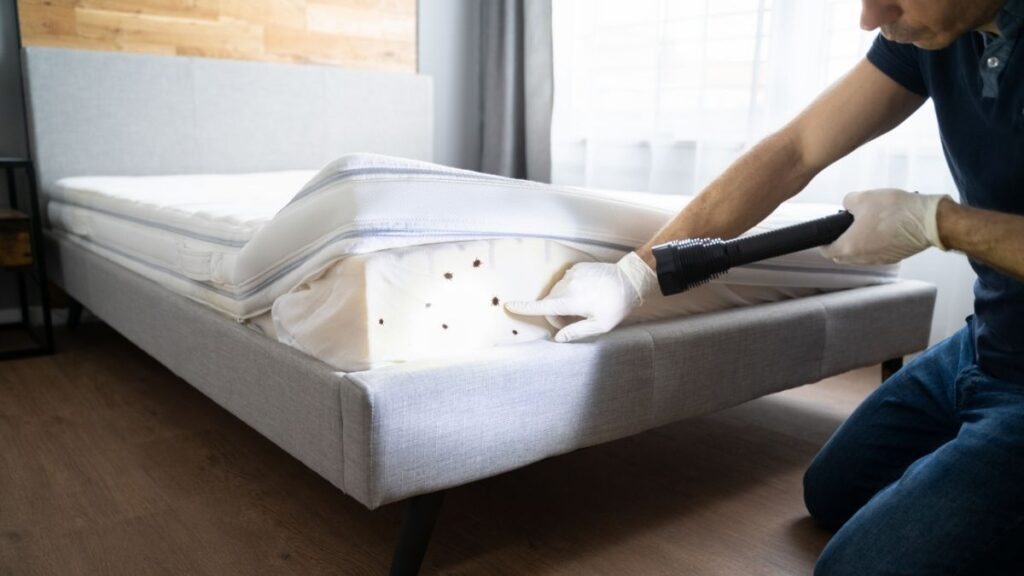
The mattress is the single most common hiding spot, and it’s where most homeowners find their first evidence. Pull back the fitted sheet and check:
- Seams along the edges of the mattress, where the fabric is stitched together
- The manufacturer’s label, which folds over and creates a dark pocket
- Piping that runs around the mattress perimeter
- Tufts and buttons on the mattress surface, if present
Look for small reddish-brown insects, pale yellowish shed skins, tiny white eggs, or clusters of dark spots that look like they came from a felt-tip pen. Those dark spots are digested blood left behind after feeding, and they’re often the first sign people notice, even before they see a live bug. Flip the mattress over and check the underside and box spring using the same approach, since bed bugs frequently colonize the box spring before the mattress itself.
Check the Bed Frame Next: Joints, Screw Holes, and the Headboard
If the mattress comes back clean, or even if it doesn’t, the bed frame deserves the same attention. Bed bugs favour tight, dark gaps, and a wooden or metal frame offers plenty of them:
- Joints where frame pieces connect
- Screw holes, which are wide enough for bed bugs to fully disappear into
- The headboard, particularly if it’s upholstered or has a hollow back
- Corner brackets and the underside of slats
A flashlight and a stiff plastic card (an old gift card works fine) are useful here. Slide the card along seams and joints to pop open any tight gaps so you can see inside, rather than just glancing at the surface.
Don’t Stop at the Bed: Baseboards, Outlets, and Nightstands
Once an infestation has been established for a while, bed bugs start moving beyond the bed frame into the surrounding bedroom. Common next stops include:
- Baseboards, especially where they meet the wall near the bed
- Electrical outlets and switch plates, which have gaps around the wiring
- Nightstands and dressers, particularly the drawer joints and the underside of the furniture
- Furniture joints on any chair or bench in the room
This is also where carpet edges, loose wallpaper, and picture frames on nearby walls come into play, though these tend to show activity later in an infestation rather than at the start.
Bed Bugs Move Beyond the Bedroom: Couches, Luggage, Chairs, and Curtains
Bed bugs aren’t limited to bedrooms. Anywhere someone sits for an extended stretch each day can become a secondary hiding spot, which matters both for prevention and for figuring out how far a problem has spread. Check:
- Couches and upholstered chairs, along the seams and underneath the cushions
- Luggage, particularly after travel or hosting overnight guests
- Curtains, along the folds and where they meet the rod
If you’ve recently returned from travel or bought secondhand furniture, this is where an infestation often gets its start. A professional bed bug inspection is worth booking if you’re seeing signs in more than one room, since that usually points to a more established problem than a single mattress check will fully reveal.
How to Tell Bed Bug Signs From Other Insects
Dark spotting, small bites, or shed skins don’t automatically mean bed bugs. Carpet beetles, fleas, and even certain mites leave marks that look similar to an untrained eye. Here’s a general comparison of what each tends to leave behind.
| Sign | Bed Bugs | Carpet Beetles / Fleas |
|---|---|---|
| Live insects | Flat, reddish-brown, found in seams and joints near the bed | Carpet beetles are oval and fuzzy; fleas jump and are usually found on pets or carpets, not bedding |
| Shed skins | Pale, bed bug-shaped, clustered near hiding spots | Carpet beetle larvae shed bristly casings, often near fabric or stored textiles |
| Dark spotting | Small, ink-like spots on mattress seams and nearby fabric | Flea dirt looks similar but turns reddish when wet, and appears where pets rest |
| Bites | Small, itchy welts, sometimes in a line or cluster | Flea bites cluster around ankles; carpet beetles rarely bite people at all |
Bites Alone Aren’t Reliable Identification
It’s tempting to treat waking up with new bites as confirmation, but bites alone aren’t a reliable way to identify bed bugs. Reactions vary a lot between people. Some people develop itchy, raised welts within hours, others show a delayed reaction over a day or two, and some people don’t react to bed bug bites at all, even after repeated exposure. Bites also resemble those from mosquitoes, fleas, or mild skin irritation, so it’s easy to misread them in either direction.
Physical evidence, whether that’s a live bug, shed skins, eggs, or dark spotting in the hiding spots above, is a far more dependable signal than bites on their own. If you suspect bed bugs but can’t find physical evidence after a thorough check, it may be too early in the infestation for visible signs, which is one reason professional inspections often use additional tools like magnification and interceptor traps to catch what a visual check alone might miss.
Bottom Line: Where Do Bed Bugs Hide Exactly?
Bed bugs hide close to where people sleep or sit, starting with the mattress and bed frame before spreading to nearby furniture and, eventually, other rooms. A methodical check of mattress seams, bed frame joints, baseboards, and any upholstered furniture nearby will catch most infestations early, when they’re easier to manage. If you find physical evidence, or you’re seeing signs but can’t find the source, Invaders Canada offers pest control services across Toronto and the wider GTA, including a general pest inspection if you’re not yet sure what you’re dealing with.
For more on stopping an infestation before it starts, our bed bug prevention tips cover the habits that make the biggest difference after travel or secondhand furniture purchases.
FAQs
How long can bed bugs hide without feeding?
Bed bugs can survive for several months without a blood meal, particularly in cooler conditions, which is why an empty apartment or vacant rental unit doesn’t guarantee they’re gone. This is also why a single treatment isn’t always enough, and follow-up inspections matter.
Do bed bugs hide in clothes and closets?
Bed bugs can hide in clothing, especially items left in a pile on or near the bed, but closets and folded, stored clothing are far less common hiding spots than the mattress and bed frame. Washing and drying on high heat is generally effective if you suspect clothing has been exposed.
Can bed bugs live in walls in a Toronto apartment?
Bed bugs don’t typically nest inside wall cavities the way some other pests do, but in multi-unit buildings they can travel through wall voids, electrical conduits, and shared plumbing to move between units. This is one reason apartment buildings in Toronto often need coordinated inspections across adjoining units rather than treating a single apartment in isolation.
How much does a professional bed bug inspection cost in the GTA?
Pricing varies by company and property size; we at Invaders Canada offer a free initial inspection to assess the extent of the problem before quoting a treatment cost. It’s worth confirming this before booking, since not every company includes it. You can book a free inspection directly if you’d like a technician to take a look.
What should I do before a bed bug inspection?
Avoid moving furniture, washing bedding, or applying any store-bought sprays before an inspection, since disturbing potential hiding spots can scatter bed bugs into new areas and make it harder for a technician to locate the source. Leave the affected room as close to normal as possible until the inspection is done.