Ontario is home to more than 100 species of ants, but only a handful regularly show up inside homes. According to Health Canada, the species most likely to invade homes are the carpenter ant, pharaoh ant, odorous house ant, thief ant, and little black ant, while pavement ants tend to become a nuisance in lawns, gardens, and driveways before working their way indoors.
For homeowners, the real question isn’t just “what ant is this?” It’s whether the ant marching across the kitchen counter is a minor nuisance or an early sign of structural damage.
This guide breaks down the three ants homeowners in Ontario deal with most, plus a few others worth knowing, so you can identify what’s in your house before deciding what to do about it.
How Many Types of Ants Are There in Ontario?
Ontario has dozens of native and introduced ant species, but pest control professionals generally group the problem species into six categories: carpenter ants, pavement ants, pharaoh ants, odorous house ants, thief ants, and Argentine ants. Of these, carpenter ants, pavement ants, and pharaoh ants cause the majority of calls to Ontario exterminators, which is why they get the closest look below.
Which Ant Did You Find?
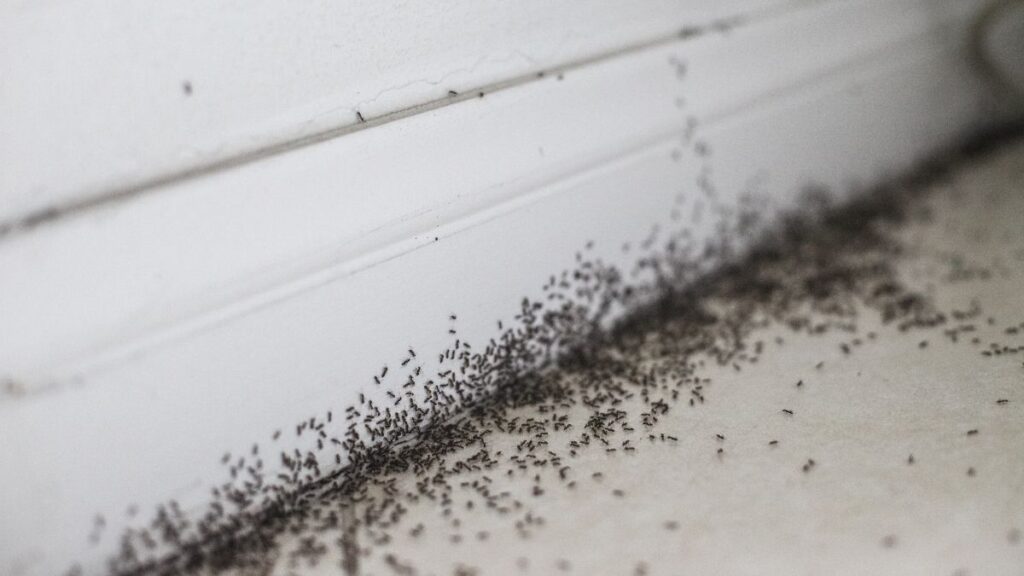
Before diving into full profiles, a fast visual check can narrow things down:
- Large, dark ant found near damp or rotting wood, a deck, or a window frame → likely a carpenter ant.
- Small, brownish-black ant trailing along a driveway, sidewalk crack, or foundation → likely a pavement ant.
- Tiny, pale to reddish ant clustered near a kitchen, bathroom, or heating duct, especially in an apartment or condo → likely a pharaoh ant.
Colour and location are useful starting clues, not a diagnosis. Several small black ants in house settings can look nearly identical to the untrained eye, and misidentifying a carpenter ant as a “regular ant” is one of the most common reasons DIY treatments fail. When in doubt, a proper inspection beats a guess.
The 3 Most Common House-Invading Ants in Ontario
1. Carpenter Ants (Camponotus spp.)
Carpenter ants in Ontario are the species homeowners worry about most, and for good reason.
- Appearance: Solid black, or black with a reddish-brown thorax, with a smooth, evenly rounded profile.
- Size: Workers range from 6 mm to 13 mm, with queens reaching up to 25 mm.
- Where found: Around damp or decaying wood, including window frames, roof eaves, decks, and areas with old water damage.
- What attracts it: Moisture more than food. Leaky pipes, clogged gutters, and damp basements are common triggers.
- Nest location: Inside wood voids, tree stumps, and structural framing. A single infestation often has satellite nests connected to one main colony.
- Warning signs: Piles of sawdust-like frass, faint rustling inside walls at night, and large winged ants indoors in spring.
Carpenter ants don’t eat wood the way termites do. They chew through it to build smooth, sanded-looking galleries, which is why a hollow-sounding beam or a small pile of shavings under a windowsill is worth investigating quickly, not later.
2. Pavement Ants (Tetramorium immigrans)
- Appearance: Brownish-black body with pale legs and fine parallel ridges on the head and thorax.
- Size: 2.5 mm to 4 mm.
- Where found: Cracks in driveways, sidewalks, patio stones, and foundation walls, especially in dense GTA neighbourhoods.
- What attracts it: Sugary and greasy food, along with dead insects.
- Nest location: Under concrete slabs, pavement, and building foundations, marked by small mounds of fine soil near exit holes.
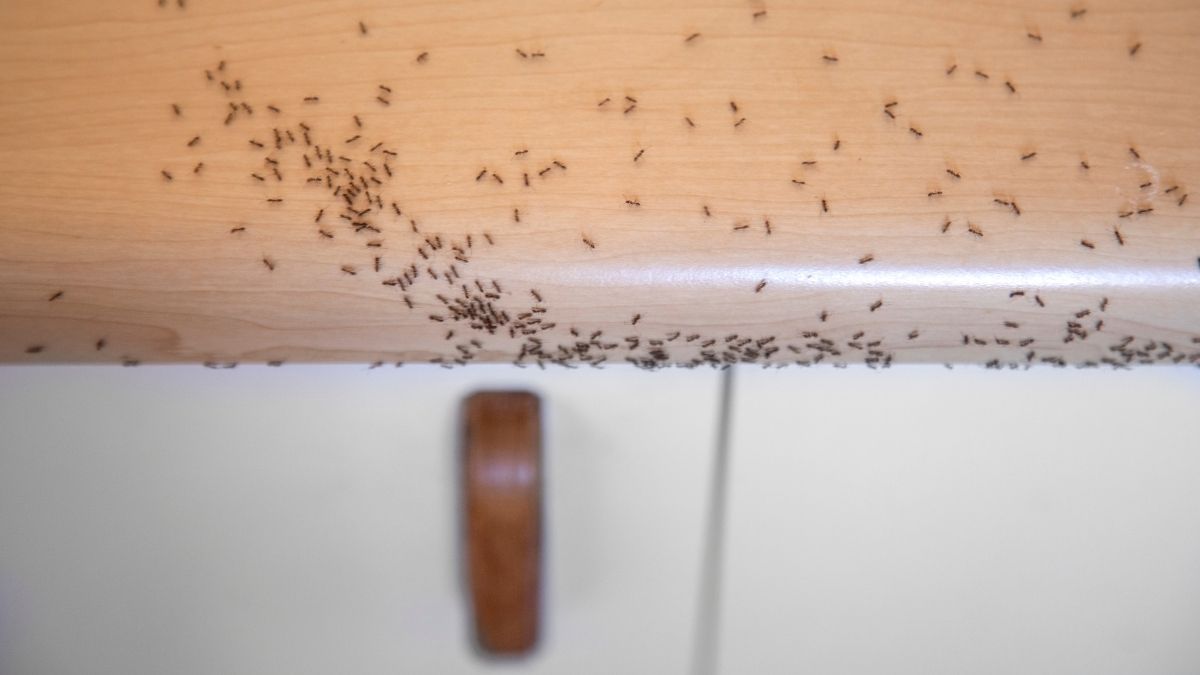
- Warning signs: Visible ant trails along counters or baseboards, and small dirt piles pushed up through pavement cracks, often alongside territorial “ant wars” between rival colonies each spring.
Pavement ants in Ontario are behind some of the most common ant identification calls Toronto homeowners make, largely because the city’s dense concrete and pavement give them endless nesting real estate.
3. Pharaoh Ants (Monomorium pharaonis)
- Appearance: Pale yellow to light red or amber, with a slightly darker abdomen.
- Size: Roughly 2 mm, among the smallest ants found indoors.
- Where found: Warm, humid areas such as kitchens, bathrooms, and heating systems, and frequently in multi-unit buildings.
- What attracts it: Fatty and sugary foods, including grease, syrup, and even toothpaste.
- Nest location: Deep inside wall voids, behind baseboards, and under flooring, rarely visible from outside.
- Warning signs: Faint trails of tiny ants near sinks or outlets, and activity spreading to multiple rooms despite spot cleaning.
Pharaoh ants in Ontario are notorious for budding. Disturb the colony with an over-the-counter spray and it can split into several smaller colonies instead of dying off, which is why professionals lean on targeted baiting instead.
Other Ants You Might See in Ontario
A few other species show up less often but still generate questions:
- Odorous house ants release a rotten-coconut smell when crushed and often nest under stones, mulch, or inside wall voids.
- Thief ants are pale yellow and among the smallest ants in Ontario at 1.5 mm to 2.2 mm, nesting close to other ant colonies to steal food and brood.
- Argentine ants are light to dark brown, form large multi-queen colonies, and are more of an outdoor nuisance that occasionally forages indoors.
European Fire Ants: Ontario’s Newest Ant Problem
One species missing from most identification guides is the European fire ant (Myrmica rubra), and it deserves attention. First recorded in Canada near Meaford, Ontario, in the 1970s, this small reddish-brown ant has since spread along Great Lakes shorelines and into GTA backyards, according to the Invasive Species Centre.
Unlike the nuisance ants above, European fire ants can both bite and sting, and colonies defend their territory aggressively when disturbed. Queens can live up to seven years and expand a colony through “budding,” a process that lets infestations spread through a neighbourhood over several seasons. If a patch of lawn or garden has quietly become a no-go zone, this species is worth ruling out.
Ontario Ant Identification Chart
| Species | Size | Colour | Nest Location | Key Warning Sign |
|---|---|---|---|---|
| Carpenter Ant | 6-25 mm | Black or black/reddish-brown | Damp or decaying wood | Sawdust-like frass |
| Pavement Ant | 2.5-4 mm | Brownish-black, pale legs | Under pavement, slabs | Trails on counters, soil at cracks |
| Pharaoh Ant | ~2 mm | Pale yellow to light red | Wall voids, behind baseboards | Trails spreading to multiple rooms |
| Odorous House Ant | 2.4-3.3 mm | Dark brown to black | Mulch, wall voids | Rotten-coconut smell when crushed |
| Thief Ant | 1.5-2.2 mm | Pale yellow to brown | Near other ant nests | Extremely tiny size |
| European Fire Ant | 4-5 mm | Reddish-brown | Soil, under rocks and logs | Painful sting when disturbed |
What’s the Difference b/w Carpenter Ants vs. Regular Ants?
The fastest way to tell carpenter ants from nuisance species like pavement or odorous house ants comes down to three things. Size is the first clue: carpenter ant workers come in noticeably different sizes within the same colony, while pavement and pharaoh ant workers look uniform. Behaviour is the second: carpenter ants are mostly active at night, while nuisance ants forage in visible daytime trails. Evidence is the third and most reliable: carpenter ants leave behind frass, while pavement and pharaoh ants don’t chew wood at all. If sawdust-like debris is turning up anywhere in the house, it’s worth treating as a carpenter ant until proven otherwise.
When Should You Call a Professional Ant Exterminator?
DIY sprays can knock down the ants you can see while leaving the colony, and the queen, untouched. That’s especially true for pharaoh ants, which can split into new colonies when disturbed. As a general guideline, call a licensed exterminator when frass or hollow-sounding wood shows up (possible carpenter ants), when trails keep returning after cleaning, when winged ants appear indoors outside of a brief spring swarm, or when ants turn up in more than one room.
Invaders Canada’s ant control service inspects the property, identifies the species, and treats the colony at the source rather than just the visible trail. This matters most during peak swarming season, when carpenter ant and pavement ant activity spikes across the GTA; our guide to seasonal pest trends covers what to expect as the weather warms each year. Homeowners in Toronto and Vaughan can book a same-day inspection if ant activity has been building for more than a few days.
The Bottom Line
Most ants marching across an Ontario kitchen counter are a nuisance, not an emergency. The exception is carpenter ants, where frass, hollow wood, or winged ants indoors point to a colony that’s already established and unlikely to leave on its own. When a look and a guess aren’t enough to tell the two apart, a licensed inspection is the fastest way to know which kind of ant problem is actually in the house.
FAQs
What is the biggest ant in Ontario?
Carpenter ant queens are the largest, reaching up to 25 mm, roughly the size of a sunflower seed.
Do carpenter ants bite?
Yes, though it’s uncommon. Their bite can break skin and may come with a spray of formic acid, causing a brief burning sensation. Most Ontario ant species rarely bite people.
What time of year do ants swarm in Ontario?
Most swarming activity happens in spring and early summer, when mature colonies send out winged reproductives to start new nests. Carpenter ants often swarm indoors first if a colony is already established inside the home.
How do I get rid of small ants in my kitchen?
Start by sealing food, cleaning up crumbs and grease, and fixing any nearby moisture sources. Gel baits placed along the trail work better than surface sprays, since they let workers carry the bait back to the colony. If the ants keep returning within a week or two, the nest is likely somewhere sprays and store-bought baits can’t reach.
Are ants dangerous in Ontario?
Most common ants, including pavement and odorous house ants, are a nuisance rather than a health risk. Carpenter ants pose a structural risk to wood over time, pharaoh ants have been linked to disease transmission in sensitive settings like hospitals, and European fire ants deliver a painful sting.