

Mice in garage usually mean they have found warmth, food and a quiet place to nest. The most reliable way to clear them is a three-part approach: remove what attracts them, trap the ones already inside, and seal the gaps they used to get in. Skipping any one of the three is a common reason the problem comes back.
This post is for homeowners in the GTA who have spotted droppings, chewed boxes or scratching in an attached or detached garage and want a clear plan. It covers what to look for, how to clean up safely, what you can do yourself, and when it makes sense to bring in a professional.
Mice move into garages for warmth, food and cover
A garage ticks almost every box a mouse is looking for. It is sheltered, often warmed by the house or a parked car, and full of cardboard, bagged seed, pet food, recycling and corners nobody checks. When temperatures in the GTA drop in the fall, mice that spent the summer in yards, ravines and fields start looking for somewhere dry and warm. Our guide on why mice infest properties in the GTA in winter explains that seasonal pattern in more detail.
How mice get into a garage
They do not need much room. An opening about the width of a pencil, roughly a quarter of an inch, can be enough for an adult mouse. The usual routes are worn rubber at the bottom of the garage door, gaps around pipes and wires, cracks in the foundation, and the door between the garage and the house. If the garage is attached, a mouse that settles in can often reach wall voids and the rest of the home.
For a wider look at mouse problems across the region, see our page on mice infestations in the GTA.
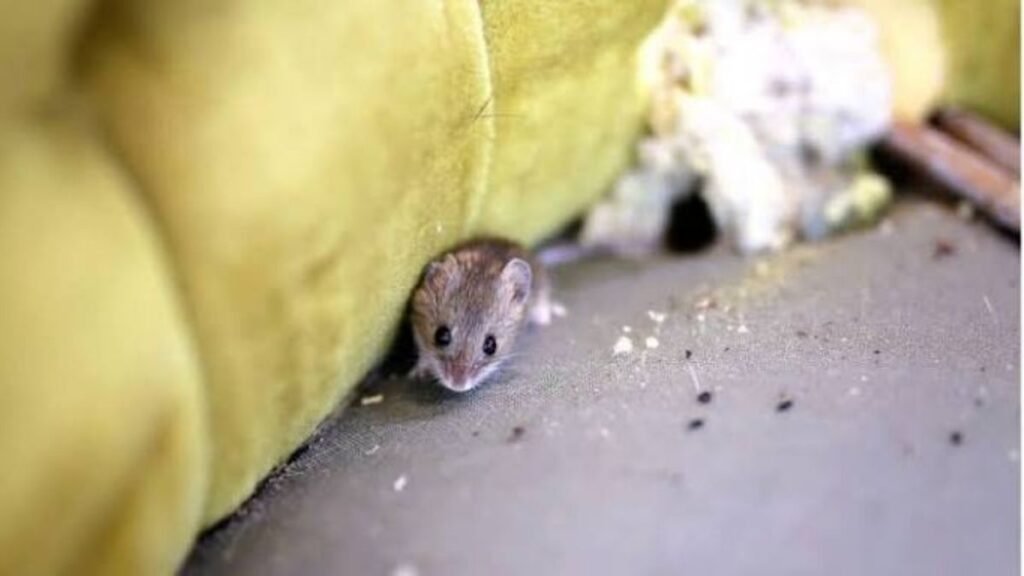
Clearest signs of mice in your garage: Droppings, gnaw marks, nests
One sighting does not always mean an infestation, but repeated signs usually do. Mice are mostly active at night, so you may see evidence well before you see a mouse. A flashlight held low and aimed along the base of the walls helps. Look for:
- Droppings: small, dark, rod-shaped pellets near food, shelves and wall edges.
- Gnaw marks: chewed cardboard, plastic bins, wood, insulation or wiring.
- Nests: shredded paper, fabric or insulation packed into a corner, a box or a pile of stored items.
- Noise: scratching or scurrying at night, especially in walls or ceilings near the garage.
- Odour: a musky or ammonia-like smell around nesting areas.
- Pet behaviour: a cat or dog that keeps sniffing or pawing at one spot.
Cleaning up droppings safely matters as much as removing the mice
The main concern with droppings, urine and nesting material is dust. Sweeping or vacuuming dry droppings can put particles into the air where you can breathe them in. In Canada, hantavirus is carried by wild rodents such as deer mice, and it is not known to be carried by household mice or common rats. That makes the typical house mouse in a garage a lower concern for that particular virus, but it is not a reason to skip precautions. Droppings can carry other germs, and it is hard to tell which species left them.
The Government of Canada’s guidance on preventing hantavirus infection describes a simple cleanup method that suits any rodent mess:
- Open the garage door and let the space air out before you start.
- Wear rubber or plastic gloves, and a HEPA-filtered respirator if you are working in a confined space.
- Do not sweep or vacuum droppings.
- Spray droppings with a household disinfectant, or a mix of 1 part bleach to 9 parts water, and let it soak for about 10 minutes.
- Wipe up with paper towels or a wet mop, bag everything, then wash your gloves and hands thoroughly.
Removing food and nesting spots makes every other step work better
Traps and sealing only go so far if the garage still offers a free meal and a cozy bed. Mice reproduce throughout the year, so a small food supply can support a growing population. Work through these changes first:
- Move pet food, birdseed and grass seed into metal or heavy plastic bins with tight lids. Paper and thin plastic bags are easy to chew through.
- Use garbage, recycling and compost bins with tight-fitting lids, and rinse food containers before they go in.
- Swap cardboard boxes for lidded plastic totes, and lift them off the floor where you can.
- Clear out old rags, newspapers, loose insulation and bags of mulch or potting soil that make easy nesting material.
- Stack firewood and yard debris away from the garage walls.
Decluttering has a second benefit. A tidier garage makes fresh droppings and gnaw marks easier to spot, so you can tell whether your efforts are working.
Snap traps along walls catch mice more reliably than traps in the open
Mice tend to follow walls and edges rather than cross open floor. Place snap traps at a right angle to the wall with the trigger end close to the baseboard, in spots where you have seen droppings or gnaw marks. A small dab of peanut butter is usually enough bait. Set several traps instead of one, since there may be more than one mouse and the nest is often close by.
Check traps daily, wear gloves when handling used traps or dead mice, and disinfect the area afterward using the steps above. Keep traps out of reach of children and pets, or use tamper-resistant trap stations. Continue until traps stay empty for several days in a row.
For more on what home methods can and cannot do, see our overview of DIY pest control.
Sealing entry points keeps new mice from replacing the ones you trapped
Inspect early, but finish sealing once trapping has cleared the garage so no mouse is shut in with no way out. Turn off the lights on a bright day and look for daylight around the door edges, pipes and vents. Check the foundation, the windows and the door to the house as well.
Material choice matters because mice chew. Thin screening and rubber alone are easy for them to gnaw through. Pack steel wool or copper mesh into small gaps and seal over it with caulk, use hardware cloth for larger openings, and patch foundation cracks with mortar.
| Entry point | Suitable sealing approach |
|---|---|
| Bottom of the garage door | New seal, or a rodent-resistant sweep or metal-reinforced threshold |
| Pipes, wires and vent lines | Steel wool or copper mesh, sealed with caulk |
| Foundation cracks | Mortar or concrete patch |
| Vents and larger openings | Hardware cloth, fastened securely |
| Door into the house | Tight door sweep and sealed frame gaps |
The garage door seal deserves a regular look. In winter, clear snow and ice from the bottom edge, including the bits left behind by tire tracks, so the seal can close fully.
Vehicles and stored items need a quick check too
Mice chew wiring and build nests in warm, quiet spaces, and a car that sits for weeks fits that description. Remove food wrappers and crumbs from vehicle interiors after each trip. For cars, trailers or seasonal vehicles that are not driven often, check under the hood, in the trunk, the glove compartment and around the spare tire well for nesting material or chewed wires. Wear gloves, clean up using the method above, and set traps along nearby walls.
Repellents and ultrasonic devices are weak on their own
Peppermint oil on cotton balls is a common home remedy. It may make an area less appealing for a short time, but the scent fades within days and mice can get used to it. Ammonia and cayenne pepper can irritate eyes, skin and lungs, which makes them a poor choice in a space where people and pets spend time. Ultrasonic devices are popular, but evidence for them is mixed and mice may simply ignore them. Treat all of these as extras, not as the plan.
Poison bait is also a poor fit for most garages. Garages see regular foot and paw traffic, and a poisoned mouse can die somewhere you cannot reach, which creates its own odour problem.
Call a professional when mouse signs keep returning or reach the house
DIY steps often work for a small, recent problem. Consider professional help if:
- You still find fresh droppings after a couple of weeks of consistent trapping.
- You hear scratching in walls or ceilings, or see activity inside the home. Our guide on mice in walls explains what that usually means.
- Wiring, insulation or stored items have been damaged.
- A strong odour suggests a dead mouse or nest you cannot reach.
- You cannot find how the mice are getting in.
A professional visit typically includes an inspection inside and outside the property, identification of entry points, targeted trapping and exclusion work, and follow-up advice. If you are in the Toronto area, you can read more about our rodent control services in Toronto.
Bottom Line
Getting rid of mice in a garage comes down to four moves: clean up safely, remove food and nesting spots, trap along the walls, and seal the gaps once activity stops. Doing them in that order gives the best chance of a lasting result, and a quick check each fall helps catch new openings before cold weather pushes mice indoors.
If the signs keep returning, or they have reached the house, getting an expert to find the source is usually faster and less frustrating than repeating the same steps.
FAQs
How long does it take to get rid of mice in a garage?
A light, recent problem can often settle within one to three weeks once food is secured, traps are in place and entry points are sealed. Established infestations or hidden nests can take longer. Keep trapping until traps stay empty for several days in a row.
Do ultrasonic repellents work on garage mice?
Results are inconsistent, and mice may ignore the sound or move to a spot the device does not reach. They are better treated as a minor add-on than a main solution. Removing food, trapping and sealing gaps does the real work.
Can mice in my attached garage get into my house?
Yes, it is a common path. Gaps around pipes, wiring and the door between the garage and house can lead into wall voids and living spaces. Sealing those spots and keeping the interior door tight reduces the risk.
When should homeowners in the GTA seal their garage against mice?
Early to mid fall, before the first hard cold snap, is a sensible time. Mice start looking for warm shelter as temperatures drop, so inspecting the door seal, foundation and utility gaps before winter helps. It is still worth checking again in late winter.
Is it safe to use poison bait in a garage?
It is usually a poor choice. Garages are used by family members and pets, and poisoned mice can die in walls or storage areas where the smell is hard to deal with. Snap traps and sealing entry points are a more controlled approach.