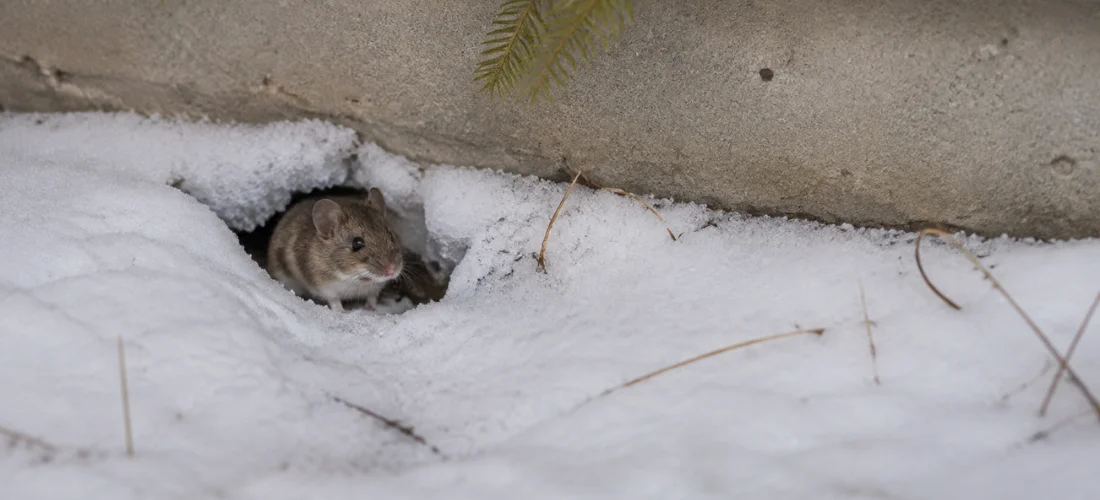
Rats and mice in winter enter GTA properties because cold weather reduces outdoor food, water, and nesting opportunities. Heated houses, garages, restaurants, apartment buildings, and commercial properties offer stable temperatures, accessible food, and protected nesting spaces. Small exterior gaps allow entry, while wall voids, basements, attics, and utility routes help rodent populations remain hidden.
Winter in the Greater Toronto Area changes how rodents search for the basic resources they need to survive.
The problem of rats and mice in winter becomes more noticeable when falling temperatures push them toward heated buildings and reliable food supplies. A rodent problem may appear to begin suddenly after the first cold nights.
In reality, animals may already be living nearby. Winter weather simply encourages them to move closer to buildings, test vulnerable entry points, and remain indoors longer. Understanding why this happens helps property owners act before scratching sounds, droppings, damaged packages, or unpleasant odours reveal a larger problem.
Why Rodent Activity Increases During GTA Winters?
Rodents do not enter buildings because they prefer dirty properties. Even a well-maintained residence can provide everything required for survival.
Winter pest problems make outdoor conditions less predictable. Soil may freeze, vegetation dies back, water sources become less accessible, and natural food becomes harder to locate. Heated buildings remain stable regardless of wind, snow, or freezing temperatures.
The three strongest attractions are food, a protected nesting location, and warmth.
Falling Temperatures Change Rodent Behaviour
Rats and house mice remain active throughout the year. Cold weather increases the energy required to maintain body temperature. Rodents must continue feeding while protecting themselves from exposure. A small opening leading into an insulated wall, basement, or heated garage can provide a major survival advantage.
The temperature difference between indoors and outdoors may also create air movement around structural gaps. Warm air, food odours, and cooking smells can escape through openings and help animals locate possible entry routes.
This movement commonly increases during:
- The first cold nights of autumn.
- Prolonged periods of rain.
- Early snowfall.
- Sudden temperature drops.
- Severe cold snaps.
- Freeze-and-thaw cycles.
By the time a homeowner hears movement indoors, the animal may already have established a route between its nest, food source, and water supply.
Natural Food Becomes Less Available
During warmer months, rodents may feed on seeds, fruit, insects, garden produce, animal food, outdoor waste, and vegetation. Many of these resources become limited or inaccessible during winter.
Rodents do not need a large meal left in the open. Crumbs beneath appliances, grease around cooking equipment, spilled bird seed, or damaged pantry packages may provide enough food to reward repeated visits.
Controlling accessible food waste is central to reducing rat activity. Trapping or baiting alone is less effective when an easier food supply remains available.
Buildings Provide Reliable Protection
Outdoor burrows and nests may become wet, disturbed, frozen, or exposed. Indoor spaces offer more stable alternatives.
Wall voids, insulation, attic corners, suspended ceilings, basement storage, crawl spaces, and gaps beneath cabinets provide darkness and protection. Cardboard, fabric, paper, and insulation can also be collected or damaged for nesting material.
These conditions make residential and commercial buildings attractive to winter rodents, especially when the building also provides nearby food and water.
Why the GTA Is Particularly Vulnerable?
The Greater Toronto Area combines high population density with extensive residential development, food businesses, waste collection systems, construction projects, and natural corridors.
These conditions do not automatically cause an infestation, but they provide opportunities for rodents to travel, feed, and relocate.
Dense Neighbourhoods Provide Connected Routes
Townhouses, apartment buildings, condominiums, plazas, restaurants, and mixed-use properties may share walls, foundations, utility lines, waste areas, or underground infrastructure.
An issue that begins in one location may affect nearby units if access routes remain open. Rodents can travel along plumbing lines, electrical conduits, wall cavities, ceiling spaces, and service corridors.
In multi-unit buildings, treating one apartment without inspecting connected areas may provide only temporary relief. Activity may shift into another unit or return after the immediate treatment ends.
Construction Disturbs Existing Nesting Areas
New development, road work, utility repairs, demolition, and renovation can disturb burrows and concealed nesting locations.
When a structure is demolished or soil is excavated, nearby animals must find another protected area. Adjacent residences, garages, sheds, businesses, and waste facilities may experience increased activity.
Construction can also create temporary access points. Open walls, unfinished utility penetrations, damaged door seals, and gaps around new installations should be corrected before the building is fully occupied.
Ravines, Parks and Waterways Support Movement
The GTA includes ravines, creek systems, parks, railway corridors, industrial land, and wooded spaces. These areas can provide food, vegetation, water, and protected travel routes.
Properties close to these environments may experience regular outdoor rodent pressure. This does not mean an indoor problem is unavoidable. It means exterior inspection and exclusion require greater attention.
Waste Offers a Consistent Food Supply
Overflowing bins, torn garbage bags, food residue, poorly maintained compost areas, and open recycling containers can attract activity.
One poorly managed waste area may affect several surrounding properties. Rodents usually nest close enough to reach dependable food without making unnecessary trips across exposed ground.
| Attraction | Why it matters | Common locations |
|---|---|---|
| Indoor heating | Reduces exposure to freezing conditions | Basements, furnace rooms and wall cavities |
| Food waste | Provides repeatable meals | Kitchens, garbage rooms and outdoor bins |
| Water | Supports daily survival | Leaking pipes, drains and pet bowls |
| Hidden nesting space | Protects animals from people and predators | Attics, storage rooms and insulation |
| Structural gaps | Allows animals to enter discreetly | Foundations, doors and utility openings |
| Shared infrastructure | Connects several units or buildings | Plumbing routes, ceilings and service corridors |
How Rats and Mice Enter Buildings?
Rodents can use openings that appear insignificant during a casual exterior inspection.
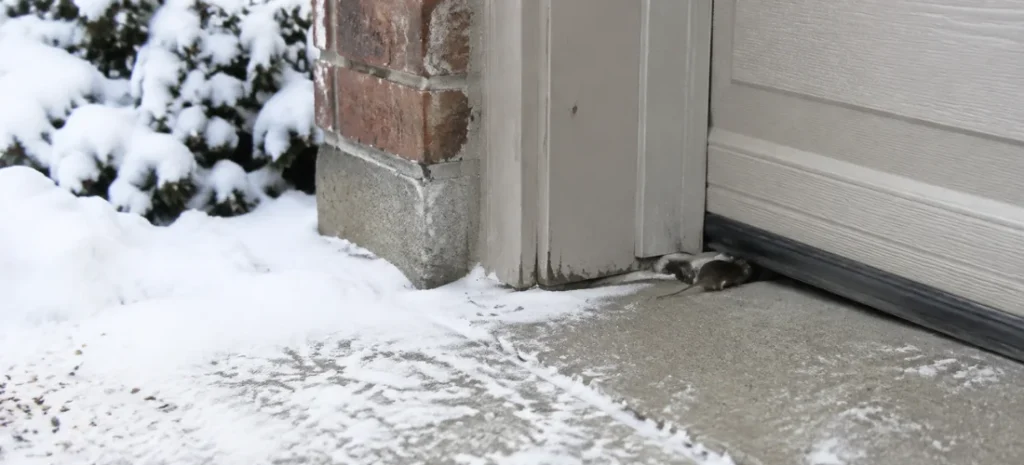
Common access points include gaps beneath doors, damaged garage seals, foundation cracks, utility penetrations, vents, roof intersections, siding gaps, and openings around plumbing or electrical lines.
Mice Require Very Little Space
House mice have flexible bodies and can enter through remarkably small openings. A narrow gap around a pipe or beneath a garage door may be enough.
Once inside, mice in winter often remain close to food and nesting areas. They may occupy kitchen walls, cabinets, ceiling voids, basements, garages, and spaces beneath appliances.
Rats Use Larger Structural Openings
Norway rats commonly burrow outdoors, particularly near foundations, vegetation, decks, waste areas, and sheds. They may enter when exterior conditions become difficult or a dependable indoor resource is available.
A rat may enter through an opening roughly the size of a quarter. Gaps around doors, pipes, walls, and floors deserve careful attention.
Rats in the house in winter are usually a problem that began through an overlooked ground-level opening, damaged drain connection, garage gap, or utility route.
Climbing Expands Their Access Options
Rodents should not be considered ground-level visitors only. They may climb rough masonry, pipes, vegetation, cables, stored materials, and structural edges.
Overhanging branches, climbing plants, stacked firewood, and objects placed against a building can make upper entry points easier to reach.
Roof vents, soffits, attic gaps, and openings around utility lines should therefore be included in an inspection.
Where Do Rodents Hide After Entering?
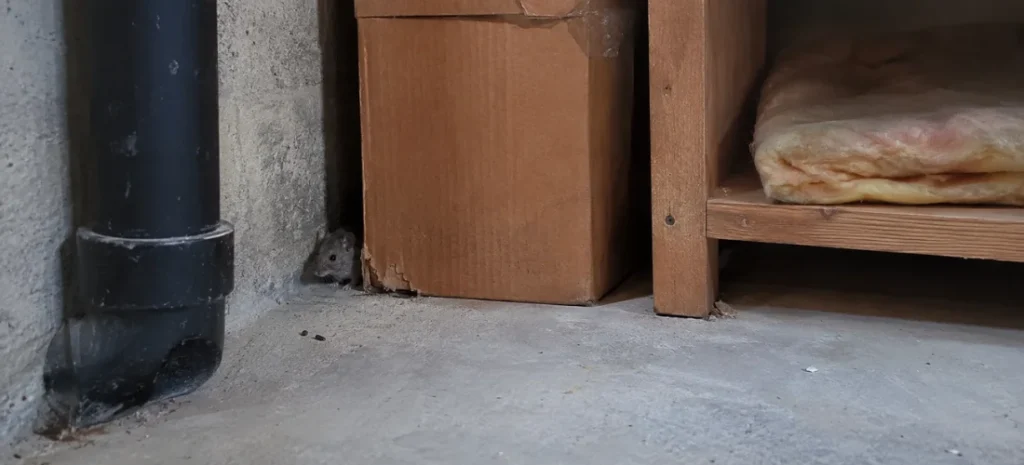
Indoor activity often remains hidden because rodents prefer dark, quiet, protected spaces.
A building may have an established population even when sightings are rare.
Basements and Crawl Spaces
Basements provide access to foundations, drains, storage, pipes, furnaces, and wall cavities. Unfinished areas may contain numerous gaps that are difficult to notice.
Kitchens and Pantries
Kitchens combine food, water, heat, and hiding places. Rodents may move beneath cabinets, behind refrigerators, under stoves, or through openings around sink pipes.
Attics and Wall Voids
Attic insulation can provide comfortable nesting material and protection from regular household activity.
Inside wall cavities, rodents may move between floors without entering open rooms. Scratching may be most noticeable at night when the building becomes quiet.
Garages and Storage Areas
Attached garages are frequent entry locations. Large doors do not always close tightly against uneven floors, and side doors may have worn sweeps.
Pet food, bird seed, recycling, cardboard, and seasonal belongings can support a developing winter infestation before activity spreads into the main residence.
| Area | What attracts activity | Signs to check |
|---|---|---|
| Kitchen | Food, water and appliance heat | Droppings, gnawed packages and grease marks |
| Basement | Foundation gaps and low disturbance | Scratching, nesting material and damaged insulation |
| Attic | Insulation and protected space | Noises, odour and compressed insulation |
| Garage | Door gaps and stored food | Torn bags, droppings and gnaw marks |
| Wall voids | Concealed movement routes | Nighttime sounds and recurring odour |
| Utility room | Pipe openings, heat and water | Droppings near walls or equipment |
Warning Signs of an Indoor Rodent Problem
Early recognition makes control easier and limits the opportunity for reproduction or contamination.
Droppings
Droppings are commonly found along travel routes, inside cabinets, near food, behind appliances, and around nesting areas. Fresh droppings may indicate current activity, but homeowners should avoid handling them casually.
Never sweep or vacuum dry droppings because contaminated particles can become airborne. You should dampen droppings before removal and use appropriate protective precautions.
Scratching and Movement Sounds
Scratching, gnawing, squeaking, or light movement may be heard inside walls, ceilings, attics, or cabinets.
Sounds frequently become more noticeable after dark. Their location does not always reveal the nest because wall and ceiling cavities can carry noise.
Gnaw Marks
Look for chewing on food packaging, wood, plastic containers, wiring, door edges, and insulation.
Repeated gnawing may damage building materials or electrical components. Because concealed wiring cannot be inspected easily, suspected activity inside walls should not be dismissed.
Grease and Rub Marks
Regular travel along the same route may leave dark, greasy marks on baseboards, pipes, walls, and structural edges.
Tracks may also be visible in dust, soil, or spilled material.
Unusual Odours
A persistent stale or musky smell can develop around nesting and activity areas. A sudden stronger odour may indicate a dead animal inside a concealed space.
Why Indoor Activity Can Grow Quickly?
A single sighting does not always mean only one animal is present.
Rodents reproduce efficiently when food, water, and nesting conditions remain stable. Indoor heating removes some environmental pressures that would otherwise limit activity.
The first animals may establish a nesting area behind a wall or inside stored material. As the population grows, evidence appears in additional rooms.
This is why the problem should not be approached as simply catching the individual that was seen. Long-term control must address entry routes, food, water, nesting sites, and remaining activity.
Why DIY Control Often Falls Short?
Traps can be useful, but placement and strategy matter.
A trap positioned in the centre of a room may be ignored because rodents tend to follow edges and familiar pathways. Too few devices may not address the population, while accessible food can compete with bait.
Sealing Too Soon Can Create Problems
Closing an opening without understanding current activity may trap animals inside walls or redirect them into occupied rooms.
Professionals usually inspect, assess, control existing activity, and then complete exclusion in a planned sequence.
Repellents Do Not Remove the Cause
Strong smells, sound devices, and household remedies may temporarily affect movement, but they do not remove food, close openings, or eliminate nests.
Rodents may adapt to ultrasonic devices, so these products should not be treated as a complete solution.
Poison Requires Careful Handling
Rodenticides can create risks for children, pets, and non-target wildlife if used incorrectly. Animals may also die in inaccessible spaces, resulting in odour.
Any pesticide product should have a valid Pest Control Products registration number and must be used according to its label.
How to Prevent Winter Entry?
The strongest strategy combines inspection, structural exclusion, sanitation, monitoring, and targeted control.
Inspect Before Temperatures Drop
Late summer and early autumn are ideal times to inspect:
- Foundations and brickwork.
- Exterior doors and garage seals.
- Dryer and bathroom vents.
- Utility pipes and cable openings.
- Roof edges and soffits.
- Attached garages.
- Decks and sheds.
- Areas beneath dense vegetation.
Repeat checks after renovations, severe weather, or utility work.
Seal Openings With Durable Materials
Use materials suited to the location and the pressure expected. Metal mesh, rodent-resistant door sweeps, flashing, hardware cloth, concrete repair materials, and properly installed plates can provide stronger protection than soft filler alone.
Foam by itself is not always sufficient because it may be chewed or damaged.
Control Food and Water
Store dry food, animal feed, and bird seed in strong containers with tight lids. Clean spills beneath appliances and keep garbage covered.
Repair leaking pipes and avoid leaving pet food out overnight. Move bird feeders away from the building and clean spilled seed from the ground.
Reduce Outdoor Harbourage
Trim dense vegetation, remove debris, and avoid placing storage directly against exterior walls.
Firewood should be raised from the ground and positioned away from the building. Sheds, decks, and compost areas should be checked for burrows and gnawing.
Monitor Vulnerable Areas
Inspect kitchens, garages, basements, and utility rooms throughout the season.
Monitoring is particularly important after treatment. New droppings, disturbed devices, fresh chewing, or returning sounds can show that activity continues.
When Is Professional Service Needed?
Professional help is advisable when:
- Droppings appear in several rooms.
- Scratching continues after traps are installed.
- Activity involves a multi-unit property.
- Rodents are seen during daylight.
- Children or pets could reach control products.
- The entry point cannot be found.
- Wiring or insulation appears damaged.
- A recurring problem returns each winter.
- Contamination is extensive.
- Burrows surround a foundation or waste area.
Professional rodent control service helps identify the species, level of activity, nesting zones, food sources, water sources, travel routes, and possible entry points.
Choosing professional help ensures a combination of trapping, secured baiting where appropriate, sanitation, exclusion, monitoring, and follow-up visits. Invaders Canada is a professional pest control exterminator, suitable for both residential and commercial property owners.
Effective control focuses on the conditions supporting the population, not only the animals that are immediately visible. Contact us now for more details.
Conclusion
Rats and mice in winter become a serious GTA concern because freezing temperatures, reduced outdoor food, and unstable nesting conditions push rodents toward heated buildings. Once inside, kitchens, basements, garages, attics, and wall cavities provide the resources they need to remain active and reproduce. The most reliable response begins before the coldest weather arrives. Property owners should inspect exterior openings, improve waste storage, protect food, correct moisture problems, reduce outdoor hiding places, and monitor vulnerable areas.
FAQs
Do rodents hibernate during GTA winters?
No. Common household rodent species remain active throughout the year. Cold weather may reduce some outdoor movement, but it often increases pressure on heated buildings.
Why do I hear scratching mainly at night?
Rodents are generally more active when a building is quiet. Nighttime sounds may come from wall cavities, ceilings, attics, cabinets, or spaces beneath floors.
Does one mouse sighting mean there is an infestation?
Not always, but it should trigger an inspection. A sighting may indicate that an animal has found an entry route, while hidden droppings or nesting material may reveal broader activity.
Can a clean property still develop a rodent problem?
Yes. Cleanliness helps reduce available food, but rodents may still enter through structural gaps to access stable temperatures, water, or protected nesting areas.
When should I contact a pest control professional?
Arrange professional service when evidence appears in multiple areas, activity returns after trapping, structural access points cannot be found, or contamination and damage are becoming difficult to manage.