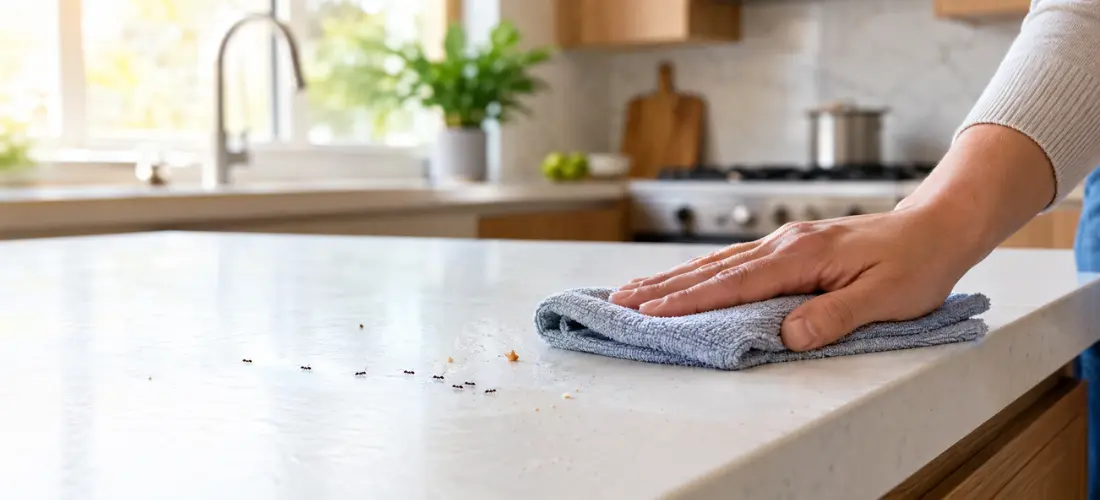
The most effective way to keep ants out of kitchen areas is to remove accessible food and water, seal possible access routes, clean hidden residue, store groceries securely, and address outdoor colonies before they spread indoors. In the Greater Toronto Area, seasonal weather changes often drive insects inside, so prevention must cover both the kitchen and the exterior of your property.
An ant problem can begin with a single insect appearing near the sink, pantry, or countertop. Within days, you may notice a visible trail leading to a cabinet, appliance, or window. This happens because worker insects leave a chemical trail that guides the rest of the colony toward a dependable source of food or water. Homes across the Greater Toronto Area can experience activity during different parts of the year. They want to keep ants out of the kitchen.
Warmer spring and summer conditions increase colony activity outdoors, while rain, drought, and sudden temperature changes may push insects into buildings. Heated properties can also support indoor activity during colder months. Simply wiping away the visible trail rarely solves this problem. The colony may remain active inside a wall, beneath flooring, near the foundation, or somewhere outside the property. Effective kitchen protection requires sanitation, exclusion, moisture management, monitoring, and targeted treatment.
Top 10 Ways to Prevent Ant Entry in the Kitchen
1. Identify What Is Attracting the Colony
Before applying a treatment, determine why insects are entering the room. Most kitchen infestations are connected to one or more of the following:
- Accessible groceries.
- Grease or drink residue.
- Moisture beneath a sink.
- Pet bowls left out overnight.
- Unsealed garbage or recycling.
- Gaps around windows, pipes, and cabinets.
- A nearby nest inside or outside the building.
Observe where the trail starts and where it ends. Check around sinks, dishwashers, refrigerators, stoves, pantry shelves, baseboards, windows, and plumbing penetrations. A flashlight can help you inspect narrow spaces behind appliances or beneath cabinets.
Avoid immediately spraying every visible insect. A repellent product may kill individual workers while causing the surviving colony to change routes. Some species can also divide into additional nesting groups when disturbed, making the problem more difficult to locate and manage.
2. Clean Beyond the Visible Surfaces
A kitchen can look clean while still offering enough residue to support a colony. Tiny grease deposits, spilled drinks, food crumbs beneath appliances, and residue around containers may not be obvious to people, but they can still be detected by foraging insects.
Use warm soapy water to clean countertops, backsplashes, cabinet handles, floors, and the areas around small appliances. Pay particular attention to the toaster, coffee machine, microwave, blender, and recycling station.
Do not forget less obvious sources, including:
- Syrup or honey around bottle caps.
- Cooking oil on cabinet doors.
- Juice residue inside recycling containers.
- Spills beneath removable refrigerator drawers.
- Used sponges and dishcloths.
- Residue in compost bins.
- Debris under pet-feeding mats.
Regular deep cleaning does more than remove a current attraction. It also makes monitoring easier because new activity becomes more noticeable.
3. Store Groceries in Sealed Containers

Open packaging is one of the most common reasons ants repeatedly return to a pantry. Thin cardboard boxes and loosely folded bags do not provide reliable protection.
Transfer vulnerable products into containers with tight-fitting lids. Glass, durable plastic, and metal containers are generally suitable when they close securely.
Prioritize products such as:
- Cereal.
- Flour.
- Rice.
- Dried fruit.
- Crackers.
- Baking ingredients.
- Pet food.
- Candy.
- Honey and syrups.
Pay special attention to sugar because even a small spill can support repeated foraging. Inspect groceries before placing them in cabinets. Sticky packaging should be wiped clean, while damaged or contaminated products should be discarded in a sealed bag.
Avoid keeping large amounts of food in rarely checked cabinets. Rotate pantry stock, place older products at the front, and clean shelves before adding new groceries. This reduces hidden spills and makes early insect activity easier to detect.
4. Manage Garbage, Recycling, and Compost
Garbage and organic waste provide concentrated sources of odour, moisture, and nutrition. In many GTA homes, compost collection can create an additional attraction if the indoor container is not managed carefully.
Use a bin with a secure lid and a liner that does not leak. Empty kitchen waste regularly instead of waiting until the container is completely full. Wash the bin when residue collects on the bottom, lid, or sides.
Outdoor bins should be positioned away from exterior doors and windows whenever the property layout allows. Keep the surrounding ground clean and make sure lids remain properly closed.
5. Remove Dependable Water Sources
Food is not the only attraction. Colonies also require moisture, and a kitchen can provide it through leaks, condensation, wet cloths, and standing water.
Inspect the cabinet beneath the sink for damp wood, loose fittings, or slow plumbing leaks. Check the dishwasher connection, refrigerator water line, faucet base, and areas where condensation develops.
At night:
- Dry the sink and surrounding counter.
- Wring out cloths and sponges.
- Do not leave dishes soaking.
- Empty standing water from trays.
- Repair dripping taps.
- Pick up pet water where appropriate and safe.
Moisture problems can also indicate a maintenance issue that needs professional attention. In a rental property, document leaks and report them to the landlord or property manager promptly.
Reducing moisture will not eliminate an established colony on its own, but it makes the room less attractive and supports other control measures.
6. Seal Gaps Around the Kitchen
For long-term results, identify and close cracks that allow insects to move between wall voids and living spaces.
Common entry points include gaps around water pipes, window frames, door frames, baseboards, electrical outlets, cabinets, vents, and flooring transitions.
Use a material suited to the location:
| Location | Common issue | Suitable corrective action |
|---|---|---|
| Window or door frame | Separated caulking | Remove failed material and apply new exterior-grade caulk |
| Plumbing penetration | Gap around a pipe | Seal with an appropriate flexible sealant |
| Baseboard edge | Narrow wall gap | Apply paintable interior caulk |
| Exterior door | Space beneath the door | Install or replace the door sweep |
| Window screen | Hole or loose edge | Repair the mesh or replace the screen |
| Foundation exterior | Structural opening | Arrange suitable masonry repair or professional assessment |
Sealing should normally be combined with sanitation and colony treatment. If insects are already nesting inside a wall, closing one opening may simply make them emerge somewhere else.
Do not seal active openings blindly when carpenter ant activity is suspected. These insects may be associated with damp or damaged wood, and a hidden moisture or structural problem may need to be investigated first.
7. Inspect the Exterior of the Property
Indoor ants in kitchen activity often begins outside. Walk around the property and look for trails near the foundation, patio stones, garden beds, utility lines, window wells, and door thresholds.
Trim branches and plants that touch the building because they can create convenient pathways. Remove piles of leaves, wood scraps, and unnecessary debris near the foundation. Store firewood away from the building and above the ground.
Check exterior caulking, weatherstripping, vents, utility penetrations, and damaged screens. Correcting these conditions can help prevent ants from returning after the indoor problem has been addressed.
8. Use Bait Carefully and Strategically
Bait can be more effective than contact spray because workers carry the material back toward the colony. However, the product must be appropriate for the species and placed where it can be used safely.
Place enclosed bait stations near active routes while following the label exactly. Keep them away from food-preparation surfaces and inaccessible to children and pets.
Once baiting begins, avoid spraying the same route with a repellent insecticide. A strong spray may stop workers from reaching the bait or cause them to create a new trail.
Results may not be immediate. Temporary increases in visible activity can occur as more workers discover the bait. The important question is whether activity declines over the following days.
9. Avoid Common DIY Mistakes
Home remedies may appear attractive because they are inexpensive and easy to prepare. However, natural does not automatically mean effective or risk-free.
Common mistakes include:
- Spraying only the visible trail.
- Using excessive amounts of insecticide.
- Applying products to food-contact surfaces.
- Mixing household chemicals.
- Using outdoor pesticides indoors.
- Placing loose treatments where children or pets can reach them.
- Sealing routes before understanding the nest location.
- Stopping treatment as soon as visible activity declines.
Vinegar or soapy water can help clean scent trails, but these solutions do not reliably eliminate a hidden ant colony. Strong-smelling oils may temporarily disrupt movement without providing lasting control.
Never combine cleaners or pesticides. Follow the product label, ventilation requirements, application instructions, and safety restrictions. If the label does not permit kitchen use, do not use the product there.
10. Build a Practical Prevention Routine
Consistent maintenance is easier than responding to a large infestation. A simple schedule can keep the room less attractive throughout the year.
Daily Tasks
- Wipe counters after preparing food.
- Sweep the floor around dining and cooking areas.
- Clean drink spills immediately.
- Store leftovers in closed containers.
- Dry the sink before bedtime.
- Remove heavily soiled waste.
Weekly Tasks
- Clean beneath countertop appliances.
- Inspect pantry shelves.
- Wash waste and compost containers.
- Check pet-feeding areas.
- Look beneath the sink for moisture.
- Examine windows and baseboards for new activity.
Seasonal Tasks
- Inspect exterior caulking in spring and fall.
- Repair damaged screens and weatherstripping.
- Trim vegetation touching the property.
- Check the foundation and utility penetrations.
- Move outdoor waste containers away from doors.
- Arrange treatment if trails repeatedly return.
This routine supports kitchen ant control by removing the conditions that allow a minor issue to become established.
Signs of a Serious Ant Infestation
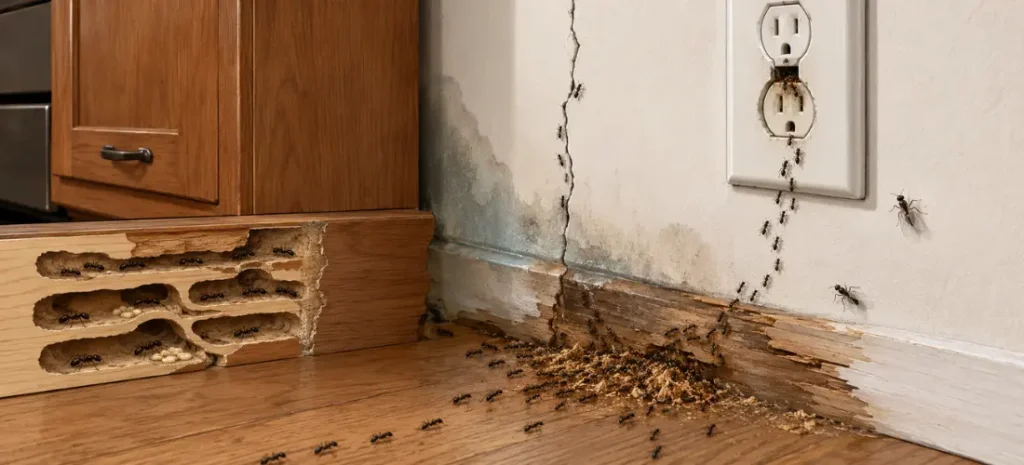
A few occasional workers may be handled through cleaning, sealing, and monitoring. Certain signs, however, suggest that the problem requires closer investigation:
- Trails return shortly after cleaning.
- Activity appears in several rooms.
- Winged insects emerge indoors.
- Workers are coming from walls or electrical outlets.
- Sawdust-like material appears near wooden features.
- Damp or damaged wood is present.
- Multiple DIY treatments have failed.
- The infestation affects several units.
Large dark insects seen around wet wood may be carpenter ants. They do not eat wood in the same way termites do, but they can excavate it to create nesting galleries. Their presence can be linked to leaks, decaying timber, or persistent moisture.
Correct identification matters because different species may have different nesting habits and food preferences. A strategy that works for one colony may be ineffective or counterproductive for another.
When to Call a Professional?
Professional ant control is appropriate when the source cannot be found, activity continues for several weeks, or the colony appears to be located inside a structural void.
A qualified technician can identify the species, inspect interior and exterior conditions, locate likely nesting zones, and select an appropriate treatment. Professional service may also be safer for households with young children, pets, allergies, or complex building layouts.
Before booking a service, ask:
- Whether interior and exterior inspection is included.
- What preparation is required.
- Which areas will be treated.
- Whether follow-up visits are provided.
- What safety precautions apply.
- Whether the underlying access and moisture conditions will be discussed.
Treatment alone cannot compensate for an ongoing leak, unsealed opening, or unmanaged waste source. The strongest results usually come from combining professional treatment with practical property maintenance.
Professional inspection and pest extermination services are beneficial in various ways. Invaders Canada offers comprehensive pest control services according to the specific infestation level and requirements of the homeowners. Whether you want ant extermination or simple inspection services, we can help you. Contact us for further information.
Conclusion
To conclude, keeping ants out of the kitchen requires more than removing the insects you can see. The dependable solution is to reduce available food and moisture, improve storage and waste handling, close access routes, inspect the property exterior, and use treatments that address the colony. Begin with a detailed inspection and a thorough cleaning. Monitor where activity returns, correct leaks and openings, and avoid overusing contact sprays. If trails continue, winged insects appear, or a nest may be hidden inside the structure, arrange a professional assessment before the infestation expands.
FAQs
Why do they keep coming back after I clean the counters?
The nest may still be active, and small amounts of residue could remain beneath appliances, inside cabinets, or around waste containers. Clean the complete route, inspect concealed areas, and address the ant colony rather than only the visible workers.
Is it safe to use insect spray near countertops?
Only use a product in locations specifically permitted by its label. Keep pesticides away from food, utensils, dishes, and preparation surfaces. Enclosed bait stations or professional treatment may be more suitable in sensitive areas.
Why does activity increase after heavy rain?
Rain can flood outdoor nesting areas and force colonies to search for dry shelter. Buildings offer stable temperatures, water, and feeding opportunities, so temporary outdoor disruption can lead to sudden indoor movement.
Can an infestation spread between condominium units?
Yes. Insects can travel through wall voids, utility routes, plumbing spaces, hallways, and shared service areas. Recurring activity in a condominium may require coordinated action by residents, management, and a pest professional.
How long does bait usually take to work?
The time varies according to colony size, species, placement, and whether workers accept the bait. Activity may take several days or longer to decline. Follow the label, avoid spraying nearby, and seek professional help if there is no meaningful improvement.