Summary
“Termites are small insects but they can cause severe damage to your property’s structure and visual appeal. When homeowners plan to invest in termite control in Canada, they must have proper knowledge of what they’re up against. They rarely announce their presence and spread instantly which make their infestations difficult to handle. Homeowners should understand the signs, causes, damage, and available treatment options to exterminate termites. Using professional pest control services is necessary, along with ongoing monitoring.”
Ignoring termites is one of the deadliest mistakes homeowners can make when they detect any termites roaming around their spaces. The silent damage termites cause makes them popular as destroyers of your property. When homeowners start investing in professional termite control services in Canada, they can understand why these pests are so common due to the fluctuating environment and other factors.
By the time homeowners notice their damage, they already have their active colonies inside or around the property. In such situations, homeowners should have proper resources to control termite damage and their infestations. Learning the signs, causes, and treatments for handling termite damage is a suitable solution to avoid massive destruction.
What Is a Termite Infestation?
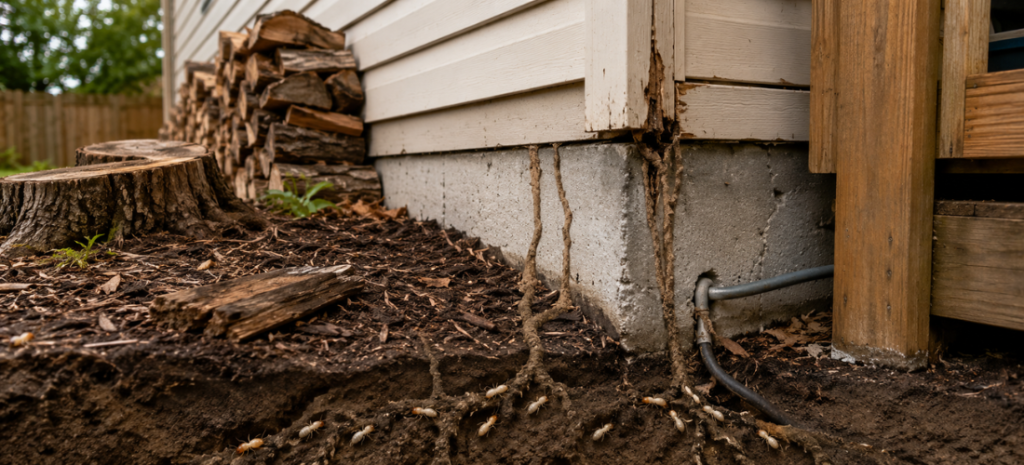
A termite infestation happens when a termite colony finds a reliable source of food, moisture, and shelter on or near your property. Termites usually stay hidden because they need moisture and protection from the open air. That is why they often travel through soil, cracks, crawl spaces, wall voids, or narrow mud tubes.
In Canada, subterranean termites are the main concern in many affected regions. These termites usually live in the soil and move between the ground and wooden materials. They can enter through foundation cracks, gaps around utility lines, wood-to-soil contact, damp crawl spaces, attached decks, or buried wood debris.
A termite infestation does not always start inside the house. Sometimes the colony begins around the property first. Old stumps, stacked firewood, fence posts, rotting deck boards, cardboard, mulch, or landscaping timbers can attract termite activity. From there, termites may move toward the main structure if conditions are favourable.
Why Termites Are a Serious Problem in Canada?
Many homeowners think termites are only a problem in warmer countries, but that is not true. Termites exist in parts of Canada, especially in areas with suitable soil conditions, older housing stock, moisture problems, and wood-to-ground contact.
Southern Ontario, including parts of the Greater Toronto Area, has known termite activity. Some areas of British Columbia may also face termite pressure. The risk is not equal everywhere, but if termites are present in your neighbourhood, early inspection and prevention become much more important.
The challenge with termites is that they rarely announce themselves early. They do not usually walk across your kitchen counter like ants or leave obvious droppings like rodents. They work inside wood, under floors, and behind finished surfaces. This hidden behaviour is why termite inspections and professional termite control Canada services are so important when warning signs appear.
Common Signs of a Termite Infestation
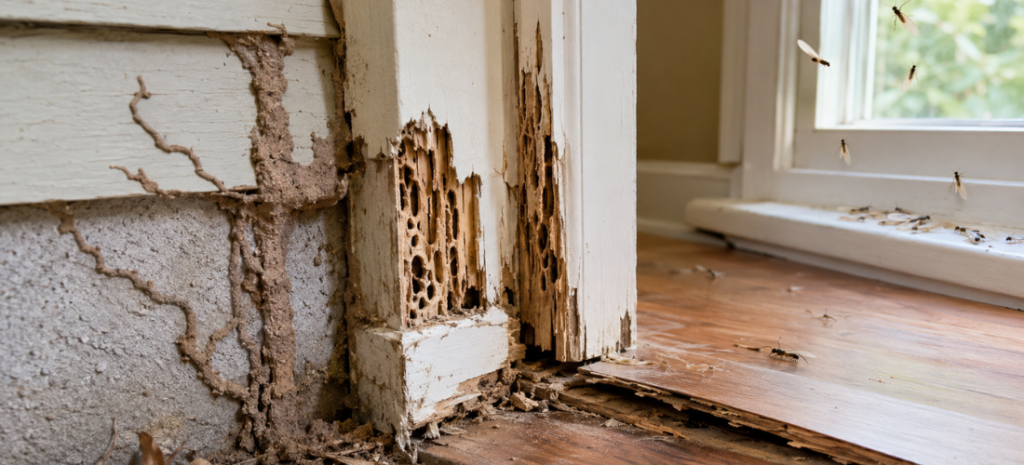
Termites can be difficult to spot, but they do leave clues. Some signs are obvious, while others are easy to ignore until the damage becomes more serious.
1. Mud Tubes on Foundation Walls
Mud tubes are one of the strongest signs of subterranean termite activity. These narrow, soil-coloured tunnels are often found on foundation walls, basement walls, crawl space supports, concrete surfaces, or around exterior walls.
Termites build these tubes to protect themselves while travelling between the soil and wood. If you see mud tubes, do not simply scrape them away and assume the problem is solved. The colony may still be active underground or inside the structure.
2. Discarded Wings Near Windows or Doors
Winged termites, also called swarmers, leave the colony to start new colonies. After swarming, they often shed their wings. Homeowners may find small piles of wings near windowsills, doors, vents, light fixtures, or basement areas.
Discarded wings can be confused with flying ant activity, but termite wings are usually similar in size and shape. Flying ants usually have a narrow waist and uneven wings, while termites have a straighter body shape and equal-length wings.
3. Hollow-Sounding Wood
Wood damaged by termites may sound hollow when tapped because termites eat from the inside out. The outer surface may look normal, while the internal structure has been weakened.
Check baseboards, door frames, window frames, basement wood, deck supports, and exposed beams. Hollow-sounding wood does not always confirm termites, but it is a strong reason to schedule an inspection.
4. Soft, Blistered, or Buckling Floors
Termite damage below flooring can cause wood floors to blister, buckle, sag, or feel unusually soft. Sometimes the surface looks like water damage. This is why termites are often missed at first. Homeowners may blame humidity, old flooring, or minor leaks.
If flooring changes appear near exterior walls, basements, bathrooms, kitchens, or entryways, the area should be checked for moisture and pest activity.
5. Damaged Baseboards, Trim, or Door Frames
Termites often attack wood that is close to walls, floors, and moisture sources. Baseboards may become soft, cracked, rippled, or easy to puncture. Door frames and window frames may also become weak or distorted.
Doors and windows that suddenly become difficult to open or close may indicate moisture, settlement, or pest-related wood damage. A termite inspection can confirm the cause.
6. Small Holes, Cracks, or Maze-Like Wood Damage
When damaged wood is opened, termite galleries may appear as tunnels or maze-like patterns. Subterranean termite galleries often contain soil or mud.
This is different from carpenter ants, which usually create cleaner galleries because they remove wood rather than eat it. If you break open damaged wood and see muddy material inside, termites should be considered a serious possibility.
7. Termite Swarmers Inside the Home
Seeing winged termites indoors is a warning sign that should not be ignored. Outdoor swarmers may come from a nearby colony, but swarmers inside the home can mean termites are already active within the structure.
If you see flying insects near windows, lights, basement areas, or doors, collect a sample or take clear photos. A pest control professional can help identify whether they are termites or flying ants.
Termite Damage: What Can They Destroy?
Termites mainly attack cellulose-based materials. In a home, that includes more than just visible wood. They may damage structural and non-structural components.
Common termite damage areas include:
- Floor joists and subflooring.
- Wall studs and framing.
- Baseboards and trim.
- Window frames and door frames.
- Porch posts and deck supports.
- Wooden stairs.
- Basement wood elements.
- Crawl space beams.
- Fences, sheds, and garages.
- Firewood piles and landscaping timbers.
- Cardboard boxes stored in damp areas.
Termite damage can be cosmetic, structural, or both. Early damage may only affect trim or surface wood. Advanced infestations can weaken beams, floors, stairs, and load-bearing wood. Once structural wood is compromised, termite treatment alone is not enough. The damaged material may also need repair or replacement by a qualified contractor.
What Causes Termite Infestations?
Termites are attracted to conditions that provide food, moisture, and access. The more favourable your property is, the higher the risk.
Common termite risk factors include:
- Wood touching soil.
- Leaky pipes or poor drainage.
- Damp basements or crawl spaces.
- Stacked firewood near the house.
- Old stumps or buried wood.
- Heavy mulch against the foundation.
- Cracks in foundation walls.
- Wooden decks connected to the home.
- Poor ventilation in crawl spaces.
- Cardboard storage in damp areas.
- Landscaping timbers close to exterior walls.
Termites do not need a large opening to enter. Small cracks, expansion joints, and gaps around utilities can be enough. That is why prevention is not just about killing insects. It is about changing the conditions that allow termites to reach and feed on your home.
How Professionals Inspect for Termites?
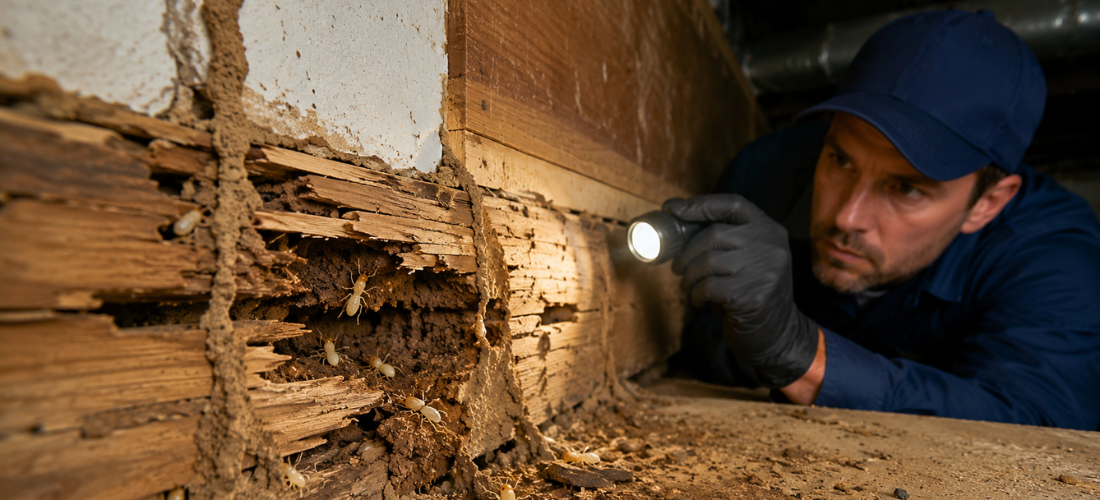
A proper termite inspection looks for live termites, mud tubes, damaged wood, moisture issues, entry points, and nearby conditions that support termite activity.
A technician may inspect:
- Basement walls and floors.
- Crawl spaces.
- Foundation edges.
- Exterior perimeter.
- Porch and deck supports.
- Window and door frames.
- Baseboards and trim.
- Garage areas.
- Sheds and fences.
- Firewood storage.
- Mulch beds and landscaping timbers.
- Moisture-prone rooms such as bathrooms and kitchens.
In some cases, professionals may use moisture meters, inspection tools, or targeted probing to check suspicious wood. A good Integrated Pest Management (IPM) procedure should not only confirm whether termites are present. It should also explain the likely entry points, damage level, and recommended treatment plan.
Top Termite Treatment Options
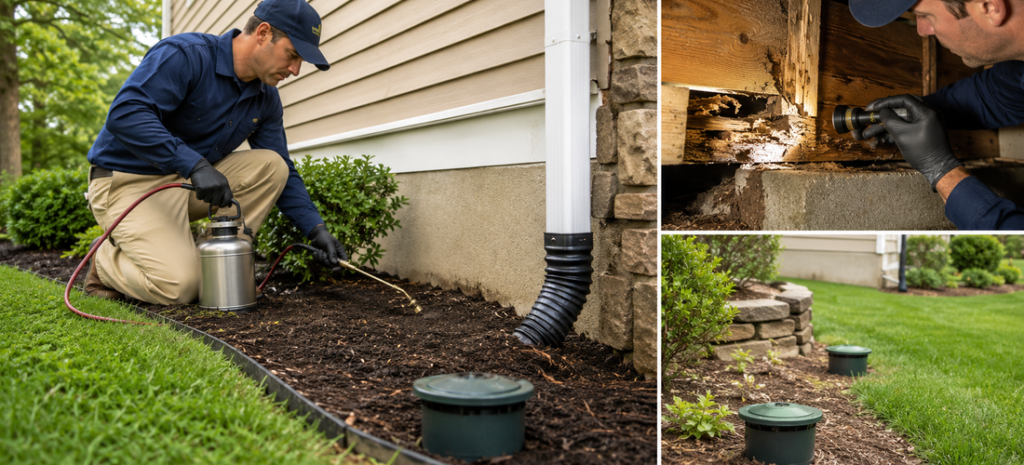
The right termite treatment depends on the species, location, severity of infestation, property structure, soil conditions, and whether the goal is active elimination, prevention, or long-term monitoring.
1. Liquid Soil Treatment
Liquid soil treatment creates a treated zone around or near the structure. This approach is commonly used for subterranean termites because they travel between soil and wood.
The goal is to stop termites from reaching the structure and affect termites moving through treated areas. This treatment may involve trenching, drilling, or applying a registered termiticide according to label directions.
Liquid treatment can be effective, but it must be applied properly. Gaps in the treated zone can leave access points. This is why DIY pest control is risky and often incomplete.
2. Termite Baiting Systems
Baiting systems use stations placed around the property. Termites find the bait, feed on it, and carry it back to the colony. Over time, this can reduce or eliminate colony activity.
Baiting is often used for monitoring and long-term control. It may take longer than some liquid treatments, but it can be useful when direct treatment is difficult or when ongoing monitoring is needed.
3. Direct Wood Treatment
In some cases, infested or vulnerable wood may be treated directly. This can help protect specific areas, especially where termites are actively feeding or where wood is exposed.
Direct wood treatment is usually part of a broader plan. It should not be the only strategy if subterranean termites are entering from the soil.
4. Moisture and Structural Corrections
No termite treatment plan is complete without correcting the conditions that attracted termites in the first place. This may include fixing leaks, improving drainage, increasing crawl space ventilation, removing wood debris, repairing damaged wood, and separating soil from wooden materials.
Treatment kills or controls termite activity. Prevention work reduces the chance of reinfestation.
5. Ongoing Monitoring
Termites can return if conditions remain favourable or if neighbouring properties have active colonies. Ongoing monitoring is especially useful in areas where termite activity is known.
Annual inspections can catch early activity before major damage occurs. For properties in higher-risk areas, this is often one of the smartest long-term termite control Canada strategies.
Can You Treat Termites Yourself?
DIY termite treatment is usually not recommended for active infestations. Store-bought sprays may kill visible insects, but they often fail to reach the colony. Worse, disturbing termites without eliminating the colony can cause activity to spread to other areas.
Homeowners can help with prevention, inspection, moisture control, and removing risk factors. But once there are mud tubes, swarmers, hollow wood, or suspected structural damage, professional treatment is the safer route.
DIY prevention steps are helpful, but DIY colony elimination is rarely reliable.
What to Do If You Find Termite Signs?
If you suspect termites, take these steps:
- First, do not panic and do not start tearing apart walls. Take photos of the signs, including wings, mud tubes, damaged wood, or live insects.
- Second, avoid spraying random chemicals. This may disturb activity and make inspection harder.
- Third, check nearby areas for moisture, leaks, wood-to-soil contact, firewood, mulch, or damaged exterior wood.
- Fourth, book a professional termite inspection. A licensed technician can confirm whether it is termites, carpenter ants, water damage, or another wood-damaging insect.
- Finally, ask for a written treatment plan. The plan should explain where activity was found, what treatment is recommended, what prevention steps are needed, and whether monitoring is included.
How to Prevent Termites Around Your Home?
Termite prevention is about reducing food, moisture, and access.
- Keep firewood at least several feet away from the home and raised off the ground.
- Remove old stumps, buried wood, scrap lumber, and rotting boards from the property. Avoid piling mulch directly against the foundation. Make sure soil does not touch siding, trim, or wooden framing.
- Fix plumbing leaks quickly. Improve drainage so water moves away from the foundation. Clean gutters and downspouts. Ventilate crawl spaces and reduce dampness in basements.
- Seal cracks and gaps where possible, especially around foundations and utility lines. Replace damaged wood and avoid using untreated wood in direct contact with soil.
- Inside the home, avoid storing cardboard boxes on basement floors or in damp areas. Use plastic storage bins when possible. Schedule inspections if you live in a known termite area or if nearby homes have reported termite activity.
Termite control in Canada is possible when you combine multiple strategies and steps. Investing in professional pest control services with Invaders Canada can help homeowners and commercial property owners alike. You can protect your spaces and detect termites at early stages to avoid massive infestations with our services.
We utilize eco-friendly and IPM combined pest control strategies with advanced tools and a team of expert exterminators. Contact us for more details.
Conclusion
To conclude, a termite infestation is not something to ignore or delay. Termites can stay hidden for months or years, slowly damaging wood from the inside. When you invest in termite control in Canada services, the most important warning signs include mud tubes, discarded wings, swarmers, hollow wood, soft flooring, damaged trim, and moisture-prone wood deterioration. The best approach is early inspection, professional treatment, moisture correction, and ongoing prevention. Termites are manageable when caught early, but they become expensive when ignored.
FAQs
What are the first signs of a termite infestation?
The first signs often include mud tubes on foundation walls, discarded wings near windows, flying swarmers, hollow-sounding wood, soft baseboards, or blistered flooring. In many cases, termites stay hidden, so visible signs may mean the infestation has already been active for some time.
Are termites common in Canada?
Termites are not equally common across all of Canada, but they are present in several regions. Parts of Southern Ontario, including areas around Toronto and the GTA, are known for termite activity. Some areas of British Columbia may also have termite concerns. Local risk depends on climate, soil, moisture, housing conditions, and neighbourhood history.
Can termites damage the structure of a house?
Yes. Termites can damage floor joists, wall studs, support beams, subfloors, stairs, and other wooden structural elements. Early damage may look minor, but advanced termite activity can weaken important parts of the home. If structural damage is suspected, treatment and repair may both be needed.
What is the best termite treatment?
The best termite treatment depends on the infestation. Common options include liquid soil treatment, baiting systems, direct wood treatment, moisture correction, and ongoing monitoring. A professional inspection is needed to choose the right plan because termites may be entering from hidden soil routes or wall voids.
Can I get rid of termites without professional help?
Homeowners can reduce termite risk by fixing leaks, removing wood debris, improving drainage, and keeping wood away from soil. However, active termite infestations usually require professional treatment. DIY sprays may kill visible insects but often fail to eliminate the colony or protect the structure long term.

How to Choose the Right Exterminator?