Summary
“Silverfish won’t bite or harm you like other insects and pests. But they can prove a nuisance for your daily routine and overall property structure. They can damage your belongings, as they feed on paper, glue, linens, etc. They live in damp and dark areas, which make them more creepy. Understanding their causes, signs, removal, and prevention strategies for silverfish can help homeowners in various ways. Choosing a professional pest control company or an exterminator can help prevent the spread of their infestation.”
Usually, homeowners are not aware of a silverfish. It’s not a fish, instead, it’s an insect. If you’re seeing shimmery and creepy little crawling things in your house, it’s probably silverfish. Timely silverfish pest control is beneficial for homeowners to avoid spreading their infestations throughout their spaces.
Although they are harmless insects, they can infest your homes and are attracted to humid environments, along with starchy materials. These wingless and flat insects are also known as bristletails. Understanding their characteristics, appearance, infestation preferences, and treatments to get rid of them can help homeowners keep their spaces safe. With the right approach, you can control silverfish infestations, but they spread quickly, so professional help is vital.
What Are Silverfish?
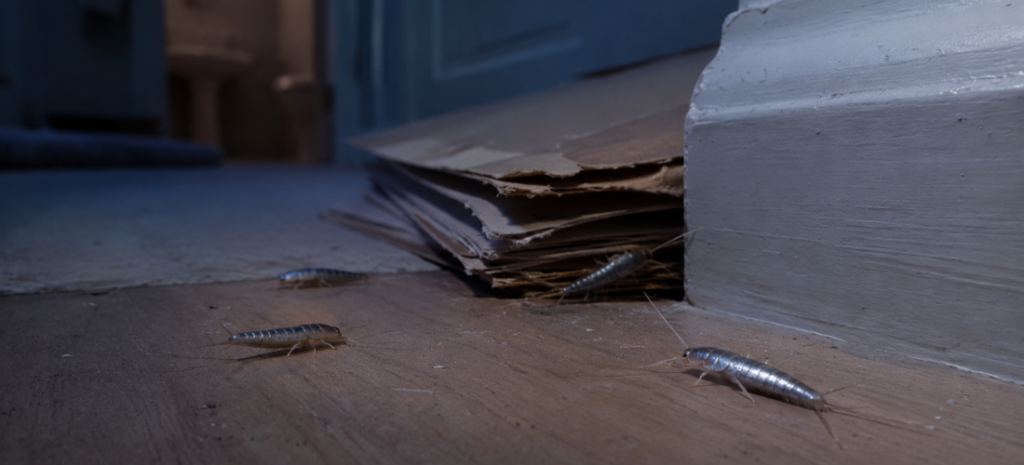
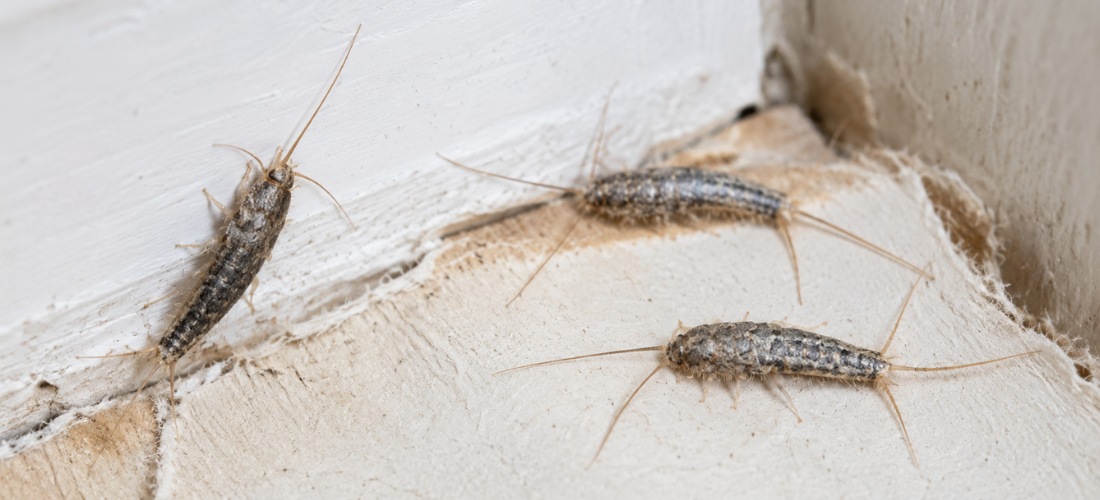
Silverfish are small, wingless insects with a narrow, flat body, long antennae, and three tail-like bristles at the back. Their name comes from their silvery-gray color and quick, fish-like movement. They are nocturnal, which means they are most active at night. During the day, they usually hide in cracks, gaps, wall voids, under sinks, behind baseboards, inside cabinets, under stored boxes, behind appliances, and around damp structural areas.
Silverfish do not usually crawl around in open spaces for long. When lights turn on, they often run quickly toward a hiding place. This is one reason homeowners may only see them occasionally, even when more are present. They can live in areas that people rarely inspect, including unfinished basements, attic corners, storage shelves, behind wallpaper, under flooring edges, and inside cardboard boxes.
Silverfish are considered nuisance pests, but that does not mean they should be ignored. They can damage paper goods, books, stored clothing, wallpaper, food packaging, photos, documents, and fabrics. They may also signal that certain areas of the home have excess humidity, poor ventilation, water leaks, or long-term clutter.
Common Causes of a Silverfish Infestation
Silverfish enter homes because the indoor environment gives them what they need: moisture, shelter, darkness, and food. They may come in through tiny cracks around foundations, windows, doors, utility openings, vents, or gaps around pipes. They can also be carried inside through cardboard boxes, old books, second-hand furniture, paper files, storage bins, or items moved from garages, basements, warehouses, or storage units.
The most common cause is moisture. Silverfish prefer humid environments and often appear where air circulation is poor. Bathrooms, laundry areas, kitchens, basements, crawl spaces, and attics are common problem areas because they can hold moisture longer than other rooms. A leaking pipe, dripping faucet, condensation around windows, damp cardboard, poor bathroom ventilation, or an unfinished basement can create the right conditions.
Food sources are another major reason. Silverfish feed on materials that contain starches, sugars, carbohydrates, proteins, and natural fibers. This includes paper, glue, book bindings, wallpaper paste, cardboard, flour, oats, cereal, pet food, fabric, cotton, linen, silk, dead insects, dandruff, hair, and crumbs. A home does not need to be dirty to attract silverfish. Even a well-kept home can have enough paper, humidity, and hidden dust to support them.
Clutter makes the problem worse. Stacked boxes, old magazines, books, storage bags, seasonal clothes, and rarely moved items provide dark hiding places and steady food sources. This is why silverfish are common in storage rooms and closets, especially when paper and fabric items are kept in damp or poorly ventilated areas.
Common Signs of a Silverfish Infestation
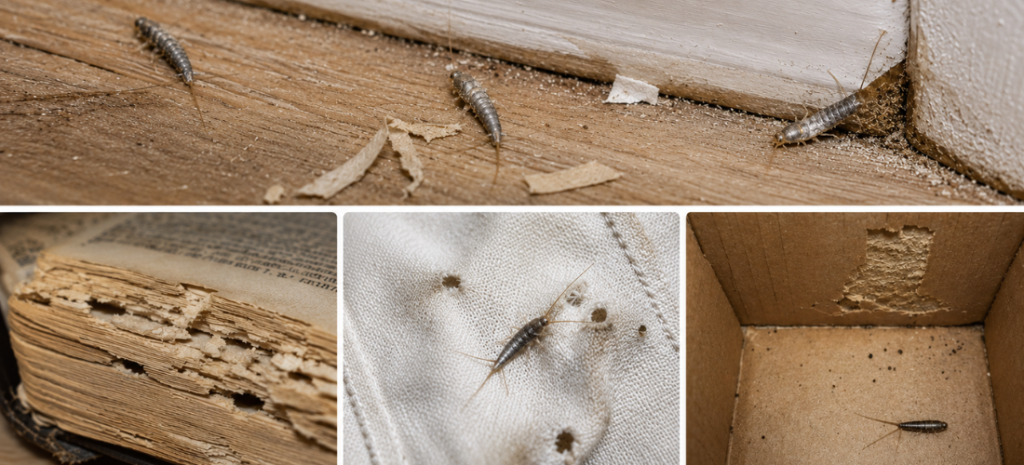
The most obvious sign is seeing live silverfish, especially at night. You may spot them near the bathtub, under the sink, along baseboards, around laundry appliances, in kitchen cabinets, in closets, or near storage boxes. If you see them often, or in different rooms, the issue may be larger than a random sighting.
Other signs include tiny holes or notches in paper, books, wallpaper, cardboard, clothing, or fabric. Silverfish feeding marks are often irregular because they scrape and nibble at surfaces rather than making clean cuts. You may also notice yellowish stains on paper, clothing, or stored materials. In some cases, they leave behind shed skins or small black pepper-like droppings.
Damage is often discovered late because silverfish prefer hidden spaces. A box of old documents, books, photos, or clothes may look fine from the outside, but silverfish may be feeding inside. If you store paper goods, keepsakes, fabrics, or seasonal clothing in a basement, attic, garage, or closet, inspect those items carefully.
Another sign is repeated activity in moisture-prone rooms. Seeing silverfish in a bathroom once may not be alarming, but seeing them weekly around the same sink, tub, cabinet, or baseboard suggests that a nearby hiding area is supporting them.
Are Silverfish Dangerous?
Silverfish are not considered dangerous in the same way as biting or disease-spreading pests. They are not known for biting people or pets, and they are not usually linked with spreading disease. However, they can still create problems inside the home.
The biggest concern is property damage. Silverfish can damage books, important documents, wallpaper, cardboard, photos, clothing, stored fabrics, dry food packaging, and other household materials. They are especially frustrating in homes with libraries, offices, closets, storage rooms, basements, or old paper records.
Silverfish can also become a warning sign. Their presence often points to excess moisture or poor ventilation. If the conditions that attract them are not corrected, the home may also become more inviting to other pests, such as cockroaches, centipedes, earwigs, and mould-related insects. In that sense, silverfish pest control is also about improving the home environment.
How to Remove Silverfish from Your Home?
Start with inspection. Identify where you see silverfish, where moisture is present, and where food sources or hiding places exist. Do not rely only on the room where you saw one insect. Silverfish may travel from nearby wall voids, cabinets, or storage areas.
Next, reduce moisture. Fix leaking pipes, dripping taps, condensation problems, and damp basement areas. Use bathroom exhaust fans during and after showers. Improve airflow in closets, basements, laundry rooms, and storage spaces. A dehumidifier can help in humid basements or rooms where moisture stays high. Removing moisture is one of the most important steps because silverfish are much harder to control when the environment still supports them.
Deep clean the affected areas. Vacuum along baseboards, under furniture, inside cabinets, behind appliances, and around storage shelves. Remove dust, crumbs, hair, dead insects, and debris. After vacuuming, empty the vacuum outside or seal the contents in a bag before disposal. This helps remove insects, eggs, shed skins, and food sources.
Declutter and reorganize storage. Replace cardboard boxes with sealed plastic bins where possible. Keep books, documents, clothing, and keepsakes off damp floors. Avoid storing paper goods directly against basement walls. If items are already damaged, sort them carefully and discard what cannot be saved.
Use traps to monitor activity. Sticky traps placed near baseboards, under sinks, in closets, behind toilets, and near storage boxes can help you understand where silverfish are active. Traps may reduce visible activity, but they usually do not solve the root cause alone.
Seal cracks and gaps. Use caulk or appropriate sealants around baseboards, pipe openings, wall gaps, window frames, door frames, and utility penetrations. This reduces hiding places and makes it harder for silverfish to move through the home.
Be careful with DIY powders or insecticides. Products such as diatomaceous earth, boric acid, or silica-based dusts are often discussed for silverfish control, but they must be used correctly and kept away from children, pets, food-prep surfaces, and areas where dust can be inhaled. Always follow product labels. If you are unsure, it is safer to contact a professional pest control provider.
Natural Prevention Methods That Actually Help
Natural prevention works best when it focuses on habitat control. The most effective natural method is reducing moisture. Keep bathrooms dry, run exhaust fans, repair leaks quickly, and avoid leaving damp towels or laundry on the floor. In basements, monitor humidity and use a dehumidifier if needed.
Storage improvement is also important. Use sealed containers instead of cardboard, especially in basements, attics, garages, and closets. Keep paper records, books, and seasonal clothing in dry areas. Store dry foods in airtight containers. Clean pantry shelves regularly and remove spilled flour, cereal, oats, and pet food.
Regular vacuuming helps remove food sources and hidden debris. Pay attention to baseboards, closet corners, behind furniture, under appliances, and storage areas. Silverfish survive best when they have quiet, dusty, undisturbed places to hide.
Ventilation can make a major difference. Open closet doors occasionally, avoid overpacking storage spaces, and make sure air can move through damp rooms. If a room always feels humid or musty, silverfish removal will be difficult until that moisture issue is corrected.
When DIY Silverfish Control Is Not Enough?
DIY pest control strategies may help when you see one or two silverfish and can clearly correct the cause. Professional silverfish pest control becomes more important when sightings continue for several weeks, silverfish appear in multiple rooms, stored items are being damaged, or you cannot locate the source.
It is also wise to call a professional if the infestation is in wall voids, subfloor areas, attic spaces, large basements, commercial storage areas, or rooms with valuable books, documents, clothing, or inventory. Choosing the right exterminator can help control damage better.
A professional inspection can identify hidden moisture issues, active harborages, entry points, and the correct treatment areas. Pest control professionals may use targeted treatments in cracks, crevices, voids, baseboards, storage areas, and other locations where silverfish hide. The best results usually come from combining treatment with prevention, not from spraying alone.
How to Keep Silverfish from Coming Back?
Long-term silverfish control depends on making your home less attractive to them.
- Keep humidity under control. Repair leaks quickly. Store paper, books, fabrics, and dry foods properly. Reduce clutter in basements, closets, laundry rooms, attics, and garages.
- Replace damp cardboard with sealed plastic bins. Clean storage spaces regularly and inspect items before bringing them inside from storage units, garages, or second-hand purchases.
- Seal gaps where possible, especially around plumbing, baseboards, windows, doors, and utility lines. Keep bathrooms and kitchens dry after use. Use exhaust fans and improve airflow in areas that stay damp.
- Most importantly, pay attention to repeat sightings. A single silverfish may not require panic, but repeated activity should be treated as a sign that the home is providing moisture, food, and shelter. The earlier you respond, the easier the problem is to control.
Professional silverfish pest control is beneficial to prevent massive infestations and damage to your property and accessories. Invaders Canada is a reliable pest extermination company that offers pest control services to both residential and commercial spaces.
Our team of expert professionals, a combination of IPM strategies, and preventive measures help homeowners in various ways. Contact us today for further details.
Conclusion
To conclude, silverfish are not usually dangerous, but they are persistent, fast-moving, and capable of damaging items that matter. They thrive where moisture, darkness, clutter, and starchy food sources are available. That means successful silverfish pest control must go beyond killing the insects you see. You need to inspect the home, fix moisture problems, clean hidden spaces, protect stored items, seal gaps, and use the right treatment strategy. If silverfish keep returning, appear in multiple rooms, or damage books, clothing, wallpaper, documents, or pantry items, professional silverfish pest control is the safest and most complete option.
FAQs
What attracts silverfish to a home?
Silverfish are attracted to moisture, darkness, warmth, clutter, and food sources such as paper, cardboard, glue, wallpaper paste, fabric, flour, cereal, oats, crumbs, and stored dry goods. Bathrooms, basements, kitchens, laundry rooms, attics, and storage areas are common silverfish hiding spots.
Are silverfish harmful to humans?
Silverfish are not known to bite people or spread disease. However, they can damage books, documents, wallpaper, clothing, cardboard, photos, food packaging, and other stored belongings. Their presence can also point to moisture problems inside the home.
Can I get rid of silverfish myself?
You may be able to reduce a small silverfish problem by fixing moisture issues, vacuuming thoroughly, decluttering, sealing cracks, using sticky traps, and storing food and paper items properly. If the activity continues, spreads, or causes damage, professional silverfish pest control is recommended.
Why do silverfish keep coming back?
Silverfish usually return because the underlying cause has not been fixed. Common reasons include high humidity, leaks, poor ventilation, damp storage, cardboard clutter, hidden food sources, and cracks or gaps where they can hide. Removal works best when treatment is combined with prevention.
When should I call a pest control professional for silverfish?
Call a professional if you see silverfish repeatedly, find them in multiple rooms, notice damage to books or clothing, have a damp basement or attic issue, or cannot locate where they are coming from. Professional silverfish pest control can target hidden areas and help prevent the infestation from returning.