Summary
“Call emergency pest control immediately if someone has an allergic reaction to a sting, you see rats or mice in daylight, a wasp nest sits near a door or window, bed bugs spread to a second room, or pests reach food, infants, or pets. These signs mean same-day treatment, not a scheduled visit. Also, learning what it means to see a specific type of pest or insect and what to do in different situations helps property owners remain prepared for varying pest control situations.”
You can protect your home, offices, and overall environment against intense damage when you detect early signs of pest infestations. Otherwise, investing in emergency pest control services becomes necessary. It doesn’t matter if you think a specific type of pest is less dangerous than the other pests.
They are equally dangerous and demand immediate extermination. Avoiding the treatment can only increase the pest activity, leading to more treatment expenses and structural damage costs. When you know the right time to invest in professional pest control services and handle infestations before they turn into intense situations, pest management becomes simple.
When Is Pest Control an Emergency?
Pest control is an emergency when pests create an immediate health, safety, access, or contamination risk, or when the infestation is spreading faster than normal DIY steps can control. Call immediately if pests are near food, infants, pets, entrances, bedrooms, or if stings, bites, droppings, or repeated sightings suggest active exposure.
Call emergency pest control now if you notice:
- Rats or mice running in daylight.
- A wasp, hornet, or bee nest near a door, walkway, deck, or play area.
- Bed bugs found in more than one room.
- Cockroaches around food storage, cooking areas, or baby items.
- Pest activity near infants, elderly people, allergic individuals, or pets.
- Bites, stings, droppings, urine smell, or nesting material inside living areas.
- DIY sprays, traps, or cleaning have failed and the issue is spreading.
Not every pest sighting needs a midnight visit, but waiting too long can turn a controlled problem into a full infestation. The safest rule is simple: if the pest is putting people, food, sleep, or access to the home at risk, call now.
Seeing Rats or Mice in Daylight Means You Should Call Now
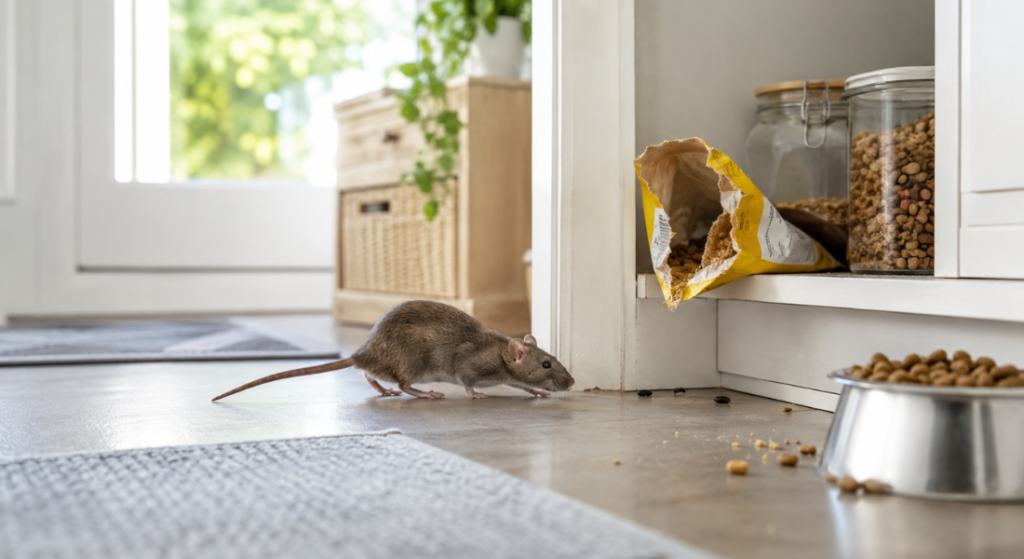
Rats and mice are mostly active when the home is quiet. Seeing one during the day does not always prove a huge infestation, but it is a strong warning sign. It can mean the rodents are hungry, overcrowded, disturbed from their nesting area, or already comfortable moving through your home.
Rodents are urgent because they do more than scare people. They can contaminate food, leave droppings and urine, chew packaging, damage insulation, and gnaw wiring or soft materials. If you see a rat in the kitchen, pantry, basement, laundry room, garage, or near pet food, do not treat it like a small inconvenience.
You should call emergency pest control immediately if you see a rat or mouse in daylight more than once, find fresh droppings, hear scratching at night, notice chewed food packets, or see activity near children’s rooms or pet bowls. Traps may catch one rodent, but they rarely solve the reason rodents are entering. A professional will look for entry points, nesting areas, food sources, and the level of activity.
While waiting, do not sweep or vacuum dry droppings aggressively. Avoid handling nesting material with bare hands. Seal food in hard containers, remove pet food overnight, keep children and pets away from the affected area, and take photos if it is safe. The goal is to reduce exposure until the technician arrives.
A Wasp Nest Near a Door or High-Traffic Area Needs Same-Day Removal
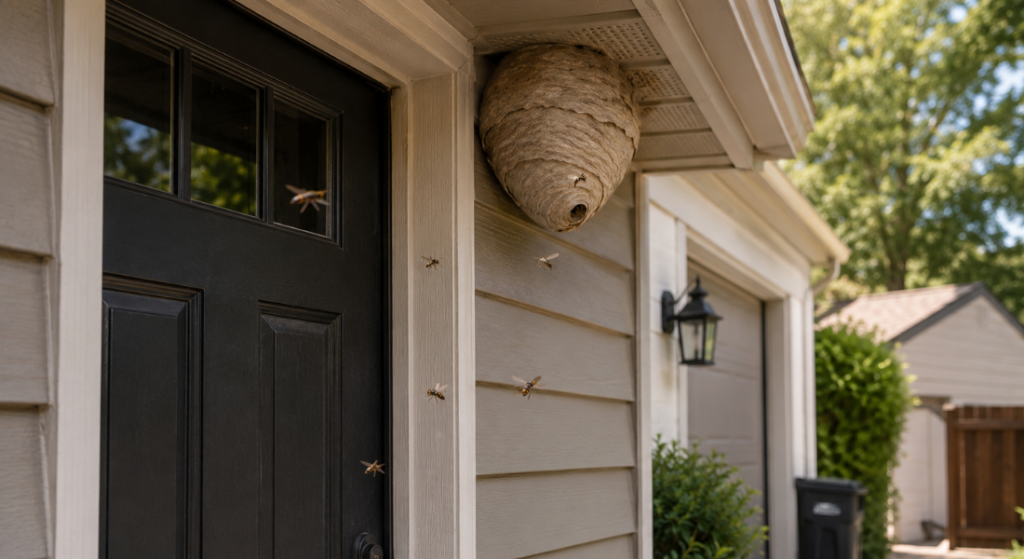
A wasp nest is not automatically an emergency if it is far from people and not causing activity around the home. But a nest near a door, porch, garage, mailbox, deck, patio, balcony, driveway, school area, or business entrance should be handled the same day. The danger comes from location and contact risk.
Wasps can become defensive when people walk near the nest, slam a door, mow the lawn, move garbage bins, or disturb nearby walls and shrubs. Children, delivery drivers, tenants, customers, and pets may not know the nest is there. One accidental bump can lead to multiple stings.
Do not spray a nest beside an entrance during the day. DIY wasp spray may knock down some insects, but it can also scatter the colony and increase sting risk. Nests in wall voids, soffits, rooflines, vents, fences, or dense shrubs are especially risky because you may not see the full nest.
Call emergency pest control if wasps are entering a wall, if people are being stung, if the nest blocks a normal entrance, or if anyone in the home has a known sting allergy. Keep windows closed near the activity, avoid using the affected door if possible, and mark the area from a safe distance so others do not walk close to it.
Why Bed Bugs in a Second Room Are an Emergency?
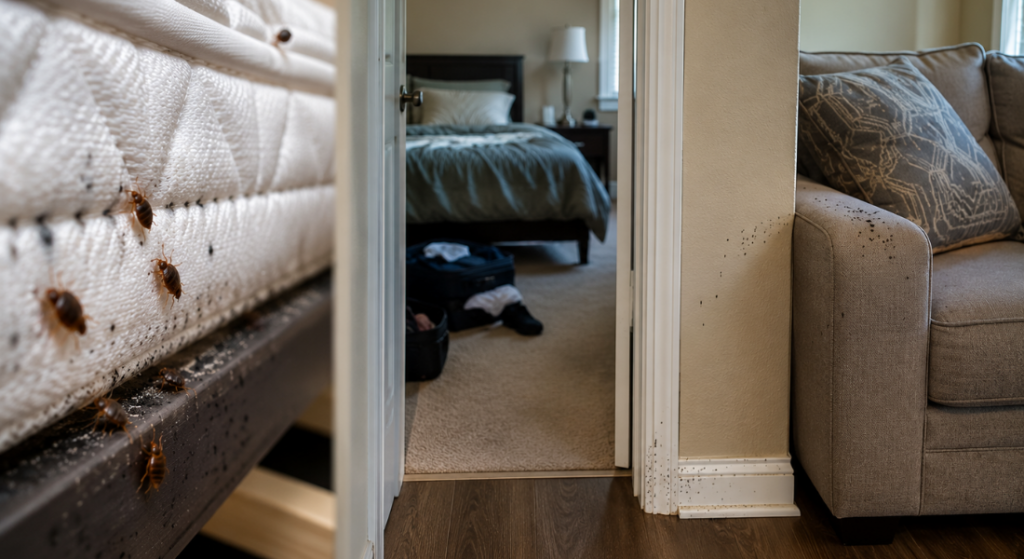
Bed bugs are not a medical emergency in the same way as a severe allergic reaction, but they can become an urgent pest control emergency when they spread beyond one sleeping area. Finding bed bugs in a second bedroom, living room, sofa, guest room, or hallway means the infestation may no longer be isolated.
This matters because bed bugs hide in seams, bed frames, baseboards, furniture joints, curtains, luggage, clothing, and wall gaps. Once they move into multiple rooms, treatment becomes more complex and more expensive. Waiting gives them time to lay eggs, spread through shared items, and affect more people.
Call emergency pest control if you find live bed bugs in two rooms, multiple people have bites, you see dark spotting on bedding, or guests, tenants, or family members may carry them to another location. Do not move mattresses, sofas, or bedding through the home unless instructed. Moving items can spread the infestation.
Avoid heavy DIY spraying. Some products can push bed bugs deeper into walls or furniture. Instead, reduce clutter, bag washable items, run clothing and bedding through high heat when fabric care allows, and keep sleeping areas in place until a professional gives instructions. Bed bugs need a planned treatment strategy, not panic cleaning.
Allergic Reaction to a Sting or Bite: When It’s a 911 Call, Not Pest Control?
This is the most important safety point: If someone is having a serious allergic reaction, call emergency medical services first. Pest control can remove the nest or pest source later, but it cannot treat anaphylaxis.
Call 911 or your local emergency number if a sting or bite is followed by trouble breathing, wheezing, throat tightness, swelling of the lips, tongue, face, or throat, dizziness, fainting, chest tightness, confusion, vomiting, widespread hives, or a rapid worsening reaction. If the person has prescribed epinephrine, use it exactly as directed and still seek emergency care.
After medical help is contacted, move away from the pest area if it is safe. Do not try to remove a wasp nest, chase insects, or keep searching for the pest while someone is reacting. The priority is the person’s airway, breathing, and circulation.
Once the medical emergency is under control, call emergency pest control to remove the source. This is especially important if the nest is near the home, a child’s play area, a workplace entrance, or a route people must use.
Pests Around Food, Infants, or Pets: Why This Can’t Wait?
Pests near food, baby areas, or pets should be treated urgently because exposure risk is higher. Rodents can chew food packaging and contaminate surfaces. Cockroaches can move across drains, garbage areas, cabinets, and cooking spaces. Ants may not always be dangerous, but heavy activity around pantry food, formula, or pet bowls can quickly become a sanitation problem.
Infants and toddlers are more vulnerable because they crawl, touch floors, put objects in their mouths, and may not communicate bites or irritation clearly. Pets can also disturb nests, eat poisoned insects, step on traps, or chase rodents into unsafe areas.
Call same-day or emergency pest control if pests are active around baby bottles, formula, pet food, pantry shelves, kitchen counters, highchairs, cribs, litter boxes, or food-prep surfaces. Do not place strong chemical sprays where children or pets can touch them. Misused pesticides can create a second safety problem.
Until help arrives, store food in sealed containers, clean crumbs and spills, remove pet bowls after feeding, keep garbage sealed, and block access to the affected area. If you already used sprays, tell the technician exactly what product you used and where you applied it.
DIY Sprays and Traps Failed, and It’s Spreading? You’re Past Emergency DIY!
DIY pest control can help with small, early problems. A few ants, one fly issue, or a single visible spider may not require urgent service. But if sprays, traps, bait stations, or home remedies have failed and the pest activity is spreading, it is time to stop experimenting.
Repeated DIY treatment can make some infestations harder to solve. Spraying cockroaches may scatter them into wall voids. Disturbing bed bugs may spread them into other rooms. Poorly placed rodent poison can create odor issues if rodents die in walls. Wasp sprays can make a nest more aggressive if the colony is not eliminated correctly.
You are past emergency DIY if you see more pests after treatment, new rooms are affected, droppings keep appearing, bites continue, nests are hidden, or pests return within days. At that point, the issue is not only the visible pest. It is the source, entry point, colony, nest, breeding area, or sanitation condition supporting them.
Professional emergency pest control focuses on inspection first. A good technician identifies what pest is present, where it is living, how it is entering, and what treatment is safe for the home. That is why professional service is often faster than repeated guesswork.
Emergency vs. Same-Day vs. Scheduled Pest Control: What Do You Actually Need?
Not every urgent pest problem needs a 24-hour emergency visit, but many need same-day action. The right service level depends on risk.
| Service Type | Best For | Response Need | Examples | What To Do |
|---|---|---|---|---|
| Emergency Pest Control | Immediate health, safety, access, or contamination risk | Call now | Wasp nest blocking entry, rats in kitchen, allergic person at risk, pests near infants | Avoid the area and request urgent service |
| Same-Day Pest Control | Serious issue that should not wait several days | Today | Bed bugs in second room, cockroaches in kitchen, repeated rodent sightings | Book the earliest visit available |
| Scheduled Pest Control | Controlled issue with low immediate risk | Next available appointment | Occasional ants, exterior spiders, seasonal prevention | Schedule inspection and prevention |
Emergency pest control is needed when pests threaten health, safety, food, sleep, access, children, pets, or people with allergies.
- Emergency triggers: Daylight rodents, wasp nests near entrances, bed bugs in multiple rooms, cockroaches near food, bites or stings, pests around infants or pets, and failed DIY treatment.
- Best action: Call a licensed exterminator immediately, avoid disturbing nests or droppings, protect food, keep people and pets away, and describe the pest, location, and urgency when booking.
- Medical warning: If someone has trouble breathing, throat swelling, fainting, or a severe reaction after a sting or bite, call emergency medical services first.
How Fast Can an Emergency Exterminator Reach You?
Response time depends on your location, the company’s schedule, the pest type, technician availability, weather, traffic, and whether it is after hours. In many urban and suburban areas, same-day pest control may be available during business hours. True 24-hour emergency pest control is less common and may cost more, especially at night, on weekends, or during peak seasons.
When calling, give clear details. Say what pest you saw, where it is located, whether anyone was stung or bitten, whether children or pets are present, and whether the pest blocks an entrance or food area. Clear information helps the company decide whether you need emergency, same-day, or scheduled service.
For wasps or hornets, the technician may consider time of day and nest activity. For rodents, they may prioritize inspection, exclusion, trapping, and sanitation guidance. For bed bugs, they may give preparation steps before treatment. For cockroaches, they may focus on kitchens, moisture, cracks, drains, appliances, and hiding spots.
While waiting, do not disturb nests, do not move infested furniture, do not leave food exposed, and do not overapply sprays. Your job is to reduce risk. The technician’s job is to identify and remove the source safely.
Emergency pest control is necessary in various situations. But regularly investing in professional pest control services can help make a difference. Contact Invaders Canada today, whether you need regular, emergency, or deep pest control services for your residential and commercial properties.
Conclusion
To conclude, emergency pest control is not something that homeowners should take lightly. It affects their protection and the value of their property. When you’re concerned about pest activity in your house or offices, early detection can save you the trouble of expensive repairs and extermination services. But understanding the main signs and when it’s considered an emergency, confirming the availability of how much time an exterminator needs to reach your property, and how to select the right pest control service can make a significant difference in handling pests.
FAQs
Is a wasp nest a pest control emergency?
Yes, a wasp nest can be a pest control emergency if it is near a door, walkway, deck, garage, mailbox, playground, business entrance, or any area people use often. It is also urgent if someone has already been stung or if anyone nearby has a known sting allergy. Do not spray or knock down an active nest yourself, especially during the day.
How many cockroaches before it’s an emergency?
There is no exact number, but seeing multiple cockroaches, seeing them during the day, or finding them around food, baby items, or pet bowls should be treated urgently. Cockroaches hide well, so visible activity can mean more are present in cracks, appliances, cabinets, or wall gaps. If DIY treatment has failed or the activity is spreading, call same-day pest control.
Can I wait until morning to call about rats?
If you see one rat outside and there is no indoor activity, you may be able to call in the morning. But if you see rats or mice inside the home, in daylight, near food, in a child’s room, or with fresh droppings, call now. Rodent problems can create contamination and property damage, and fast action helps limit exposure.
Do exterminators offer 24-hour emergency service?
Some exterminators offer 24-hour emergency pest control, but not every company does. Many offer same-day or next-day urgent service instead. Availability depends on your area, pest type, technician schedule, and the time of the call. When calling, explain the risk clearly so the company can prioritize correctly.
What should I do while waiting for emergency pest control?
Keep people and pets away from the affected area, seal food, close doors where possible, and avoid disturbing nests, droppings, bedding, or furniture. Do not add more sprays if you have already used chemicals. Take clear photos from a safe distance, write down where you saw activity, and tell the technician about any bites, stings, allergies, children, pets, or previous DIY treatments.