Summary
“Bed bugs are a real problem across the GTA – and Toronto has ranked Canada’s worst-infested city seven years running. Spraying alone won’t fix it. Heat treatment is the only method that kills bed bugs eggs. This post covers how to spot an infestation early, which treatments actually work, and how to stop bed bugs from coming back.”
Table of Contents:
- Why the GTA Has Canada’s Worst Bed Bug Problem
- How to Identify a Bed Bug Infestation
- How Bed Bugs Spread Through GTA Homes
- Proven Bed Bug Treatment Methods Compared
- DIY vs. Professional Pest Control for Bed Bugs
- Before and After Treatment: What You Must Do
- Eco-Friendly Bed Bug Control Options
- Prevention: How to Keep Bed Bugs from Coming Back
Waking up with unexplained red welts on your arms or noticing dark specks along your mattress seams is a deeply unsettling experience – and in the Greater Toronto Area, it’s more common than you might think. The GTA has consistently ranked as Canada’s most bed-bug-infested region, and the problem shows no sign of slowing down. Whether you live in a Brampton townhouse, a North York condo, or a Mississauga semi-detached, this guide covers everything you need to know about bed bug control in the GTA – from identifying an infestation to choosing the right treatment and preventing a recurrence.
Why the GTA Has Canada’s Worst Bed Bug Problem
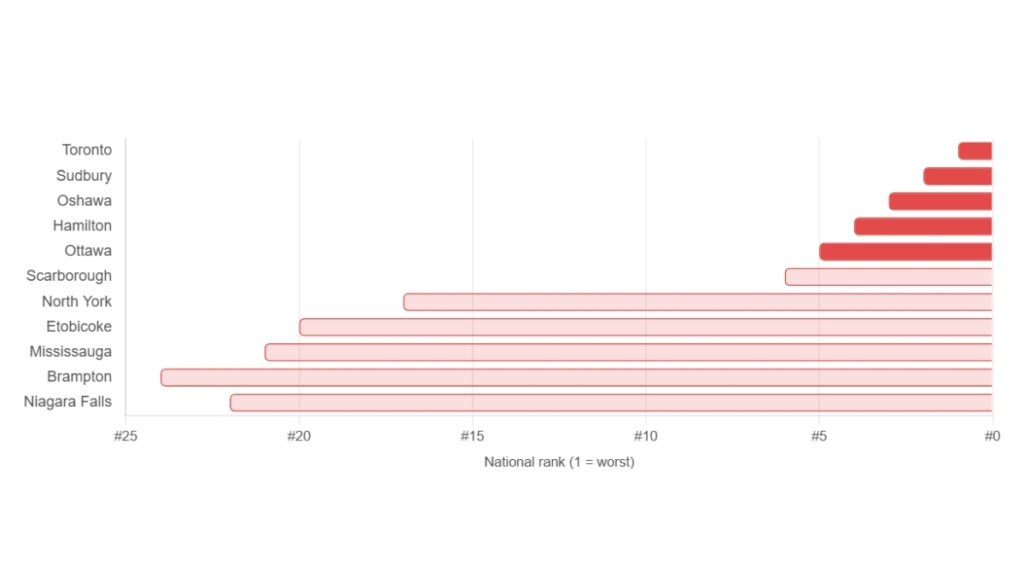
The data is stark. Toronto has held the top spot as Canada’s most bed-bug-infested city for seven consecutive years. Equally striking: 15 of Canada’s 25 worst bed bug cities are in Ontario – that’s roughly 60 % of the country’s most severe infestations concentrated in a single province.
- 7+ → Years Toronto ranked #1 in Canada for bed bugs
- 60 % → Of Canada’s top 25 bed bug cities are in Ontario
- 1,200 % → Rise in Ontario bed bug reports from 2005–2015
- 30 % → Of people show NO skin reaction to bed bug bites
Several GTA-specific factors fuel this crisis. Toronto’s high population density and vast multi-unit housing stock make it easy for infestations to spread between units undetected. Post-pandemic travel has returned to pre-2020 levels, and bed bugs are expert hitchhikers – they cling to luggage, clothing, and furniture without anyone noticing. Older downtown buildings with aging infrastructure offer countless cracks and crevices for bugs to establish colonies. Add in high apartment turnover rates and a large student population, and the conditions are ideal for persistent infestations.
GTA cities that appear in Canada’s top 25 worst-infested cities include:
- Toronto: Ranked #1 in Canada
- Sudbury: Ranked #2 in Canada
- Oshawa: Ranked #3 in Canada
- Hamilton: Ranked #4 in Canada
- Ottawa: Ranked #5 in Canada
- Scarborough: Ranked #6 in Canada
- North York: Ranked #17 in Canada
- Etobicoke: Ranked #20 in Canada
- Mississauga: Ranked #21 in Canada
- Niagara Falls: Ranked #22 in Canada
- Brampton: Ranked #24 in Canada
These cities make bed bug control a region-wide priority, not just a downtown Toronto issue.
How to Identify a Bed Bug Infestation
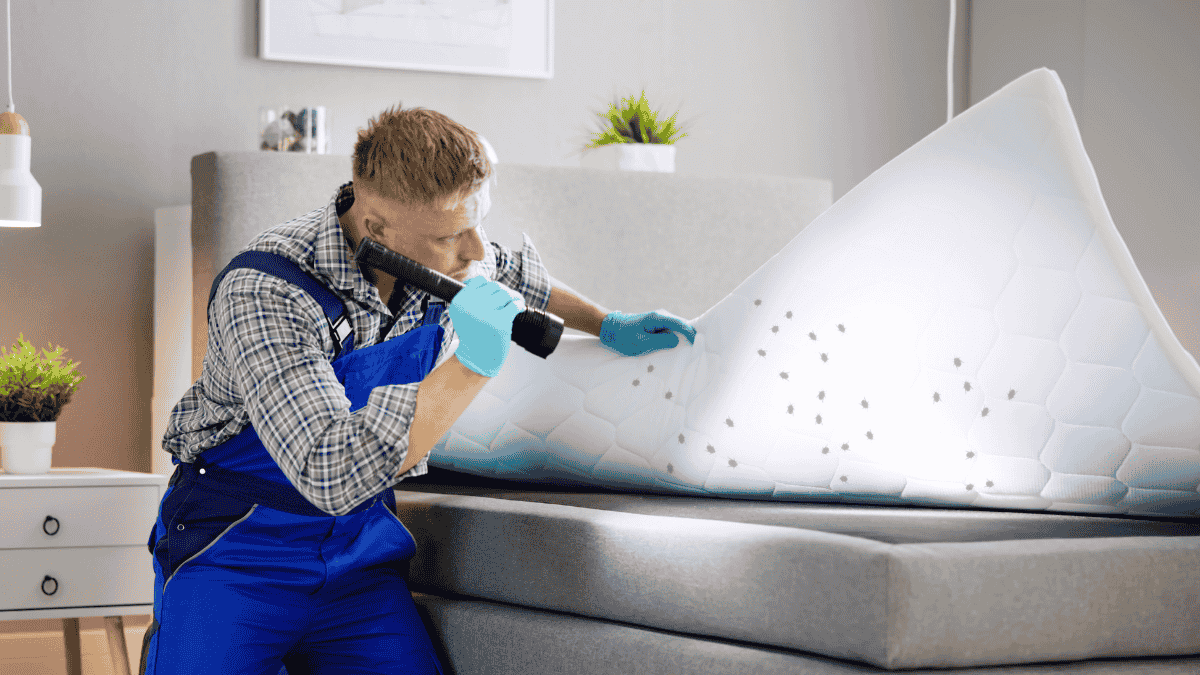
One reason bed bug infestations escalate so quickly is that they’re notoriously difficult to detect early. About 30 % of people never develop a visible skin reaction to bites, meaning an infestation can grow for weeks or months before anyone notices. Knowing what to look for beyond bite marks is critical.
Dark fecal spots
Tiny black or rust-brown specks on mattress seams, pillowcases, or bed frames – bed bug excrement left behind after feeding.
Blood stains
Reddish smears on sheets from crushed bugs or residual blood after they feed. Look along seams and corners of bedding.
Shed skins
Translucent, hollow exoskeletons left behind as nymphs molt. Found in crevices, baseboards, and under mattress tags.
Musty odour
A distinctive sweet, musty scent from pheromones. If you can smell it clearly, the infestation is already severe.
Visible bugs or eggs
Adult bed bugs are apple-seed-sized (4–5 mm), flat, and reddish-brown. Eggs are white, pinhead-sized, and found in clusters of 10–50.
Bite patterns
Itchy welts in rows or clusters, typically on exposed skin. Reactions can take up to two weeks to appear in some individuals.
84 % of pest control professionals report that clients originally called about a different pest before bed bugs were properly identified. Don’t assume – if you notice any two of the signs above, arrange a professional inspection immediately.
How Do Bed Bugs Spread Through GTA Homes?
Understanding transmission is key to preventing reinfestations.
Bed bugs do not fly or jump – they travel by clinging to objects and people. Common entry routes include: used or second-hand furniture, luggage brought back from travel, shared laundry facilities in condo and apartment buildings, school bags and backpacks, and even public transit seating. In multi-unit buildings, they migrate through shared wall voids, plumbing conduits, and electrical pathways.
A single mated female can lay 200-500 eggs over her lifetime and 1-3 eggs per day, with eggs hatching in about 10 days. This means a minor issue can become a full infestation within weeks. They will hide within 8 feet of where you sleep – prioritising mattresses, box springs, headboards, and nearby furniture – and only spread to dressers, closets, and walls when the infestation becomes severe.
Proven Bed Bug Treatment Methods Compared
There is no single universal cure for bed bugs. Effective pest control for bed bugs in Toronto relies on combining multiple approaches, a strategy known as Integrated Pest Management (IPM).
Here’s how the main treatment options compare:
| Treatment Method | How It Works | Kills Eggs? | Best For | Notes |
|---|---|---|---|---|
| Heat Treatment | Raises room temp to 49–60°C (120–140°F) for several hours | Yes | Severe infestations; whole-room treatment | Gold standard; chemical-free; requires prep; must be done by a licensed technician |
| Residual Chemical Spray | EPA/Health Canada registered insecticides applied to harborage areas | No | Targeted/moderate infestations | Effective on contact; residual action lasts weeks; risk of resistance with repeated use |
| Desiccant Dusts | Silica gel or diatomaceous earth damages the bug’s outer shell | Partial | Cracks, crevices, wall voids | Low toxicity; slow-acting; excellent in combination with spray treatments |
| Steam Treatment | Superheated steam (120°C+) applied directly to surfaces | Yes | Mattresses, upholstery, tight spaces | Chemical-free; excellent as a first step to flush bugs before vacuuming |
| IPM (Combined Approach) | Heat + chemical + desiccant dust + steam + vacuuming in sequence | Yes | All infestation levels | Most effective; recommended by Health Canada and Toronto Public Health |
A critical point about chemical-only treatments: sprays and powders alone do not reliably kill bed bug eggs. Products that claim otherwise are inconsistently effective. This is why professional exterminators always include a heat component in their protocol – it’s the only proven method to eliminate all life stages in a single treatment cycle.
DIY vs. Professional Pest Control for Bed Bugs
| DIY Bed Bug Control | Professional Pest Control |
|---|---|
| ✅ Lower upfront cost | ✅ Licensed under Ontario’s Pesticides Act |
| ✅ Useful for mild, early-stage infestations | ✅ Access to professional-grade heat and chemical treatments |
| ❌ Store-bought sprays rarely eliminate eggs | ✅ Eliminates all life stages including eggs |
| ❌ Repeated failed treatments build pesticide resistance | ✅ Typically resolved in 1-3 visits with a guarantee |
| ❌ High likelihood of missed harborage zones | ✅ Guaranteed service with follow-up visits |
Budget pest control companies that rely on a single chemical spray not only tend to fail – they can make the problem harder to solve. Repeated sub-lethal exposure to insecticides promotes pesticide resistance in bed bug populations, meaning that a cheap first treatment can make all future treatments less effective. When it comes to eliminating bed bugs, investing in a qualified exterminator from the start almost always costs less in the long run.
👉 Still unsure what to expect from a professional visit? We’ve answered your most common questions about bed bug treatment and more, in our dedicated FAQ section.
Before and After Treatment: What You Must Do
Professional treatments only work when residents properly prepare their homes beforehand. Inadequate preparation is one of the top reasons infestations persist after treatment.
Before treatment:
- Wash all bedding, clothing, and soft items in the hottest water possible and dry on high heat for at least 45 minutes
- Vacuum thoroughly – especially mattress seams, baseboards, and behind headboards – and immediately seal the vacuum bag in a plastic bag for disposal
- Empty dresser drawers and leave them open for the technician to treat
- Remove clutter from floors and under the bed – bed bugs use clutter as harborage
- Do NOT throw out furniture – laundering and heat treatment is almost always sufficient
After treatment:
- Encase your mattress and box spring in bed-bug-proof covers immediately following treatment
- Monitor with glue traps or interceptor cups under bed legs for at least 30 days
- Do not move infested items to other rooms or common areas – this spreads bugs to neighbours
- Schedule a follow-up inspection – most protocols require 2–3 rounds of treatment
Eco-Friendly Bed Bug Control Options
For households with children, elderly residents, or pets, minimising chemical exposure is understandably a priority. Fortunately, the most effective bed bug treatment – thermal heat treatment – is already completely chemical-free. Licensed GTA pest control companies can eliminate entire infestations using heat alone, raising ambient temperatures to levels lethal to all life stages without pesticide use.
Additional eco-friendly approaches that work well in combination with professional heat treatment include: diatomaceous earth (food-grade silica dust), mattress encasements, HEPA vacuuming, and steam cleaning. These methods have minimal environmental impact and are safe for all household members when applied correctly. If chemical application is necessary, look for pest control companies licensed under Ontario’s Pesticides Act that use Health Canada-registered products and follow Integrated Pest Management principles to minimise chemical volume.
Bed Bug Prevention: How to Keep Them from Coming Back
After a successful treatment, prevention is everything. The GTA’s density and constant flow of residents means re-exposure is a real risk.
- When travelling: inspect hotel mattresses, headboards, and upholstered chairs before sleeping. Keep luggage elevated on a rack – never on the floor or bed.
- Buying second-hand furniture: inspect all seams, joints, and crevices before bringing any used furniture inside your GTA home. When possible, avoid upholstered second-hand items entirely.
- In multi-unit buildings: notify your landlord at the first sign of an infestation. Ontario’s Residential Tenancies Act places responsibility on landlords to arrange treatment, and neighbouring units should be inspected simultaneously.
- Use mattress encasements: bed-bug-proof encasements on all mattresses and box springs eliminate the most common harborage site and make future inspections far easier.
- Regular inspections: if you live in a high-risk area (older building, frequent guests, or near a previous infestation), schedule a professional inspection every 6–12 months as a preventive measure.
- Reduce clutter: minimising clutter – especially under the bed and along baseboards – eliminates harborage zones and makes early detection easier.
Note: Toronto Public Health provides free fact sheets and resources for tenants dealing with bed bug infestations. Tenants in Ontario also have specific legal rights – landlords are required to maintain rental units in a good state of repair, which includes addressing pest infestations promptly. If your landlord is unresponsive, you can contact Toronto Public Health or file a complaint with the Rental Housing Enforcement Unit.
When to Call a Professional Exterminator
You should call a licensed pest control company as soon as you identify any two signs of a bed bug infestation – do not wait to see if it resolves on its own. Bed bugs do not go away without treatment, and every week of delay allows the population to grow exponentially. Early intervention is significantly faster and less expensive than treating a severe infestation that has spread across multiple rooms or units.
For residents across the GTA – from Brampton and Mississauga to Scarborough and North York – Invaders Canada provides licensed, professional pest control services equipped to handle infestations of any scale. Whether you need a same-day inspection or a comprehensive IPM treatment plan, the team at Invaders Canada is ready to help.
Dealing with bed bugs in your GTA home?
Get a fast, free inspection from Invaders Canada – licensed pest control specialists serving Toronto, Mississauga, Brampton, Scarborough, North York, and the wider GTA.
Sources & References:
- Global News – “Most bed bug ridden cities across Canada are in Ontario”
- City of Toronto – Bed Bug Information & Tenant Resources
- Government of Canada – Bed Bug Control and Prevention Guidelines