

Living in the Greater Toronto Area means you’re going to face-off with the pests sooner or later. Pests are attracted to Toronto and the GTA because of the variety of homes and easy access to food, and with a population density of 4,334.4 people per square kilometre, space is limited – making it significantly easier for pests to travel between homes and businesses.
Toronto and the surrounding GTA are uniquely vulnerable to pest activity due to high population density, aging infrastructure, constant construction, and increased movement between residential and commercial spaces. The region has repeatedly been ranked among the most bed bug-affected cities, the rattiest urban areas, and one of the most cockroach-prone regions in Canada.
A better understanding of seasonal pest control GTA patterns is crucial to keep your home pest-free in Toronto throughout the year.
GTA Pest Activity by Season: Quick-Reference Chart
| Season | Active Pests | Key Risk Areas | Priority Action |
|---|---|---|---|
| 🌱 Spring (Mar-May) | Carpenter ants, spiders, wasps, bats | Walls, soffits, attics, foundations | Seal cracks, inspect wood structures |
| ☀️ Summer (Jun-Aug) | Mosquitoes, wasps, flies, cockroaches, bed bugs | Kitchens, standing water, eaves | Eliminate standing water, store food properly |
| 🍂 Fall (Sep-Nov) | Rodents, spiders, boxelder bugs, cluster flies | Basements, garages, attics | Seal entry points, store firewood away |
| ❄️ Winter (Dec-Feb) | Mice, rats, cockroaches, bed bugs | Interior walls, kitchens, heating areas | Monitor traps, schedule professional inspections |
Spring Pest Prevention: Stop Infestations Before They Start [March-May]
As the weather warms up in Toronto, pests start to emerge from their winter hibernation, making spring a critical time for pest control.
Common pests like ants, spiders, and bees become more active, searching for food and breeding grounds.
Carpenter Ants – The GTA’s #1 Structural Pest
Unlike less common termites in the GTA, carpenter ants are the primary structural pest for Ontario residents. As temperatures consistently hit double digits, these ants begin foraging for water and sweets.
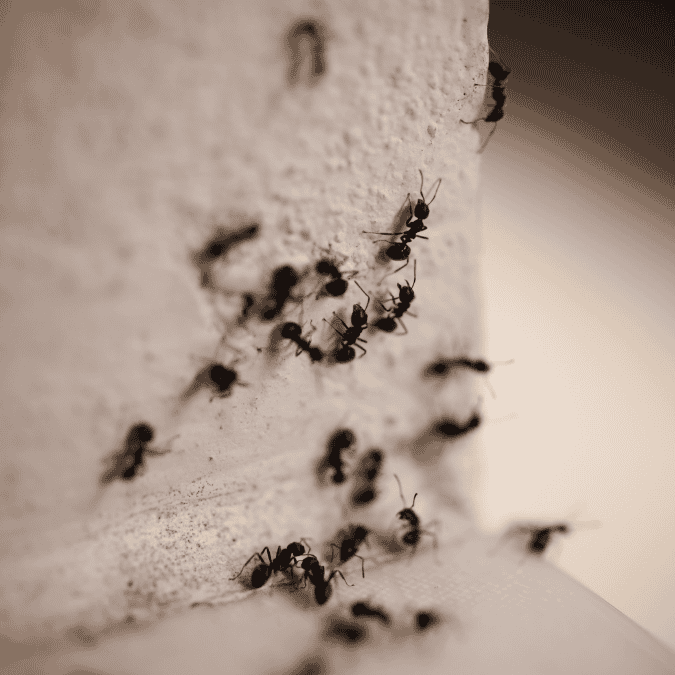
Seeing large black ants inside your house in April is usually a sign of a “satellite colony” already established within your walls. They don’t eat wood but make holes in it to build nests, which can weaken structural beams over time.
Spring Action Checklist
- Clear the gutters – clogged gutters create the damp wood conditions that carpenter ants and termites love.
- Inspect windowsills and check for gaps in screens or cracks in caulking where boxelder bugs or spiders might enter.
- Keep garden mulch at least 12 inches away from your home’s foundation to prevent it from acting as a “pest highway.”
- Seal cracks around windows and doors, and keep food stored tightly.
Summer Pest Control: Managing Peak Activity [June-August]
Summer brings an increase in mosquitoes, wasps, and flies due to the warm weather and increased breeding opportunities.
Wasps and hornets are common in Toronto during the summer months, causing fear and danger due to their painful stings.
Common Summer Threats in Toronto
| Pest | Health/Property Risk | Prevention Tip |
|---|---|---|
| Mosquitoes | West Nile virus transmission | Remove standing water; install window screens |
| Wasps/Hornets | Painful stings, allergic reactions | Remove nests from soffits, eaves, and decks early |
| Cockroaches | Allergens, asthma triggers, food contamination | Seal pantry items; fix leaks under sinks |
| Bed Bugs | Skin irritation, psychological stress | Inspect second-hand furniture; use mattress encasements |
While mosquitoes are not typically indoor pests, they can be a significant nuisance in outdoor spaces, especially near water sources, and some species can potentially transmit diseases like West Nile virus.
Summer Action Checklist
- Store your food in airtight containers – including pet food, which people sometimes don’t realize can attract unwanted guests.
- Keep your home clean, especially the kitchen. Wipe down surfaces, vacuum floors, and avoid leaving dirty dishes out overnight.
- Trim bushes, trees, and plants to reduce the chances of wildlife making homes near your home.
Fall Pest Prevention: Fortify Your Home Before Winter [September-November]
In the fall, pests like spiders and rodents seek shelter indoors as temperatures drop. Wasps and yellow jackets become more aggressive in the fall as their colonies start to decline.
The queens are the only ones that survive the winter, so workers and males become increasingly desperate for food before they die off.
Fall Action Checklist
- Inspect your home for potential entry points and seal any cracks or gaps in walls, windows, and doors. Pay special attention to areas around utility pipes, vents, and eaves.
- Store firewood at least 20 feet away from the house and keep shrubbery well trimmed to remove areas where pests can hide near your home.
- Reduce clutter in the house and yard, as it makes the perfect hiding place for critters and rodents. Regularly get rid of things you don’t need.
- Clear away debris such as wood, leaves, or other natural materials, because these materials are used to make nests.
Winter Pest Control: Defend Against Cold-Weather Invaders [December-February]
During winter, pests like mice and rats are more likely to invade homes in search of warmth and food.
This makes winter an essential season for year-round pest prevention in the GTA.
Rodent Alert: A Growing GTA Crisis
Research published in Science Advances indicates that Toronto’s rat population has risen by 186 % over the past decade. Pest control companies have reported a 30-50 % increase in rodent-related calls in some areas over the last few years.

Make sure you have robust weather stripping on all your doors and windows – mice have been known to fit through holes as small as a quarter inch round, about the size of a pencil!
Winter Action Checklist
- Screen vents, chimneys, and attic openings to prevent small animals and insects from gaining access. Replace loose mortar around basement foundations and worn weather stripping around windows.
- Schedule a winter pest inspection in Toronto to detect and prevent hidden infestations.
- Add insulation to vulnerable areas like attics, basements, and crawlspaces, as improved insulation reduces temperature fluctuations and helps prevent moisture buildup that pests rely on.
Top 6 Common GTA Pests: Identification & Risk Guide
| Pest | Peak Season | Health Risk | Property Damage |
|---|---|---|---|
| Carpenter Ants | Spring (Mar-May) | Low | High – structural wood damage |
| Cockroaches | Year-round (peak in summer) | High – asthma, allergies, disease | Moderate – food contamination |
| Mice & Rats | Fall/Winter | High – Hantavirus, Leptospirosis | High – chew wiring, insulation |
| Bed Bugs | Year-round | Moderate – skin irritation, stress | Low |
| Wasps/Hornets | Summer/Early Fall | Moderate – stings, allergic reactions | Low |
| Raccoons/Squirrels | Spring/Fall | Moderate – rabies risk | High – attic and roof damage |
Common types of ants found in Toronto include the carpenter ant (Camponotus), pharaoh ants (Monomorium pharaonis), pavement ants (Tetramorium caespitum), and fire ants (Myrmica rubra).
DIY vs. Professional Pest Control: When to Call in the Experts
Small infestations can often be managed with DIY solutions like bait stations, pheromone traps, and natural repellents. However, for large or recurring infestations, structural damage, or health risks, professional pest control services are recommended.
Call a professional residential pest service when you notice:
Recurring pest sightings despite DIY efforts
Structural damage caused by pests like carpenter ants or rats, or health risks posed by pests like cockroaches or bed bugs
Multiple pests in different areas of your home
What to look for in a GTA pest control provider:
Experience and a proven track record, proper certifications and licensing, eco-friendly methods and products, positive customer reviews, and a guarantee on their work.
Year-Round Home Pest Management in Toronto
Develop a comprehensive, year-round pest management plan tailored to your home and the common pests in Toronto. Prioritize the most critical areas first, such as sealing entry points and addressing moisture issues.
Sustainable Long-Term Prevention Strategies
- Seal entry points – Pests are opportunists, always on the lookout for a way in. Take a thorough tour around your home, inside and out, and seal any potential entry points. Remember, mice can squeeze through holes as small as a dime.
- Manage moisture – Many pests are attracted to damp environments.
- Fix leaky pipes, ensure proper drainage, and use dehumidifiers in basements.
- Maintain cleanliness – Clean kitchens, properly stored food, and decluttered spaces are your first line of defense.
- Schedule regular inspections – Regular inspections help in adjusting pest control strategies according to seasonal changes, ensuring year-round protection.
- Engage your community – Adjust your strategies with the seasons and engage with neighbors for community-wide efforts.
The Bottom Line: Prevention Over Reaction
In regions like Toronto and the GTA, where pest pressure is constant, prevention is a practical necessity, not a luxury. The key to effective pest control is consistency and proactivity.
Follow this season-by-season pest control for all seasons approach – seal your home in fall, inspect in winter, treat in spring, and maintain throughout summer – and you’ll hopefully be able to protect your home in the Greater Toronto Area from the region’s most persistent invaders.
Don’t wait until pests have settled in. A proactive, year-round prevention plan is the most cost-effective and stress-free way to keep your GTA home safe, healthy, and pest-free for all seasons ahead.