
Summary
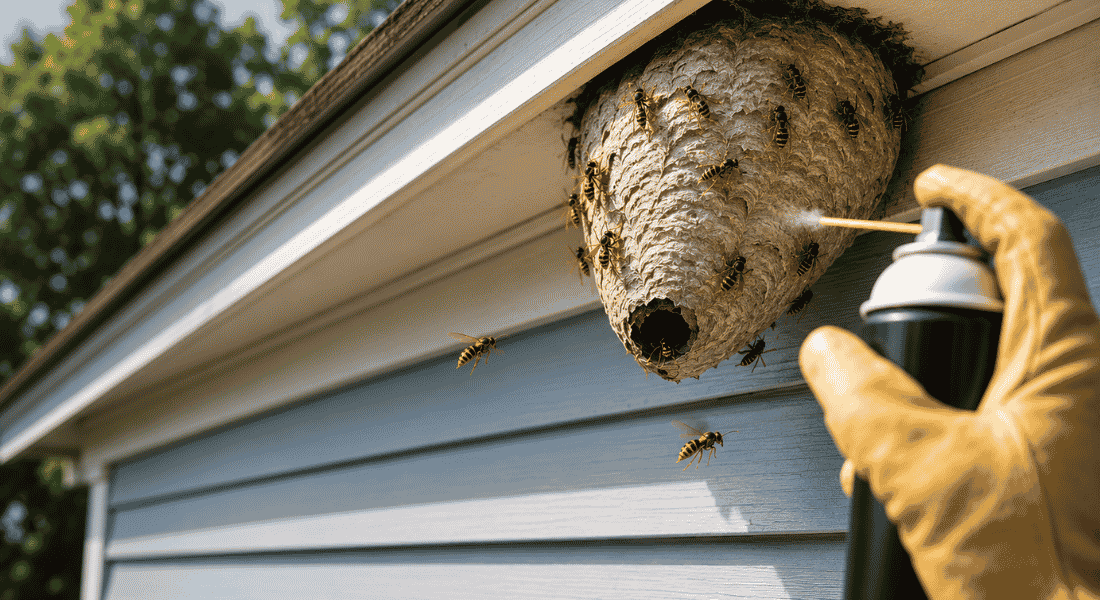
“The impact of dangerous wasps exceeds severe levels. Investing in professional wasp nest removal services can help. But for that purpose, learning about wasp infestations, how they affect your environment, and endanger your security is necessary. Knowing the signs that you need wasp removal services and avoiding common mistakes is also beneficial. When you know the differences between DIY and professional wasp control, you can make reasonable choices.”
During the warmer months, wasps and hornets are the most active. They can create health challenges for homeowners, especially when your family spends a lot of time outdoors. Finding a wasp nest is a disastrous situation because these type of pests become aggressive when they feel their nest or colony is threatened. Implementing different measures can help in the wasp nest removal.
But even before that, you can hurt them during different activities like gardening, mowing the lawn, playing outdoors, etc. Such activities end up disturbing the nest, increasing the risk of painful stings. You must learn proper measures and the importance of removing these nests to keep your family and environment safe.
What Is Wasp Nest Removal?
It’s the process of eliminating an active wasp colony and removing or managing the nest structure after the colony is no longer active. The primary purpose is to decrease the risks of stings, prevent wasps from entering indoors, and keep your outdoors safe where your loved ones spend time regularly.
An active wasp nest means a nest with wasps flying in and out, which makes it more dangerous than an old and empty nest. Active nests may contain workers, developing larvae, and a queen. If the nest is disturbed, wasps can defend it aggressively. That is why homeowners should never treat wasp nest removal like ordinary outdoor cleanup.
Wasp control should always start with observation. Watch from a safe distance. Look for repeated flight activity, the entry point, the nest shape, and whether the nest is exposed or hidden. Do not hit, shake, spray randomly, burn, flood, or seal the nest without knowing what is inside.
How to Identify a Wasp Nest?
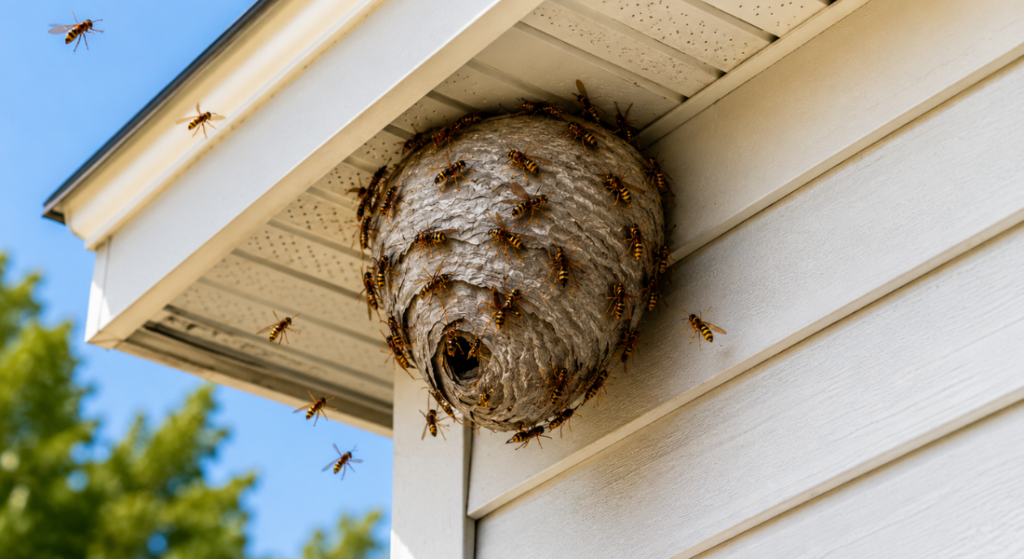
Before you remove a wasp nest, understand what you’re dealing with. Different wasps build different nests. Their removal risks vary according to the specific species and nesting spots.
| Nest Type | Common Location | What It Looks Like | Homeowner Risk |
|---|---|---|---|
| Paper wasp nest | Eaves, porch ceilings, railings, fence posts | Open comb, umbrella-shaped cells | Moderate if low and exposed |
| Yellowjacket nest | Ground holes, wall voids, attics, sheds | Often hidden, heavy traffic at entry point | High, especially if disturbed |
| Hornet nest | Trees, rooflines, high eaves, shrubs | Large gray paper-like enclosed nest | High due to defensive behavior |
| Old inactive nest | Trees, eaves, corners, sheds | No flight activity | Low, but confirm first |
A visible nest is easier to assess. A hidden nest is more serious. If wasps keep entering a crack in siding, a hole near the roofline, a gap around a vent, or an opening in the ground, do not assume the nest is small. Hidden nests may be larger than they appear from outside.
Should Every Wasp Nest Be Removed?
No. Not every wasp nest requires immediate removal. If the nest is far from activity, high in a tree, away from doors, and not bothering anyone, it may be safer to leave it alone. Wasps can help control other insects, and many nests naturally die off when the season ends.
However, removal is usually the better option when the nest is close to people. A nest near a front door, garage entrance, deck, patio, pool, mailbox, play area, outdoor dining space, or roofline repair area can become a real hazard.
The decision should be practical. If no one is likely to disturb the nest, monitoring may be enough. If regular movement, vibration, noise, pets, or yard work happens nearby, wasp nest removal becomes more important.
Can You Remove a Small Wasp Nest Yourself?
A homeowner may be able to remove a small, exposed paper wasp nest if it is easy to reach from the ground, away from high-traffic areas, and not showing heavy activity. Even then, caution is needed.
A safer DIY situation looks like this: the nest is visible, small, low, not inside a wall, not above your head from a ladder, and not surrounded by dozens of wasps. If the nest is active, any product used should be labeled for wasp or hornet nest treatment and used exactly according to the label.
The best time to address an exposed nest is usually late evening or early morning when wasps are less active. After treatment, homeowners should wait and monitor for activity before removing the nest. If wasps continue flying in and out after treatment, the colony may still be active.
If there is any doubt, call a professional. The cost of professional wasp control is usually easier to manage than the risk of multiple stings, a fall, or wasps entering the house.
When Should You Avoid DIY Wasp Nest Removal?
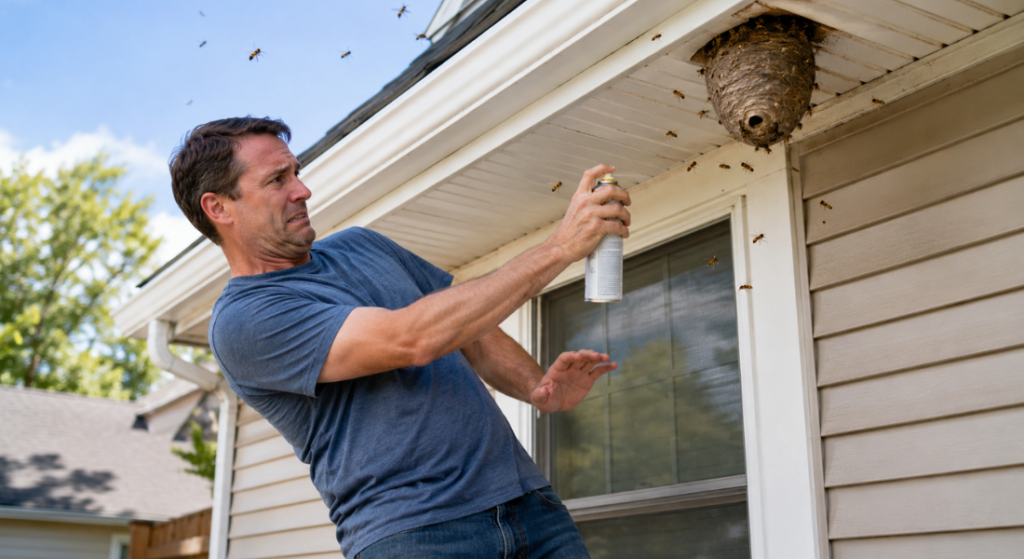
DIY wasp nest removal is not always worth the risk. Homeowners should avoid DIY removal when the nest is inside a wall, attic, roofline, chimney, vent, or ground opening. These situations can quickly become unsafe because the nest is hidden, the colony may be large, and wasps may escape into the home.
You should also avoid DIY pest control if anyone in the household has a history of severe sting reactions, asthma, mobility issues, or limited ability to move away quickly. Do not attempt removal from a ladder, steep roof, tight attic, or unstable outdoor surface. The risk of falling while reacting to wasps can be worse than the sting itself.
Large nests, aggressive wasps, and nests with heavy flight activity should be handled by a pest control professional. This is especially true for yellowjackets and hornets.
Ground Nests and Hidden Nests
Ground nests are often linked with yellowjackets. These nests may start in old rodent burrows, soil cavities, or gaps near landscape edges. They can be hard to notice until someone steps near the opening or runs a mower over it.
Ground nests can be very defensive. Do not flood them with water or cover the entrance with rocks, soil, or concrete. That may not eliminate the colony and can cause wasps to find another exit. Keep the area marked from a safe distance and avoid yard work nearby until the nest is handled.
Hidden wall nests are also risky. Buzzing sounds, wasps appearing indoors, or insects entering siding gaps can point to a nest inside the home’s structure. This is not a normal DIY job. It may require proper treatment, controlled access, and later repair of entry points.
Common Mistakes Homeowners Make
The biggest mistake is disturbing the nest without a plan. Hitting the nest with a broom, throwing objects at it, spraying from too close, or using a ladder can quickly lead to multiple stings.
Another mistake is sealing active entry points. If wasps are nesting inside a wall or roofline, sealing the outside hole may drive them into the home. The colony must be handled first.
Homeowners also underestimate nest size. A small outside opening may lead to a large hidden colony. Repeated wasp traffic is a stronger clue than the size of the visible hole.
Using unsafe methods is another serious problem. Fire, gasoline, and unapproved chemicals should never be used for wasp control. They can harm people, pets, plants, siding, roofing, and the environment.
Signs You Need Wasp Control
For proper outdoor safety and protection of your family, staying cautious about signs of wasp activity is beneficial.
- You may need wasp control if you notice repeated wasp activity in the same area. One or two wasps in the yard does not always mean there is a nest on the property. But a steady traffic pattern usually means a nest is nearby.
- Common warning signs include wasps flying in and out of a roofline gap, buzzing inside a wall or ceiling, wasps gathering near a porch or deck, insects entering a ground hole, or increased stings near one outdoor area. A nest near children, pets, doors, or seating areas should be treated as a safety issue.
- The most serious signs are wasps entering the home, wasps appearing indoors repeatedly, or people getting stung near the same location. At that point, the nest should not be ignored.
How to Remove A Wasp Nest?
Professional pest control technicians usually start with an inspection. They identify the type of wasp, locate the nest or entry point, check the risk level, and decide which treatment method fits the situation.
But if you’re planning to remove a wasp nest, then follow the given steps.
- Check where the wasps are entering, how active the nest is, and whether it is exposed or hidden inside a wall, attic, roofline, or ground hole.
- Make sure children, pets, and visitors stay far from the nest before any treatment.
- If the nest is small and exposed, treat it early morning or late evening when wasps are usually less active.
- Use a product made for wasp nest treatment and follow the label directions carefully. Never use fire, gasoline, water, or random chemicals.
- After treatment, watch the nest from a safe distance. Remove it only when there is no more wasp activity.
- Avoid DIY removal if the nest is large, high, hidden, indoors, near electrical areas, or if anyone has a sting allergy.
DIY vs Professional Wasp Nest Removal
| Situation | DIY May Be Reasonable | Professional Help Is Better |
|---|---|---|
| Small exposed paper wasp nest | Yes, if low and easy to access | If activity is heavy |
| Nest inside wall or attic | No | Yes |
| Roofline nest | Usually no | Yes |
| Ground nest | Usually no | Yes |
| Large hornet nest | No | Yes |
| Sting allergy in household | No | Yes |
| Nest near children or pets | Not ideal | Yes |
| Nest requires ladder work | No | Yes |
What Happens After the Nest Is Removed?
After wasp nest removal, activity may not stop instantly. Some returning wasps may come back to the old nest site for a short time. This does not always mean treatment failed. However, heavy activity after a day or two may need follow-up.
Once the colony is inactive, the nest can usually be removed if it is accessible. Removing an old nest can make the area cleaner and reduce concern, but the bigger priority is sealing entry points and correcting conditions that attracted wasps in the first place.
For roofline and wall void nests, repairs should happen only after activity has stopped. Seal gaps around soffits, fascia, siding, vents, pipe penetrations, and exterior cracks. Use proper materials, not temporary tape or loose foam where wasps can chew or enter again.
Why Wasps Build Nests Around Homes?
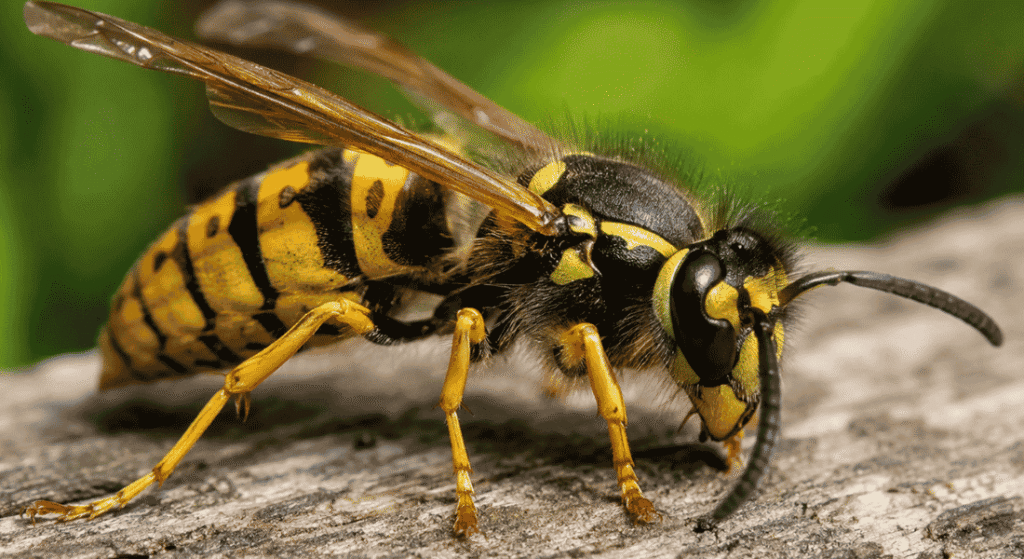
Wasps choose nesting areas that give them access to food, shelter, and protection against weather fluctuations. Usually, these nesting areas involve rooflines, eaves, soffits, attics, wall gaps, sheds, garages, fences, porch ceilings, tree branches, shrubs, and underground holes.
A roofline is especially attractive because it gives cover from rain and direct sunlight. Small gaps near fascia boards, siding, vents, or soffits can also lead to hidden voids. Once wasps start using the same entry point repeatedly, the nest may already be inside the structure.
Food sources also matter. Wasps are attracted to sugary drinks, exposed trash, fallen fruit, pet food, barbecue leftovers, and other insects. In spring and early summer, wasps often hunt insects to feed larvae. Later in the season, they become more noticeable around sweet foods and outdoor gatherings.
How to Prevent Wasp Nests Around the Home?
Prevention is the best long-term wasp control strategy. Start by reducing food attractants. Keep trash bins sealed, rinse recycling, clean outdoor dining areas, pick up fallen fruit, and avoid leaving sugary drinks outside. Pet food should not stay outdoors for long periods.
Inspect the home exterior in early spring. Look at rooflines, soffits, window frames, sheds, porch ceilings, decks, fence posts, and garage corners. Small early nests are easier to deal with than mature nests later in the season.
Seal structural gaps before wasps move in. Repair damaged screens, cover vents with proper mesh, close gaps in siding, and fix loose fascia boards. Keep shrubs trimmed away from walls and rooflines so nests are easier to spot.
You can also reduce nesting shelter by decluttering garages, sheds, and covered storage areas. Wasps prefer quiet, protected spaces where they are not disturbed.
Professional pest control solutions are effective in various ways. Saving money is not something you should sacrifice your safety for. Invaders Canada can help by offering wasp nest removal services for both residential and commercial spaces.
You can contact us today to get thorough details and beneficial solutions for your pest control needs. When you feel DIY solutions are risky, they probably are, and not worth risking your personal safety.
Conclusion
To conclude, wasp nest removal is a safety decision, not just a pest cleanup task. Homeowners should first identify the nest, watch activity from a safe distance, and decide whether removal is necessary. Some nests can be left alone if they are far from people. The safest wasp control plan is to avoid disturbing the nest and call a professional when the risk is high, and seal entry points after the colony is inactive. A careful approach prevents stings, protects the home, and keeps outdoor spaces safer throughout wasp season.
FAQs
What is the safest way to remove a wasp nest?
The safest way is to first identify the nest type and location, then decide whether it should be handled by a professional. Small, exposed paper wasp nests may be manageable for some homeowners, but hidden, high, ground, roofline, or aggressive nests should be handled professionally.
Can I remove a wasp nest at night?
Wasps are usually less active at night, but night removal still carries risk. Poor visibility, ladder use, and sudden wasp activity can make the job dangerous. If the nest is high, hidden, or large, do not attempt it yourself.
Should I knock down a wasp nest after spraying?
Only remove the nest after you are sure it is inactive. If wasps are still flying in and out, wait and reassess. Knocking down an active nest can provoke the colony and lead to stings.
Will wasps return to the same nest?
Many wasp nests are not reused the next year, but the same property can attract new nests if food sources, shelter, and entry points remain. Prevention and sealing are still important after removal.
How do I keep wasps away from my roofline?
Inspect rooflines in spring, seal soffit and fascia gaps, repair damaged vents, keep nearby vegetation trimmed, and reduce outdoor food attractants. If wasps are already entering the roofline, treat the nest before sealing the opening.