
Summary
“The best way to get rid of rats in GTA homes is to use a complete control plan: inspect the property, remove food and water sources, place traps or bait stations in active areas, seal entry points, clean contaminated areas, and keep monitoring until there are no fresh signs of rat activity. Traps or baiting alone may reduce the problem, but long-term rat control GTA homeowners need depends on exclusion, sanitation, and prevention.”
A genuinely distressing experience is to find rats in your house, right? Homeowners and property owners want to get rid of rats in the GTA. They can enter houses, garages, basements, sheds, restaurants, storage rooms, and apartment buildings looking for food, warmth, water, and shelter. The problem often starts outside before rats move indoors.
Garbage bins, compost, pet food, bird seed, cluttered yards, construction gaps, damaged foundations, old garages, and shared waste areas can all attract rats. Once they find a reliable food source and a safe nesting spot, they can become difficult to remove without a proper plan. If you have rats in house areas, the worst thing you can do is ignore the signs. Learning how to get rid of them and when to call for professional help can prove effective.
Simple Steps to Get Rid of the Rats in the GTA
Step 1: Confirm That You Are Dealing With Rats
Before starting treatment for rat removal in the GTA, make sure the pest problem is actually rats and not mice. Rats are larger, stronger, more cautious, and harder to control than mice. They also need larger traps, stronger exclusion materials, and a more strategic control plan.
Common signs of rats include large droppings, gnaw marks, scratching noises at night, greasy rub marks along walls, damaged food packaging, burrows outside, and a strong musky smell in enclosed spaces. You may notice these signs in basements, kitchens, garages, crawl spaces, laundry rooms, sheds, or near outdoor garbage areas.
Rat droppings are usually bigger than mouse droppings and often appear near walls, appliances, storage shelves, or food sources. Rats also tend to travel along edges instead of crossing open spaces, so signs are often found beside baseboards, fences, foundations, and wall lines.
If you see a rat during the day, the infestation may already be active and pressured. Rats are usually more active at night, so daytime sightings can mean competition for food or a larger population nearby.
Step 2: Inspect the Whole Property
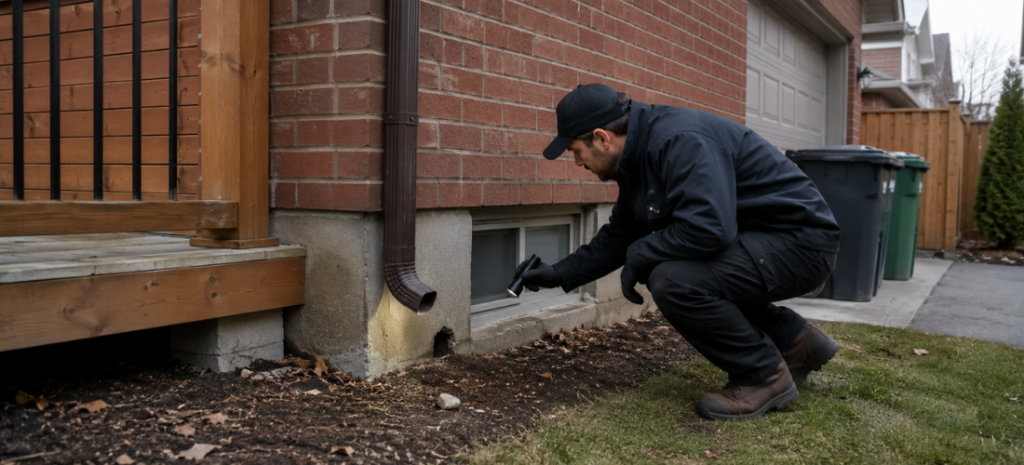
A proper rat control GTA plan starts with a full inspection. Do not only check the room where you saw the rat. Rats can move between outdoor burrows, garages, basements, wall voids, kitchens, and neighbouring properties.
Start outside the home. Walk around the foundation and look for holes, gaps, damaged vents, loose siding, broken weather stripping, garage door gaps, pipe openings, AC line gaps, and burrows near the ground. Check under decks, sheds, stairs, porches, retaining walls, compost bins, and garbage storage areas.
Then inspect inside the property. Focus on basements, kitchens, laundry rooms, furnace rooms, crawl spaces, pantries, storage rooms, garages, and drop ceilings. Look for droppings, chewing, urine stains, nesting material, damaged packaging, and greasy marks. Without inspection, traps and baiting can become guesswork.
Step 3: Remove Food Sources Immediately
Sanitation is one of the most important parts of rat control GTA homeowners should focus on. Rats stay where they can find food. If food is easy to access, they are less likely to interact with traps and more likely to continue nesting nearby.
Start with garbage. Use bins with tight lids, avoid leaving garbage bags outside overnight, and clean food residue from the bin area. If you live in a townhouse, apartment, or multi-unit property, shared garbage zones should be kept closed, clean, and organized.
Inside the home, store food in sealed hard containers. Rats can chew through cardboard, paper, and thin plastic. Cereal, rice, flour, pasta, snacks, pet food, bird seed, and dry goods should not be left in weak packaging.
Outdoor food sources are just as important. Remove fallen fruit, clean BBQ grease, secure compost, avoid leaving pet food outside, and reduce bird seed spillage. Bird feeders, vegetable gardens, open compost, and overflowing bins can all support rat activity.
If you want to get rid of rats in the house for good, sanitation has to happen before and during treatment. Otherwise, the property keeps attracting new rats even after some are removed.
Step 4: Remove Water and Shelter Sources
Rats need more than food. They also look for water and shelter. Leaky outdoor taps, poor drainage, wet basements, clogged gutters, low areas in the yard, and pet water bowls can all support rat activity.
Fix plumbing leaks, remove standing water, improve drainage, and keep basement areas dry. If your property has damp corners, open crawl spaces, or poor foundation drainage, rats may find the area more comfortable.
Shelter is another major factor. Rats like cluttered, protected spaces where they can hide and nest. Remove piles of wood, old furniture, cardboard, construction debris, unused garden materials, and dense vegetation near the building.
Keep grass trimmed and avoid storing items directly against exterior walls. If rats have fewer places to hide, their movement becomes more exposed, and control becomes easier.
Step 5: Place Traps in Active Areas
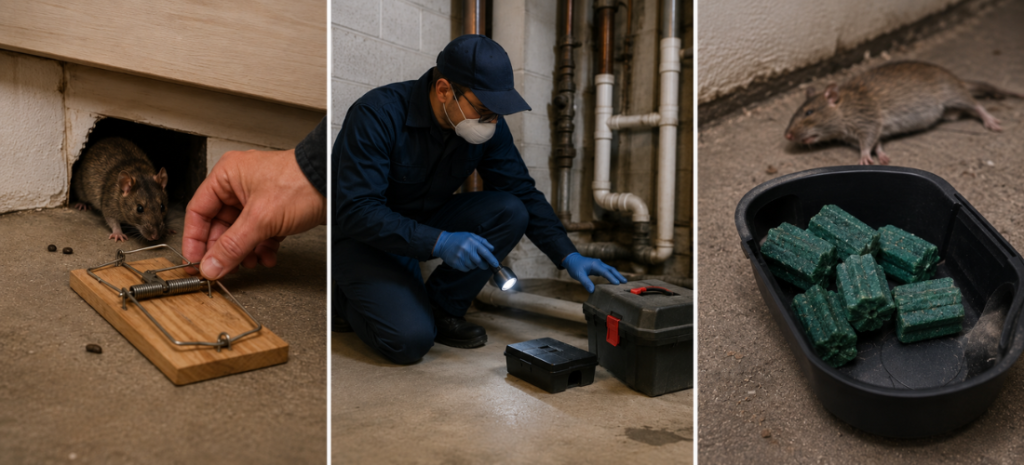
Traps are often the best first control method inside a home. They allow you to remove rats without the risk of poisoned rats dying inside walls or ceilings. However, traps only work when they are placed correctly.
Use rat-sized traps, not mouse traps. Place them along walls, behind appliances, near droppings, close to entry points, beside burrow exits, or along greasy rub marks. Rats usually travel along edges, so wall-side placement is more effective than open-floor placement.
Use small amounts of bait on the trap. Peanut butter, oats, dried fruit, nuts, or pet food can work. Do not overload the trap. Too much bait can let the rat feed without triggering it.
Check traps daily. Wear gloves when handling traps, dead rats, or contaminated materials. Keep traps away from children, pets, and food preparation areas. For homes with pets or kids, enclosed trap stations are safer than exposed snap traps.
If you place traps for several nights and nothing happens, do not assume the rats are gone. It may mean the traps are in the wrong location, the rats are avoiding them, or there is still too much alternative food available.
Step 6: Use Baiting Carefully
Baiting can be useful for larger infestations, especially outside the home, but it must be done carefully. Loose poison should never be scattered around the property. Bait should be placed in secure bait stations where children, pets, birds, and other non-target animals cannot access it.
Baiting is usually more effective when combined with sanitation and exclusion. If you only use bait but leave garbage, food sources, and entry points available, the rat problem can return. Baiting may reduce the active population, but it does not fix the conditions that caused the infestation.
For outdoor rat control GTA properties often need locked bait stations along active travel paths, near burrow zones, beside fences, around garbage areas, or close to exterior walls. Placement should be based on inspection, not random guessing.
Be careful using bait indoors. If a poisoned rat dies in a wall void, ceiling, crawl space, or hidden area, it can cause odour and secondary pest issues. In many cases, traps are better indoors, while bait stations are better suited for controlled exterior placement.
For serious infestations, professional baiting is safer and more strategic. A rat removal GTA technician can place stations properly, monitor bait consumption, adjust treatment, and reduce risk.
Step 7: Seal Entry Points With Strong Materials
Exclusion is the step that prevents rats from coming back. If you trap and bait but do not seal entry points, new rats can enter again.
Rats can squeeze through surprisingly small openings, especially around foundations, vents, pipes, garages, and utility lines. Inspect every gap carefully. If you can see daylight, damaged material, or an opening leading into the structure, treat it as a possible entry point.
Use strong materials such as metal mesh, steel wool combined with sealant, cement, metal flashing, hardware cloth, and properly fitted vent covers. Do not rely on foam alone. Rats can chew through weak materials.
Common rat entry points include foundation cracks, garage door gaps, basement window gaps, open vents, gaps around AC lines, loose siding, damaged brickwork, utility pipe openings, crawl space doors, and gaps under exterior doors.
Do not seal rats inside the home. If you hear activity in the walls or ceiling, use trapping and inspection first. Once activity is reduced and the main movement is understood, seal the openings properly.
Step 8: Clean Contaminated Areas Safely
Rat droppings, urine, nesting material, and contaminated surfaces should be cleaned carefully. Do not sweep dry droppings or vacuum them directly, because this can spread particles into the air.
Wear gloves, ventilate the area if possible, and spray droppings or nesting material with disinfectant before removing them. Let the disinfectant sit for several minutes, then collect the waste with paper towels and place it in a sealed bag.
After removing visible contamination, disinfect the surrounding surface. Wash hands thoroughly after cleanup. If the contamination is heavy, especially in insulation, crawl spaces, attics, or storage rooms, professional cleanup may be safer.
Cleaning is also useful for monitoring. Once old droppings are removed, it becomes easier to see whether new droppings appear. Fresh signs after cleanup mean the rat problem is still active.
Step 9: Monitor After Treatment
A complete get rid of rats GTA plan does not end after one trap catch or one bait station visit. Rats are cautious, and activity can continue in small amounts after the first treatment.
Monitor for fresh droppings, new chewing, trap activity, bait consumption, new burrows, scratching sounds, and food damage. Check the same areas every few days, especially kitchens, basements, garages, garbage zones, and foundation edges.
If there are no new signs for several weeks, the active problem may be under control. Still, keep prevention habits in place. Rat pressure can return because of nearby construction, shared garbage, restaurants, sewers, ravines, laneways, or neighbouring infestations.
For rental properties, commercial buildings, and restaurants, ongoing monitoring is even more important. These properties often have more food sources, more traffic, and more hiding spots.
Step 10: Prevent Rats From Returning
Long-term prevention is the real goal. Once rats are removed, your property should become harder to enter and less attractive to rodents.
Keep garbage sealed. Store food properly. Repair exterior gaps. Maintain the yard. Trim vegetation. Clean under decks and sheds. Keep compost secure. Remove clutter from garages and basements. Check weather stripping and door sweeps. Inspect the property after storms, construction work, or seasonal changes.
If your neighbours also have rat activity, prevention may require cooperation. Rats move across yards, fences, alleys, drains, and shared waste areas. A single property can improve, but nearby attractants can keep pressure high.
For GTA properties, this is especially important because homes are often close together. Semi-detached houses, townhomes, apartment buildings, restaurants, and mixed-use areas can all share rodent pressure.
DIY Rat Control vs Professional Rat Removal GTA Service
| Option | Best For | What You Can Do | Limitations | Recommended Action |
|---|---|---|---|---|
| DIY Pest Control | Small, early rat problems with limited activity | Inspect the property, place traps, remove food sources, clean droppings safely, and seal one or two visible entry points | May not work if rats are inside walls, ceilings, basements, or multiple areas of the property | Use DIY only when the problem is minor, the entry point is clear, and activity is limited |
| Professional Rat Removal GTA Service | Active, repeated, or hard-to-locate rat problems | Complete inspection, activity mapping, sanitation advice, trapping or baiting, exclusion recommendations, entry-point sealing, follow-up visits, and prevention planning | Costs more than DIY, but gives a more complete and reliable solution | Hire a professional when rats are in walls, ceilings, rental units, restaurants, basements, or multi-property areas |
| Poison-Only Service | Not recommended as a complete solution | May reduce the rat population temporarily | Does not inspect the property, does not seal entry points, and does not solve why rats are entering | Avoid services that only place poison without inspection, exclusion, and prevention guidance |
Invaders Canada is a professional pest control company in the GTA for both commercial and residential properties. Whether you want to get rid of rats or any other pests and insects, we can offer complete assistance with a combination of advanced and comprehensive strategies.
We have a team of experts, and we use unique tools to ensure long-term prevention of rats and other pests. Contact us today for further details.
Conclusion
To get rid of rats in GTA homes, you need more than one quick fix. Rats survive because they find food, shelter, water, and entry points. If those conditions stay in place, the problem can return again and again. The right process is clear: inspect the property, remove attractants, place traps in active areas, use baiting carefully, seal entry points, clean contaminated spaces, and monitor after treatment. When you use a combination of cleaning strategies, rat control becomes much more effective and long-lasting.
FAQs
What is the fastest way to get rid of rats in GTA homes?
The fastest way is to combine inspection, sanitation, traps, baiting where needed, exclusion, and follow-up monitoring. Traps can remove active rats, but sealing entry points and removing food sources are needed for long-term control.
Why do I have rats in house areas?
You may have rats in house areas because they found food, warmth, water, or an entry point. Common causes include open garbage, pet food, foundation gaps, garage openings, compost, clutter, nearby construction, or neighbouring rat activity.
Is baiting enough for rat control GTA properties?
No. Baiting alone is not enough. It can reduce rat activity, but it does not fix entry points, food sources, water sources, or nesting areas. For lasting rat control, GTA homeowners should combine baiting with traps, exclusion, sanitation, and prevention.
Should I use traps or poison for rats?
Traps are often better indoors because they let you remove the rat and avoid odour from dead rats in hidden areas. Poison or baiting may be useful outdoors in secure bait stations, especially for larger infestations. The best option depends on the location and severity of the rat problem.
When should I call a professional rat removal GTA company?
Call a professional if you hear rats in walls, see rats during the day, find droppings in multiple rooms, notice burrows near the foundation, have repeated infestations, or cannot find the entry point. Professional rat removal GTA service is also recommended for rental properties, restaurants, commercial spaces, and homes with children or pets.
Ant Colony in Your House? 7 Signs You Must Know