
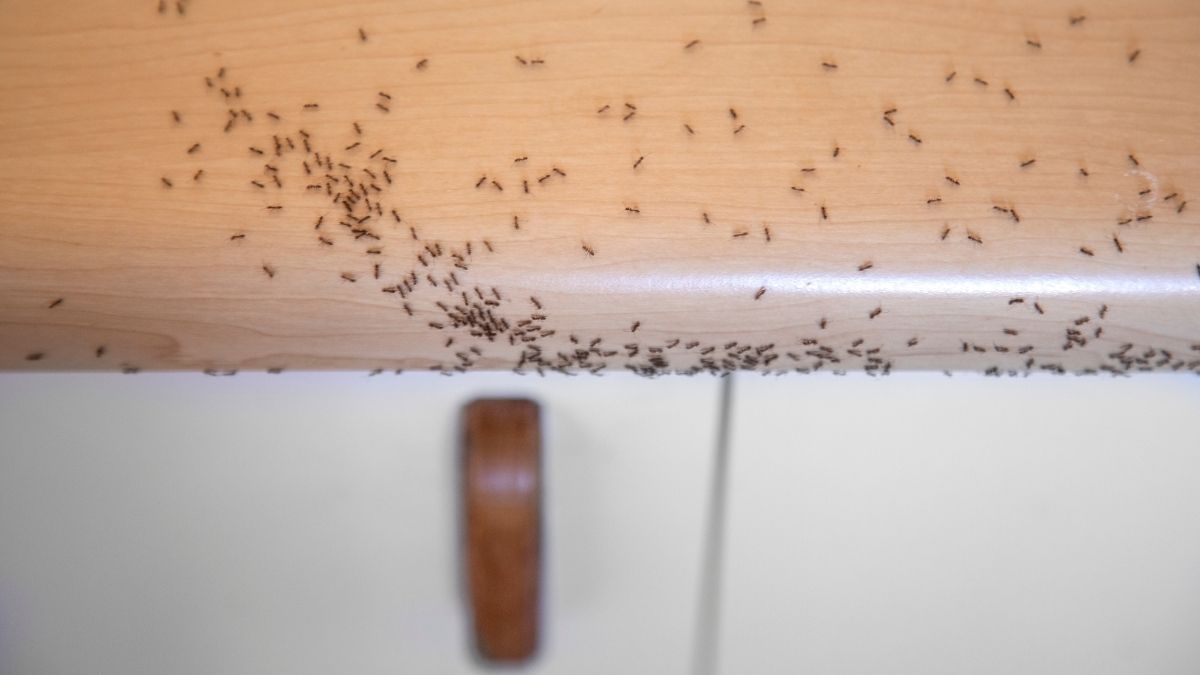
Spotting a couple of ants on the kitchen counter is normal. Spotting the same ants every single day, in the same spot, is not. That’s your sign that a colony has already set up camp inside or right around your house, and it is only going to grow until something is done about it.
This post breaks down the 7 true signs of an ant colony in your house, the species most common across Ontario, and what to do the moment you notice them.
If you are in the Greater Toronto Area, we can also send a licensed technician for a free inspection.
What Does It Mean If You See an Ant Colony in Your House?
If you are seeing ants indoors on a regular basis, it means a colony has established a nest inside your home’s structure or just outside its foundation, and worker ants are actively foraging for food and water.
A single ant is a scout. A repeated trail is a colony.

7 Signs You Have an Ant Colony in Your House
Here are the seven most obvious signs an ant colony is around:
1. You See a Steady Trail of Ants, Not Just One or Two
A single ant wandering across your counter is just a scout. A visible line of ants moving in formation, often in a zigzag rather than a straight path, means dozens or hundreds of workers are already using an established pheromone trail between the nest and a food source. Ants lay down scent trails as they travel, and other workers follow that same path, which is why the line gets thicker the longer it goes unnoticed.
2. Ants Keep Reappearing in the Same Spot Every Day
If you wipe down a counter or windowsill and ants show up in that exact spot again within a day, the colony is close by. Occasional random sightings suggest ants passing through. A consistent daily pattern points to a nest inside a wall void, under flooring, or just beneath your foundation.
3. You Notice Small Piles of Dirt, Sand, or Wood Shavings
Certain ants leave physical evidence behind. Pavement ants push fine soil or sand out through cracks in concrete, driveways, and foundation gaps. Carpenter ants excavate wood to build galleries and leave behind small piles of sawdust-like debris called frass, often found near baseboards, window frames, or in the basement.
Either type of debris is a strong indicator of an active nest, not just foraging activity.
4. You Hear Faint Rustling or Tapping Sounds Inside Walls
This sign is specific to carpenter ants, which hollow out damp or damaged wood to build their colony rather than eating it. People sometimes describe a faint rustling, crackling, or tapping sound coming from inside walls, especially at night when carpenter ants are most active. If you hear this along with sawdust piles, it is time for a proper wall inspection.
5. You Spot Winged Ants (Swarmers) Indoors
Winged ants inside your house, known as swarmers or alates, are one of the clearest signs a mature colony already exists on your property. Swarmers are reproductive ants that leave an established nest to start new colonies, and their presence indoors, particularly near windows, usually means the parent colony is close enough to be inside your walls or foundation.
Note: Many people confuse ant swarmers with termite swarmers, so so confirming the difference between carpenter ants and termites is imperative before you choose a treatment.
6. Ants Are Concentrated Around Moisture (Kitchens, Bathrooms, and Basements)
Ants need water as much as they need food, which is why kitchens, bathrooms, and laundry rooms attract the heaviest activity. Look closely at areas with leaky pipes, condensation around windows, damp basement corners, and under sinks. Odorous house ants and pharaoh ants, both common in Ontario, are especially drawn to consistent moisture sources indoors, particularly during hot, dry stretches in the summer.
7. You Find Dead Ants Clustered Near Windows or Baseboards
Small piles of dead ants, often near a window sill or along a baseboard, usually point to a nest close by inside a wall cavity. This is common with odorous house ants and can also happen after a bait product has been used, since worker ants that consume bait often die near the trail before making it back to the nest.
Signs Checklist
| Sign | What It Usually Means |
|---|---|
| Daily ant trails in the same spot | Active nest nearby, not a one-off scout |
| Sand or dirt piles near foundation cracks | Pavement ant nest under concrete |
| Sawdust-like debris (frass) | Carpenter ants excavating wood |
| Rustling sounds inside walls | Carpenter ant colony inside a wall void |
| Winged ants indoors | Mature colony ready to spread |
| Ants near sinks, drains, or damp basements | Moisture-seeking species like odorous house ants |
| Dead ants near windows or baseboards | Nest close to that entry point |
Common Ant Species Found in Homes
Not every ant behaves the same way, so knowing which species you are dealing with changes how quick you should act.
| Species | Common in Canada | Key Identifier | Risk Level |
|---|---|---|---|
| Carpenter Ants | Widespread across Ontario, especially near wooded lots | Large (up to 13 mm), black or bicolored, hollow out wood | High, structural damage |
| Pavement Ants | Very common in GTA driveways and foundations | Small, dark brown to black, nest under concrete | Low to moderate |
| Odorous House Ants | Frequent in kitchens and bathrooms | Rotten coconut smell when crushed, brown or black | Low, but persistent |
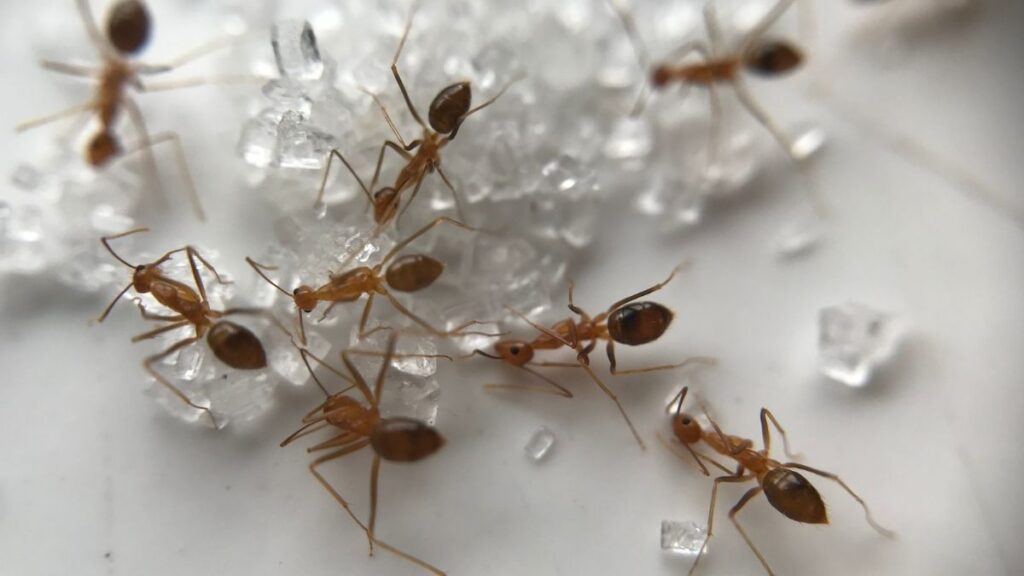
| Pharaoh Ants | More common in apartments and multi-unit buildings | Tiny, pale yellow to light brown | Moderate, hard to eliminate |
How Do You Tell the Difference Between a Few Stray Ants and a Full Colony?
Well, this difference comes down to pattern and volume. A stray ant or two, seen once and never again, is normal and not a colony indicator. A repeated trail seen over several days, along with any of the physical signs above such as frass, dirt piles, or winged ants, confirms an established colony is feeding from your home.
Why Do Ants Invade Homes?
Ants come inside for the same three reasons everywhere: food, water, and shelter. In Canada specifically, temperature swings play a bigger role than most people realize. Colonies often move deeper into a home’s foundation or wall voids during extreme summer heat or heavy rain, and again as fall temperatures drop, since ants seek warmth and stable conditions to survive the winter.
A kitchen with easy access to crumbs, an open garbage bin, or a leaky pipe gives them every reason to stay once they are in.
What Should You Do If You Find an Ant Colony in Your House?
- Identify the species first. Carpenter ants need a different approach than pavement or odorous house ants, since misidentifying them wastes time and money on the wrong treatment.
- Do not just spray the ants you see. Contact sprays kill visible workers but scatter the colony, and stressed colonies sometimes split into multiple smaller nests, a process called budding, which makes the problem worse.
- Use bait, not instant kill, for colony-level control. Slow-acting bait allows worker ants to carry it back to the nest and share it with the rest of the colony, including the queen.
- Seal entry points such as cracks in the foundation, gaps around pipes, and worn window screens once the active colony is under control.
- Call a licensed technician if you find carpenter ants, winged swarmers, or a colony that keeps returning after DIY treatment. Structural damage from carpenter ants can be extensive if left untreated for a full season.
When Should You Call a Professional Exterminator in the GTA?
Some signs mean it’s time to call pest control immediately, such as carpenter ant frass, sounds inside a wall, winged swarmers indoors, or DIY baits that haven’t worked after two weeks. These signs usually mean the nest is inside the structure itself, not just outside the foundation, and that requires targeted treatment rather than surface-level products.
If any of the 7 signs sound familiar, the colony is not going anywhere on its own. Explore our ant control services or contact Invaders Canada for a free inspection and a treatment plan built around the exact ants in your home.
Invaders Canada offers same-day inspections across Toronto, Mississauga, Brampton, Vaughan, and the rest of the GTA, with Health Canada approved treatments that are safe for kids and pets once dry. A trained technician can confirm the species, locate the nest, and apply a treatment plan built for that specific colony instead of guessing with store-bought sprays.
FAQs
How do you get rid of an ant colony in your house?
Find the nest, use slow-acting bait so workers carry it back to the colony, then seal entry points. Persistent trails often need a licensed exterminator.
Why is there a whole bunch of ants in my house?
A large group usually means a scout found food or water and left a pheromone trail, drawing the rest of the colony inside.
Why should you not kill ants in your house?
Killing visible ants alone leaves the colony intact, and stressed colonies sometimes split into new nests, making the infestation harder to control.
How do I get rid of ants permanently in my house?
Treat the colony with bait, seal foundation cracks and gaps, remove food and moisture sources, and book a follow-up inspection each season.
Will ants leave if I keep killing them?
No. Killing visible ants does not remove the nest or queen, so the colony keeps sending new workers until the source is treated.