Summary
“When homeowners notice mice infestations in the GTA, they should handle them quickly because mice can contaminate food, leave droppings, damage insulation and wiring, and keep returning if entry points are not sealed. The best solution is not just trapping. It is a full process: inspect the property, identify activity, remove the mice, seal openings, clean affected areas safely, and follow a practical prevention plan.”
Mice infestations in the GTA are a common issue in both residential and commercial properties, especially during colder months when mice seek warmth and food indoors. Experts consistently emphasize that mice reproduce quickly, can squeeze through very small entry points, and often remain hidden until the infestation becomes noticeable. Professional pest control approaches focus on more than just eliminating visible mice.
They aim to identify nesting areas, remove attractants, and block entry points to prevent future infestations. Without a structured approach that includes inspection, removal, exclusion, and prevention, mouse problems often return. Understanding how infestations start and how experts handle them can help homeowners take faster and more effective action.
Why Mice Infestations Are Common Across the GTA?
Mice are common in dense urban and suburban areas because they only need three basic things: food, shelter, and access. The Greater Toronto Area has all three. Homes, restaurants, apartment buildings, garages, basements, sheds, commercial units, and older properties can all give mice the warmth and hiding space they need.
Rodents, including mice, are common pests in Toronto and can damage property, contaminate food, and spread disease. Droppings, sightings, holes, burrows, bite marks, tracks, and pathways are signs of rodent activity.
In many GTA homes, the issue starts small. One mouse may enter through a gap near a door, utility pipe, garage frame, vent, or foundation crack. Once inside, it may move behind walls, under cabinets, above ceilings, or around appliances. By the time you see droppings, hear scratching, or notice chewed packaging, the problem may already be active.
Signs You Have a Mouse Infestation GTA Problem
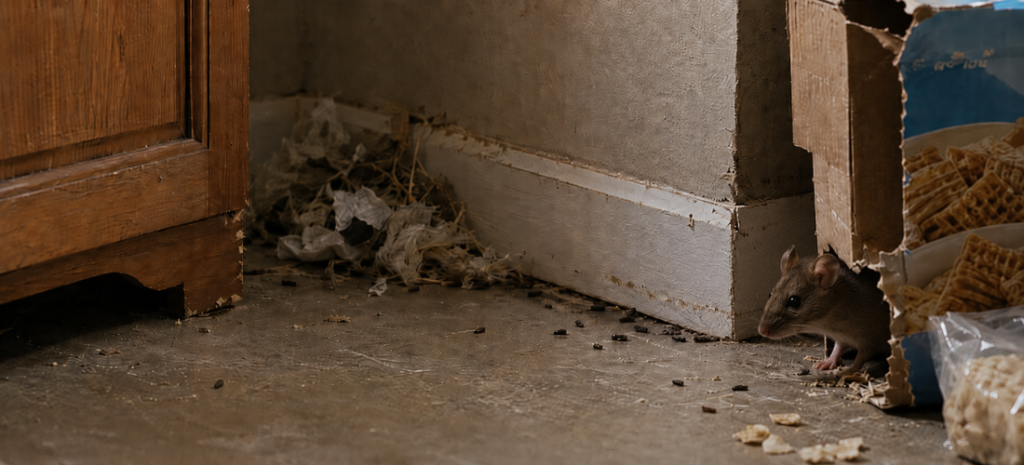
A mice infestation GTA issue is not always obvious at first. Mice are quiet, fast, and mostly active when the home is dark or still. Many homeowners never see a live mouse right away. Instead, they notice small signs that something is moving through hidden areas.
Fresh Droppings
Droppings are one of the clearest signs of activity. Mouse droppings are usually small, dark, and rod-shaped. Mouse droppings are dark, rod- or spindle-shaped, and about 6 mm or 1/4 inch long.
You may find droppings inside kitchen cabinets, behind the stove, under the sink, near baseboards, inside drawers, around pantry shelves, or in basement corners. Fresh droppings often look dark and moist. Older droppings may look dry, grey, or crumbly.
Scratching or Movement Sounds
Mice often move through wall voids, ceiling spaces, attics, basements, and cabinets. Scratching sounds at night are a common warning sign. You may hear movement behind drywall, above ceiling tiles, or near kitchen appliances.
Chewed Food Packaging
Mice chew through bags, cardboard, plastic, and soft packaging to reach food. Check cereal boxes, pet food bags, rice bags, snack packaging, and pantry items. Even a small hole in a package can be a sign of activity.
Gnaw Marks
Mice gnaw to create access and keep their teeth worn down. The CDC lists rodent droppings and gnaw marks as two major signs of rodent presence. It also notes that gnaw marks are often found in the same areas as droppings.
Gnaw marks may appear on wood, baseboards, storage boxes, pipes, wires, or plastic containers.
Bad Odour
A strong, musky smell can appear in areas with repeated mouse activity. In serious cases, a dead mouse inside a wall, ceiling, or cabinet void can create a sharp odour that becomes difficult to ignore.
Nests and Shredded Material
Mice build nests using soft materials. Look for shredded paper, fabric, insulation, cardboard, tissue, or dry grass in hidden areas. Common nesting spots include storage rooms, attics, wall gaps, crawl spaces, garage corners, and behind appliances.
Mice Infestation Warning Signs
| Sign | Where You May Notice It | What It Usually Means |
|---|---|---|
| Small dark droppings | Cabinets, drawers, basement corners, behind appliances | Active mouse movement nearby |
| Scratching sounds | Walls, ceilings, attic, kitchen areas | Mice may be travelling through hidden voids |
| Chewed packaging | Pantry shelves, pet food bags, storage boxes | Mice are accessing food |
| Gnaw marks | Baseboards, wires, wood, plastic, pipes | Rodents are creating paths or maintaining teeth |
| Shredded material | Attic, garage, basement, storage areas | Possible nesting activity |
| Greasy rub marks | Along walls, pipes, or tight pathways | Repeated travel route |
| Bad odour | Wall voids, cabinets, ceiling spaces | Heavy activity or possible dead mouse |
Where Mice Enter GTA Homes?
The biggest mistake homeowners make is focusing only on traps. Traps may remove some mice, but they do not stop new ones from entering. The real long-term mice removal GTA solution is to identify and seal entry points.
Common Entry Points
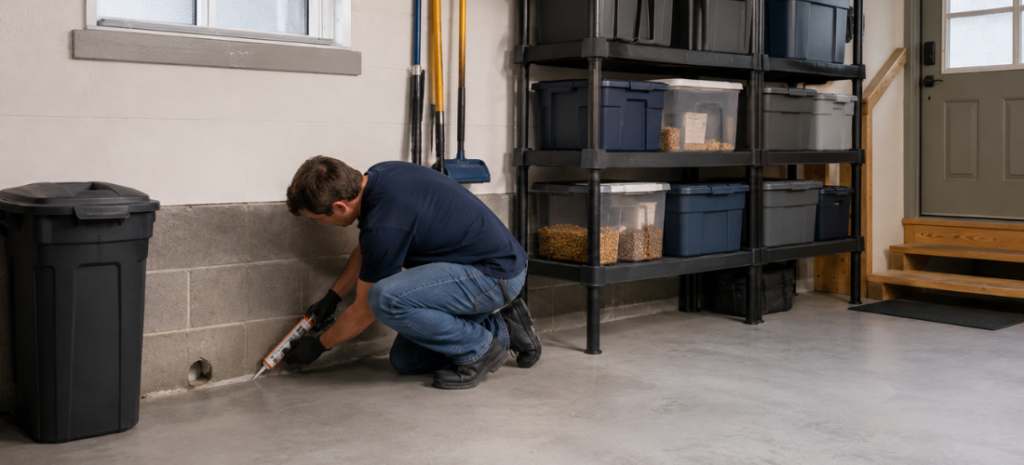
Mice can enter through very small openings. Many pest professionals recommend sealing gaps around doors, vents, utility lines, pipes, windows, garages, foundation areas, and exterior walls. Seal holes larger than a dime and gaps wider than a pencil. Use materials such as silicone-based caulk, steel wool, or other construction materials.
Common entry points include:
- Gaps under exterior doors.
- Garage door corners.
- Cracks around the foundation.
- Openings around utility pipes.
- Damaged vent covers.
- Loose siding gaps.
- Openings around basement windows.
- Gaps near AC lines.
- Holes around electrical or cable lines.
- Broken weather stripping.
- Openings under decks or porches.
Why do Entry Points Matter?
If entry points remain open, mice removal treatments may only provide short-term relief. You may catch a few mice, but new ones can keep entering. That is why rodent control inspection and exclusion are essential parts of any proper mouse control plan.
Why You Should Not Ignore a Mouse Infestation?
A mouse infestation is more than an inconvenience. It can affect cleanliness, comfort, food safety, and property condition. Mice may contaminate surfaces with urine and droppings. They can chew insulation, wood, packaging, and wiring. They can also create stress for homeowners, especially when activity continues after basic DIY attempts.
Rodents can spread diseases through direct contact, droppings, urine, saliva, bites, and contaminated air or food. You cannot tell whether a rodent carries disease simply by looking at it.
This is why safe handling matters. Do not sweep or vacuum dry droppings. Wear rubber gloves and a dust mask, dampen droppings and debris with a bleach-and-water solution before wiping, double-bag dead rodents, and never sweep or vacuum dry droppings, as raised dust can cause illness.
Expert Mice Removal GTA Process
Professional mice removal GTA services usually follow a step-by-step process. The goal is to remove current activity and reduce the chance of return.
1. Interior and Exterior Inspection
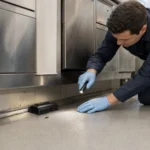
The first step is a full inspection. Inside the home, the technician checks kitchens, basements, utility rooms, garages, attics, crawl spaces, storage areas, and wall-adjacent spaces. Outside, the inspection focuses on foundation gaps, doors, vents, pipes, siding, garage frames, and other possible access points.
A proper inspection helps answer three questions:
- Where are the mice active?
- How are they getting in?
- What is attracting them to the property?
2. Activity Mapping
Mice usually travel along walls, edges, pipes, and hidden pathways. Activity mapping helps determine where droppings, gnaw marks, nesting material, and food access are concentrated. This makes treatment more accurate.
3. Strategic Trapping or Baiting
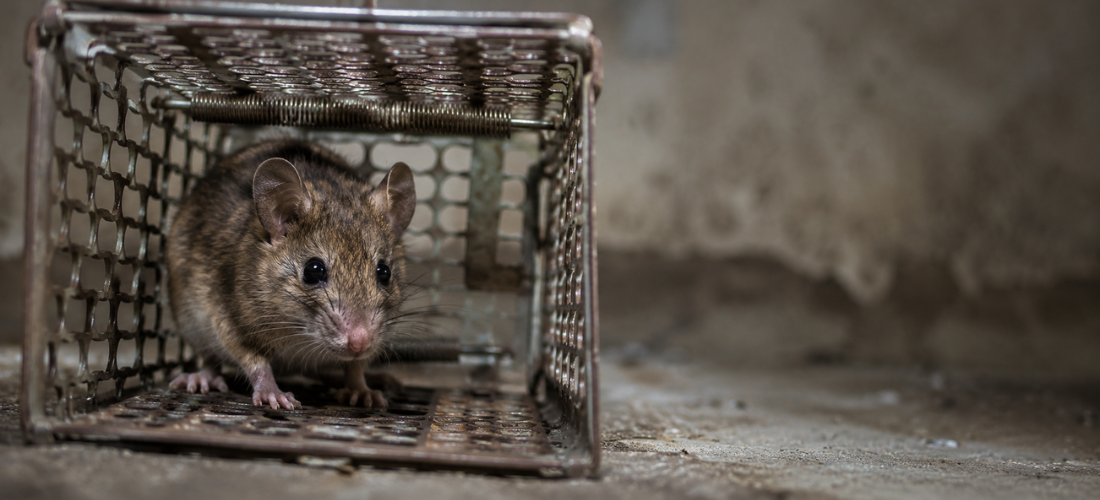
Traps and bait stations should be placed where mice actually travel, not randomly around the house. Poor placement is one reason DIY efforts often fail.
Traps may be used in kitchens, basements, garages, attic access points, storage rooms, or other high-activity zones. The right method depends on the property, activity level, children, pets, food areas, and safety concerns.
4. Exclusion and Sealing
This is the most important long-term step. Exclusion means closing the openings mice use to enter. Rodent exclusion looks for vulnerable pressure points such as door seal gaps, damaged screens, utility pipe gaps, unscreened vents, foundation openings, and wall voids.
Sealing should be done with rodent-resistant materials. Foam alone is usually not enough because mice can chew through it. Steel wool, metal mesh, caulking, cement, hardware cloth, door sweeps, and proper vent covers are often more effective depending on the opening.
5. Sanitation and Cleanup Guidance
After activity is controlled, affected areas should be cleaned safely. Food packaging with chew marks should be discarded. Cabinets, drawers, and pantry surfaces should be disinfected. Droppings should be handled carefully using proper protective steps.
6. Follow-Up and Monitoring
Mice control is not always completed in one visit. Follow-up may be needed to check trap activity, confirm whether droppings return, inspect sealed areas, and adjust the plan if activity continues.
Mice Prevention Tips for GTA Homes
Mice prevention works best when it becomes part of property maintenance. The goal is to remove access to food, water, and shelter.
Seal Exterior Gaps
Inspect the outside of your home at least twice a year. Pay attention to foundation lines, garage corners, utility openings, basement windows, vents, door frames, and siding gaps. Seal small holes before they become active access points.
Store Food Properly
Keep dry goods in sealed containers. This includes cereal, rice, flour, pasta, pet food, bird seed, and snacks. Do not leave pet food out overnight.
Reduce Clutter
Mice prefer quiet, cluttered spaces where they can hide. Keep storage rooms, garages, basements, and sheds organized. Store boxes off the floor where possible.
Manage Garbage
Use bins with tight-fitting lids. Remove garbage regularly. Keep outdoor bins clean and away from easy access points when possible.
Fix Moisture Problems
Leaking pipes, damp basements, and clogged drains can attract pests. Keep basements, crawl spaces, and storage areas dry and ventilated.
Maintain the Yard
Trim vegetation away from the house. Remove debris, unused materials, and wood piles near the foundation. Remove clutter, construction debris, garbage piles, fallen fruit, pet food, and other food sources that can attract rodents.
DIY Mice Control vs Professional Removal
DIY methods can help in very minor cases, but they often fail when the infestation is active, hidden, or recurring. Many homeowners place traps where they see droppings, but mice may be travelling from another location. Others seal a visible hole but miss several smaller openings outside.
DIY methods may be suitable if you saw one mouse, found a very limited number of droppings, and can clearly identify and seal the access point. However, professional help is better when there are repeated sightings, fresh droppings after cleanup, scratching sounds, nesting material, chewed wires, multiple rooms affected, or signs in a rental, restaurant, office, warehouse, or commercial space.
When to Call a Professional?
Call a pest control professional if the signs keep returning or if you are unsure where the mice are entering. You should also get help if there are droppings in food areas, activity in multiple rooms, scratching in walls, damaged wiring, or a recurring issue after DIY trapping.
Professional service is especially important for restaurants, rental properties, offices, warehouses, and multi-unit buildings because mice can move through shared walls, utility lines, and ceiling voids.
In these spaces, one untreated entry point can affect multiple units. Invaders Canada is an expert pest extermination company that offers comprehensive services for a wide range of homeowners and property owners. You can request a free quote today for further information.
Conclusion
To conclude, a mice infestation that GTA property owners face should be treated as a removal and prevention problem, not just a trapping problem. Mice are small, quiet, and persistent. If they find food, warmth, and open entry points, they can stay active inside a property and return even after several are caught.
The best approach is simple: inspect carefully, remove current activity, clean safely, seal entry points, and maintain strong prevention habits. If the signs continue after basic steps, expert help can save time, reduce stress, and protect the property from a recurring infestation.
FAQs
What is the fastest way to deal with a mice infestation GTA homeowners notice?
The fastest practical step is to remove food access, clean visible droppings safely, place traps in active areas, and inspect for entry points. However, for lasting results, the openings must be sealed. If fresh droppings keep appearing, call a professional.
How do I know if I have one mouse or a bigger infestation?
One sighting does not always mean there is only one mouse. If you find fresh droppings in multiple areas, hear scratching, see chewed packaging, or notice activity after cleaning, there may be an active infestation.
Are mouse droppings dangerous?
Mouse droppings can be risky if handled incorrectly. Do not sweep or vacuum dry droppings. Use gloves, dampen the area with disinfectant or bleach solution, wipe carefully, and dispose of waste in sealed bags.
Can mice come back after removal?
Yes. Mice can return if entry points remain open or if food and shelter are still available. Long-term control depends on sealing gaps, reducing clutter, storing food properly, and monitoring the property.
What is the best mice prevention method?
The best mice prevention method is exclusion. Seal holes, repair door gaps, screen vents, close utility openings, keep food sealed, manage garbage, and reduce clutter around the home.