Summary
“Seeing tiny little creatures is fun, until they are gathering in your house. Carpenter ants and termites are popular for their wood destruction and structural damage to the property. Learning the differences between carpenter ants vs termites can help you understand what type of insects they are. When you know about their top differences, signs of infestations, preventive measures, and when to use professional pest control solutions, you can keep your property safe and pest-free. But immediate measures are necessary to avoid severe issues.”
It’s natural to panic when you see pests, especially ants and termites, damaging your property. They are not just taking food and shelter from your spaces, but also cause structural property damage. Both termites and carpenter ants are popular as wood-destroying insects. But how do you differentiate between them? Do you know about carpenter ants vs termites? Does knowing about this difference really matter?
Yes, especially when you want to get rid of these dangerous pests for your house’s safety. Knowing about their differences is important to choose a specific treatment for getting rid of them. Otherwise, it doesn’t matter who’s destroying your space; you just need to protect it against such small attackers. Learning about their mating, colonies, and attacking habits, and overall differences can make a lot of difference.
What Are Carpenter Ants?
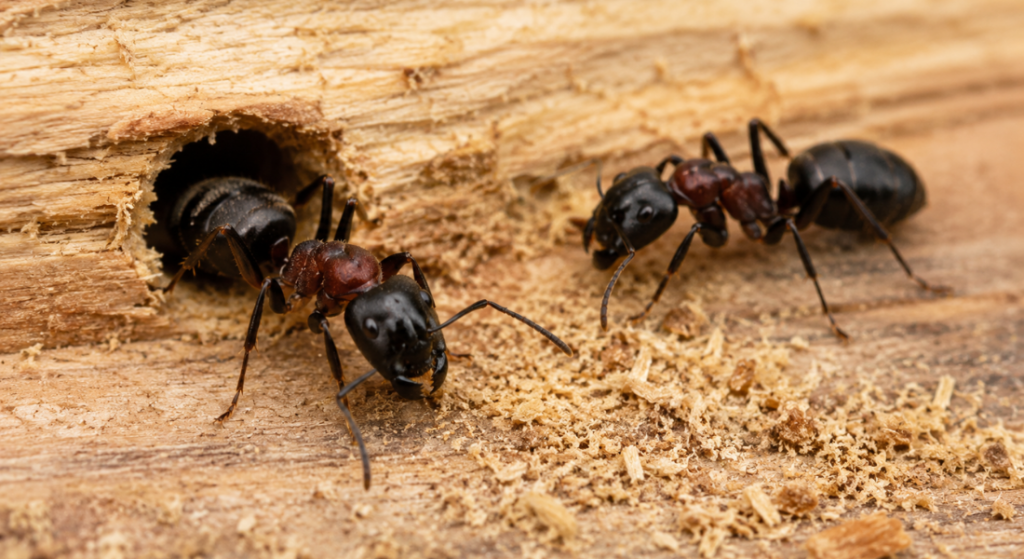
Carpenter ants are large ants that excavate wood to build nests. They do not eat wood for food. Instead, they chew through softened, damp, or decaying wood to create smooth tunnels and galleries where the colony can live, expand, and raise young.
These ants are often black, dark brown, reddish, or a mix of colours depending on the species. They usually have a narrow waist, bent antennae, and, in the case of swarmers, front wings that are longer than the back wings. Their body shape looks more like a typical ant than a termite.
Carpenter ants prefer wood that has already been weakened by moisture. That means they are often found near leaking windows, rooflines, bathrooms, kitchens, crawl spaces, decks, wall voids, tree stumps, firewood piles, and damaged trim. Their presence can point to a larger moisture problem inside or around the home.
The wood damage caused by carpenter ants can become serious if the colony remains active for a long time. They may start in one damp area, then create satellite colonies in nearby wood. Over time, these tunnels can weaken wood members, especially if the infestation is ignored.
A key sign of carpenter ants is the presence of frass. This material resembles fine sawdust and may contain tiny wood fragments, insect parts, or debris pushed out of the nest. Homeowners may also see large ants foraging at night, especially around kitchens, bathrooms, sinks, and food sources.
What Are Termites?
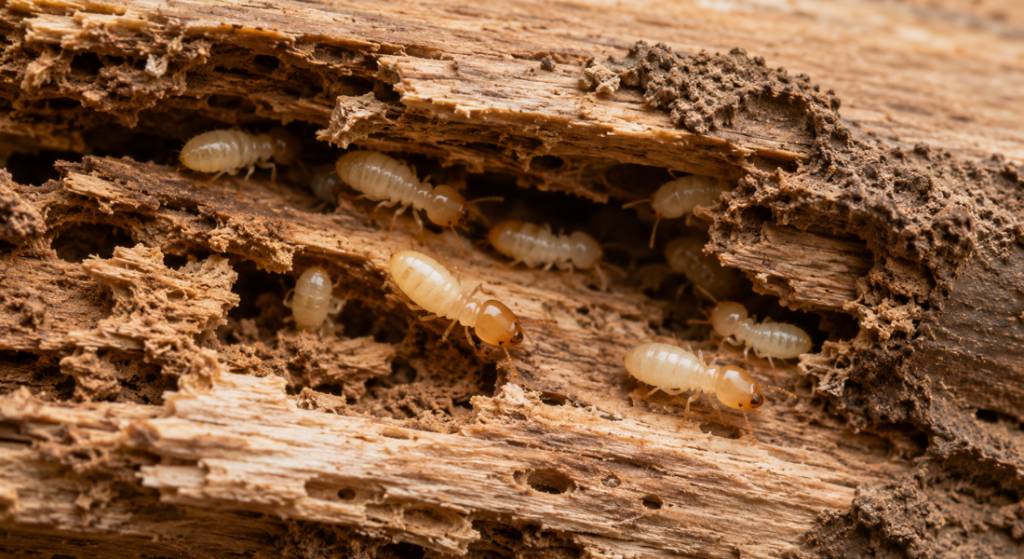
Termites are social insects that feed on cellulose, which is found in wood, paper, cardboard, and other plant-based materials. Unlike carpenter ants, termites actually consume wood. This makes termite damage especially concerning because they can feed quietly inside walls, floors, beams, and other hidden areas.
Termites have soft bodies, straight antennae, and a broad waist. Winged termite swarmers have four wings that are roughly equal in size. These wings are often longer than the body and may be found discarded near windowsills, doors, vents, or light sources after a swarm.
The most common termite problems in many areas involve subterranean termites, which usually live in soil and build mud tubes to reach wood above ground. These tubes protect them from drying out and help them travel between their colony and food source. Drywood termites, where present, can live directly inside wood and may leave pellet-like droppings.
Termite colonies can stay hidden for a long time. Homeowners may not see the insects themselves. Instead, they may notice blistered paint, soft wood, hollow-sounding boards, sagging floors, stuck windows, mud tubes, or piles of discarded wings. By the time visible damage appears, the colony may already be well established.
Because termites eat wood from the inside, they can cause major structural damage before the surface looks badly affected. That is why early inspection and accurate identification matter so much.
Carpenter Ants vs Termites: A Quick Comparison
| Feature | Carpenter Ants | Termites |
|---|---|---|
| Main behavior | Excavate wood to build nests | Eat wood and cellulose |
| Type of damage | Smooth tunnels and galleries | Irregular, often muddy or layered galleries |
| Body shape | Narrow waist, ant-like body | Broad waist, straight body |
| Antennae | Bent or elbowed | Straight |
| Wings | Front wings longer than back wings | Four wings usually equal in size |
| Common sign | Sawdust-like frass | Mud tubes, hollow wood, discarded wings |
| Visibility | Often seen foraging indoors | Usually hidden inside wood or soil |
| Moisture link | Strongly attracted to damp or damaged wood | Many species prefer moisture, especially subterranean termites |
| Colony behavior | Main nest plus possible satellite nests | Large hidden colonies, often in soil or wood |
| Urgency | Serious if active, especially with moisture damage | High urgency due to ongoing wood consumption |
Physical Differences Between Carpenter Ants and Termites
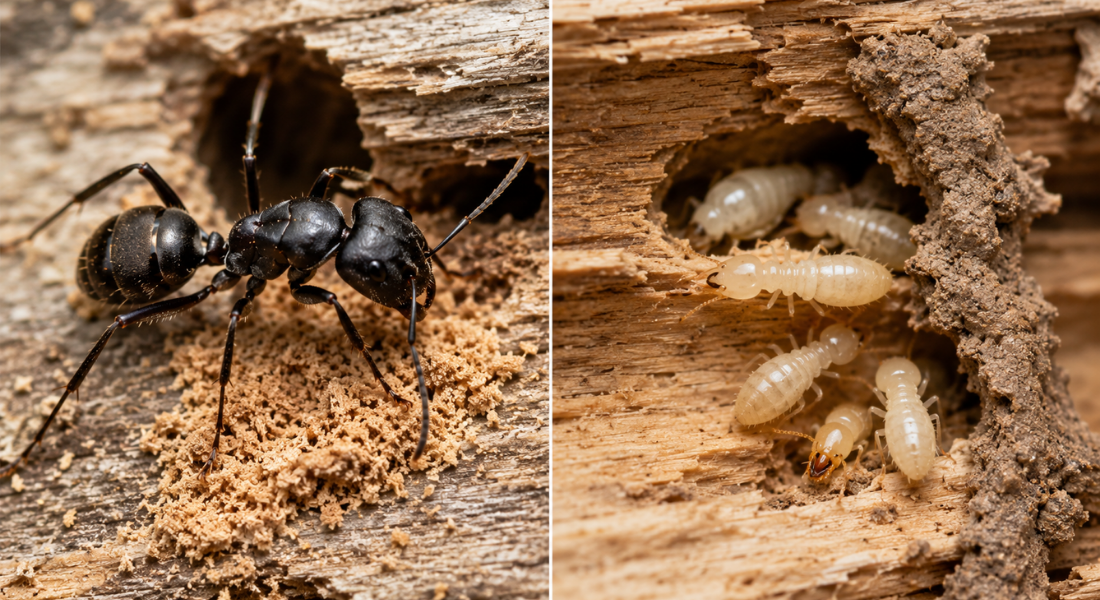
The fastest way to compare carpenter ants vs termites is to look at body shape, antennae, and wings. These physical clues are especially useful during swarming season, when winged ants and termite swarmers may appear indoors.
Carpenter ants have a clearly pinched waist. Their bodies are divided into noticeable sections, and their antennae are bent. If they have wings, the front pair is longer than the rear pair. Their wings may also look slightly tinted.
Termites look more uniform from head to abdomen. Their waist is broad rather than pinched, and their antennae are straight or bead-like. Winged termites have two pairs of wings that are similar in size and shape. These wings are often pale, delicate, and easy to shed.
Color can help, but it should not be the only clue. Carpenter ants are often black or dark-colored, but some species may be reddish or brown. Termite workers are often pale or creamy, while termite swarmers may be darker. Because color varies, body shape and wing structure are more reliable.
If you find dead winged insects near a window, place a few in a small bag or container. A pest professional can often identify whether they are ants or termites by checking the wings, waist, and antennae.
Termite vs Ant Damage: How Does the Wood Look Different?
The damage from both these pests looks different because they use wood differently. Carpenter ants remove wood to make space for nesting. Termites consume wood as a food source.
Carpenter ant tunnels are usually clean, smooth, and polished inside. The ants push wood shavings and debris out of the galleries, which is why small piles of frass may appear below kick-out holes, baseboards, window frames, or damaged wood. The wood may look carved out rather than eaten.
Termite damage is usually more hidden and irregular. Subterranean termites often leave soil or mud inside their galleries because they need moisture while traveling. Damaged wood may look layered, muddy, or honeycombed. The outside surface can remain thin and intact while the inside is badly eaten.
Drywood termites, where active, may leave small pellet-like droppings instead of mud tubes. These pellets can collect below infested wood and may look like tiny grains.
A basic test is to tap the wood. Termite-damaged wood may sound hollow because the inside has been eaten. Carpenter ant damage may also weaken wood, but nearby sawdust-like frass is a stronger clue for ants. Either way, visible wood damage should not be ignored.
Wings and Swarmers: A Major Identification Clue
Wings are one of the clearest differences between carpenter ants and termites. Both insects produce winged reproductive members, often called swarmers. These swarmers leave the colony to mate and start new colonies.
Carpenter ant swarmers have two front wings that are longer than the two back wings. They also have a narrow waist and bent antennae. If you look closely, they still look like ants with wings.
Termite swarmers have four wings that are about the same length. The wings are often longer than the body and may break off easily. After a termite swarm, homeowners may find piles of discarded wings near windowsills, doors, vents, or light fixtures.
Swarm timing can vary by region and species, but indoor swarmers are always a warning sign. Seeing a few winged insects outside does not always mean the home is infested. Seeing them indoors, especially repeatedly, is more concerning.
Do not rely only on the presence of wings. Collect a sample and compare the body shape. Equal wings, straight antennae, and a thick waist point toward termites. Uneven wings, elbowed antennae, and a pinched waist point toward carpenter ants.
Tunnels, Galleries, and Hidden Nesting Areas
Both carpenter ants and termites make tunnels, but the tunnels have different purposes and appearances.
Carpenter ants create galleries to live in. These galleries are often smooth and clean because the ants remove the wood and push debris outside. The tunnels may be found in damp framing, window sills, porch posts, roof areas, wall voids, insulation, and hollow doors. They often start where moisture has softened the wood.
Termite tunnels are tied to feeding and travel. Subterranean termites may build mud tubes on foundation walls, basement surfaces, crawl space supports, pipes, and cracks. These tubes help them move from soil to wood while staying protected. Inside wood, termite galleries often contain soil, moisture, or fecal material.
Carpenter ant activity may be heard as faint rustling inside walls at night. Termites are usually harder to detect by sound. Both can remain hidden behind finished surfaces, which is why visual signs may only show after the infestation has grown.
If tunnels are visible, do not break everything apart without a plan. Disturbing the area can scatter insects and make treatment harder. Take photos, collect samples if possible, and arrange an inspection.
Colony Behavior and Infestation Growth
Carpenter ants and termites both live in colonies, but their colony behavior is different.
Carpenter ant colonies usually have a main nest and may develop satellite nests. The main nest may be outdoors in a tree, stump, log, or damp structure. Satellite nests can appear inside homes where conditions are suitable. This is why treating only the ants you see often fails. The visible ants may be foragers from a larger hidden colony.
Carpenter ants commonly forage for sweets, proteins, fats, and household food sources. Homeowners may see trails at night, especially in kitchens, bathrooms, and areas near water. Seeing large ants indoors during cold months can suggest a nest inside the structure.
Termite colonies are often more hidden. Subterranean termites may live in the soil and travel into a home through mud tubes, cracks, or hidden entry points. Their workers feed on wood and carry resources back through the colony. Because they avoid open air and light, homeowners may not see active workers unless wood is opened.
Termite colonies can grow large and remain active for years when moisture and food are available. That hidden behavior makes them more dangerous to structural wood.
Which Is Worse: Carpenter Ants or Termites?
Termites are usually more destructive because they eat wood continuously. Carpenter ants can still cause serious problems, but their damage usually develops because they excavate nesting space rather than consume the wood itself.
That does not mean carpenter ants are harmless. A mature carpenter ant colony inside a home can expand through wall voids, damaged framing, insulation, and other hidden spaces. If the moisture problem remains, the infestation can return even after surface treatment.
Termites create a higher structural risk because the colony uses wood as food. They may damage beams, subfloors, joists, trim, decks, and other materials while staying hidden. In many cases, a homeowner notices the issue only after wood becomes soft, hollow, blistered, or visibly damaged.
The real answer depends on the situation. A small carpenter ant issue found early may be easier to correct than an active termite colony. A long-term carpenter ant infestation in wet framing can still be expensive. Any confirmed wood-destroying insects inside a home should be handled quickly.
Signs You May Have Carpenter Ants
Common carpenter ant signs include large ants indoors, especially at night, sawdust-like frass, faint rustling sounds in walls, damaged damp wood, and winged ants near windows or lights. You may also see ants trailing from trees, decks, fences, or firewood toward the home.
Carpenter ants are strongly linked to moisture. Check around leaking roofs, clogged gutters, window frames, plumbing leaks, bathroom walls, kitchen sinks, crawl spaces, and basement rim joists. Outdoor nests may be found in rotting stumps, logs, landscape timbers, or old fence posts.
The presence of a few ants does not always prove a structural infestation. They may be entering from outside to find food. However, repeated indoor sightings, especially in winter or in upper floors, can point to an indoor nest.
Signs You May Have Termites
Common termite signs include mud tubes, discarded wings, hollow-sounding wood, blistering paint, damaged flooring, soft trim, stuck windows or doors, and visible galleries inside broken wood. In some cases, termite damage looks like water damage because the surface may bubble or warp.
Mud tubes are one of the strongest warning signs for subterranean termites. These narrow tubes may appear on foundation walls, crawl space piers, basement surfaces, or around utility penetrations. If you break a small section and it is rebuilt later, that may indicate active termites.
Discarded wings are another important sign. Termite swarmers shed their wings after mating. Piles of equal-sized wings near light sources can suggest termite activity nearby.
Because termites often stay hidden, a professional inspection is recommended when signs appear.
Prevention Tips for Wood Destroying Insects
The best prevention strategy is moisture control. Repair roof leaks, plumbing leaks, damaged flashing, clogged gutters, and poor drainage. Keep wood dry whenever possible because moisture makes homes more attractive to both carpenter ants and termites.
Remove wood-to-soil contact around the property. Keep firewood, lumber, mulch, and debris away from the foundation. Store firewood off the ground and away from exterior walls. Trim branches and shrubs so they do not touch the house.
Seal cracks, gaps, and utility openings where insects can enter. Pay attention to windows, doors, siding gaps, vents, and foundation cracks. Replace rotting wood instead of painting over it.
Keep crawl spaces ventilated and dry. Use proper drainage, vapor barriers, and maintenance where needed. Inspect decks, porches, fences, sheds, and exterior trim regularly.
Routine inspections are important, especially if your home has a history of moisture problems, old wood damage, or previous pest activity.
Investing in professional pest control solutions can make a significant difference. Invaders Canada stands out as a professional and skilled pest extermination company.
We have years of experience, advanced extermination tools, methods, and materials, along with a team of expert exterminators. Contact us today for further details.
Conclusion
To conclude, carpenter ants vs termites comes down to how they damage wood, how they look, and how they behave. Carpenter ants excavate smooth tunnels to create nests. Termites eat wood and can cause hidden structural damage over time. Both pests deserve attention because both are connected to wood damage, tunnels, colonies, and long-term property risk. If you are not sure whether you have termite or ant damage, get a proper inspection before the problem spreads.
FAQs
Are carpenter ants as bad as termites?
Carpenter ants are serious, but termites are usually worse because they eat wood. Carpenter ants tunnel through wood to build nests, while termites consume cellulose as food. However, a large carpenter ant colony can still damage structural wood if the issue is ignored.
How can I tell if I have carpenter ants or termites?
Check the body shape, antennae, wings, and damage signs. Carpenter ants have a narrow waist, bent antennae, and uneven wings. Termites have a broad waist, straight antennae, and equal-length wings. Carpenter ants often leave sawdust-like frass, while termites may leave mud tubes or hollow wood
Do carpenter ants eat wood?
No, carpenter ants do not eat wood. They chew and remove wood to create tunnels and nesting galleries. This is different from termites, which eat cellulose inside wood and can cause hidden structural damage.
What does termite vs ant damage look like?
Carpenter ant damage usually has smooth, clean tunnels with sawdust-like frass nearby. Termite damage is often more irregular and may include mud, soil, hollow wood, blistered surfaces, or discarded wings. Subterranean termites may also build mud tubes.
Should I treat carpenter ants or termites myself?
Small ant issues may sometimes be reduced with sanitation, moisture control, sealing, and baiting, but active wood damage should be inspected professionally. Termites usually require professional treatment because colonies are hidden and can keep damaging wood if not properly controlled.