Cockroaches are worthy enemies and can cause massive destruction in your spaces. You can protect your spaces, whether residential or commercial, against such infestations when you learn about their early signs, droppings, odours, their skin sheddings, and species, and preventive measures. People also have to invest in professional cockroach control and extermination services. You can keep your homes, businesses, children and pets safe from severe allergies and different diseases they can get from cockroaches by implementing different strategies.
Cockroaches are among the most common and annoying pests found in homes and offices. Usually, people feel frustrated about cockroach droppings, and they don’t know how to handle such infestations. There are various cockroach infestation signs. Cockroaches travel everywhere in the house and office, leave droppings, and contaminate surfaces and food. They shed their skins while growing and leave unpleasant smells behind when their numbers increase.
Implementing cockroach control in Canada is essential to avoid allergies and asthma issues. Your children can face unhealthy consequences due to prolonged exposure to roaches. You can prevent such issues with preventive measures and by avoiding various mistakes. Choosing professional pest control services can also help.
What Are the Early Signs of a Cockroach Infestation?
The early signs of a cockroach infestation include droppings, cockroach smear marks, egg cases, musty odours, shed skins, and daytime sightings. Cockroaches are nocturnal, so you may not see them at first. Instead, you may notice small evidence near food, moisture, heat, or dark hiding areas.
The earlier you identify these signs, the easier the problem is to control. Seeing the roaches during the day as a small issue in one cabinet can spread into walls, neighbouring units, storage areas, or food-preparation zones if ignored.
Cockroach Droppings: What They Look Like and Where to Find Them?
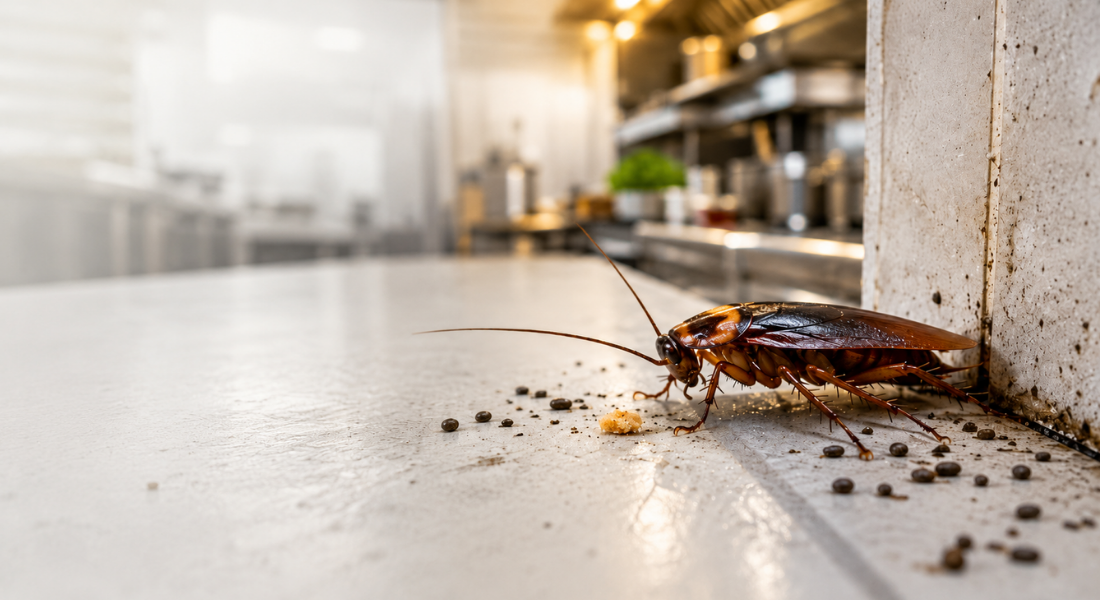
Cockroach droppings often look like black pepper, coffee grounds, dark specks, or small cylindrical pellets. The shape and size depend on the species and the size of the cockroach. When it comes to German cockroach signs and their droppings, they are usually tiny dark spots, while larger cockroaches may leave bigger pellet-like waste.
You may find droppings inside kitchen cabinets, behind refrigerators, under sinks, near garbage bins, around baseboards, inside drawers, behind appliances, and in basement corners. In restaurants, the musty cockroach smell and droppings may appear near dishwashing areas, food storage shelves, floor drains, grease traps, prep tables, and garbage rooms.
Droppings are one of the clearest signs that cockroaches are feeding and hiding nearby. Do not just wipe them away and move on. Clean the area properly, inspect nearby cracks, fix leaks to prevent roaches, and look for moisture or food residue.
Cockroach Smear Marks on Walls and Surfaces
Cockroach smear marks are dark, greasy-looking streaks or smudges left on walls, floors, baseboards, and surfaces where cockroaches travel in homes. These marks usually appear in damp areas or along regular travel routes.
You may notice smear marks behind appliances, around pipes, near wall-floor joints, inside cabinets, or near garbage storage areas. Signs of roaches in the kitchen in commercial spaces include their appearance around drains, equipment legs, storage racks, and hard-to-clean corners.
Smear marks are easy to miss because they can look like ordinary dirt. If the marks keep returning after cleaning, inspect the area closely for droppings, egg cases, and hiding spots.
Cockroach Egg Cases (Oothecae)
Roach egg cases are called oothecae. They are small, capsule-shaped cases that contain multiple eggs. Depending on the species, they can be brown, reddish-brown, or dark in colour.
Egg cases may be found behind appliances, inside cabinets, under sinks, in cardboard boxes, near plumbing gaps, inside wall cracks, and around storage areas. In businesses, they may be hidden behind shelving, near floor drains, under counters, or in equipment gaps.
Finding egg cases is a serious warning sign because it means cockroaches are breeding. Removing visible adults is not enough if egg cases are still hidden nearby. A growing infestation often needs targeted treatment and monitoring.
Musty Cockroach Odour: What Does It Smell Like?
A cockroach infestation can create a musty, oily, or stale smell. In heavier infestations, the odour may become stronger in cabinets, kitchens, bathrooms, basements, storage rooms, and food-service areas.
This smell comes from cockroach secretions, droppings, shed roach skins, and dead insects. It may be more noticeable in enclosed spaces, such as pantry cabinets, under-sink areas, wall voids, or cluttered storage rooms.
If a room smells musty even after cleaning, check for hidden moisture, food spills, garbage buildup, or pest activity. Odour alone does not always confirm cockroaches, but it becomes more concerning when combined with droppings, smear marks, or sightings.
Shed Cockroach Skins
Cockroaches shed their outer skin as they grow. These shed skins may look like light brown, dry, empty shells. You may find them near hiding areas, food sources, or warm spaces.
Common places include behind fridges, under stoves, inside cabinet corners, near plumbing, behind baseboards, around cardboard boxes, and in basement storage areas.
Shed skins suggest that cockroaches are developing and living in the area, not just passing through. They can also contribute to indoor allergen problems, especially in apartments, older buildings, and areas with poor ventilation.
Common Cockroach Species Found in Canadian Homes and Businesses
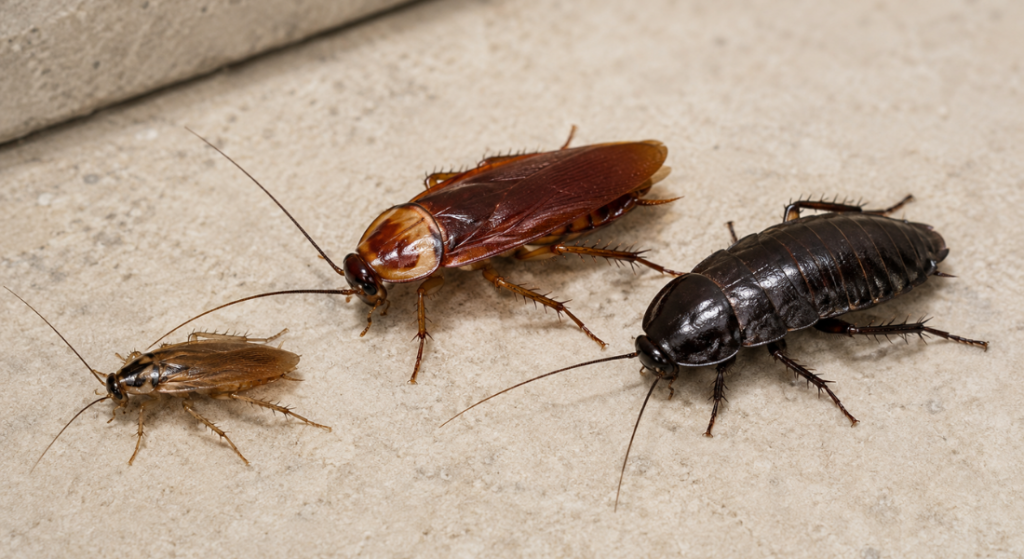
The most common species of cockroaches in Canadian homes and businesses include German cockroaches, American cockroaches, Oriental cockroaches, and sometimes brown-banded cockroaches.
Identifying the species helps determine where they are hiding, why they are there, and what prevention steps will work best.
German Cockroach
The German cockroach is one of the most common indoor cockroaches in Canada. It is small, light brown to tan, and usually has two dark stripes behind the head. It prefers warm, humid areas close to food and water.
German cockroaches are commonly found in kitchens, restaurants, apartments, hotels, food-storage rooms, break rooms, and commercial kitchens. They hide behind appliances, inside cabinets, near dishwashers, under sinks, and around cracks close to food sources.
This species reproduces quickly, which makes early control important. Even a small number can become a major infestation if food crumbs, grease, moisture, and clutter are not managed.
American Cockroach
The American cockroach is larger than the German cockroach and is reddish-brown in colour. It is often associated with warm, damp environments, sewers, basements, boiler rooms, drains, and utility spaces.
In Canadian buildings, American cockroach homes may be found in commercial facilities, apartment basements, food-service buildings, storage rooms, and areas connected to drains or plumbing systems. They may enter through gaps, utility openings, floor drains, or service areas.
Because they are larger, sightings can be alarming. Their presence often points to moisture, drainage, sanitation, or structural access issues that need attention.
Oriental Cockroach
The Oriental cockroach is dark brown to black and has a shiny appearance. It prefers cool, damp areas such as basements, crawl spaces, floor drains, garbage areas, and exterior entry points.
In Canadian homes and businesses, Oriental cockroaches may appear near damp foundations, basement storage, laundry rooms, utility areas, and outdoor-to-indoor access points. They are often linked to moisture problems and poor drainage.
Prevention for Oriental cockroaches should focus on moisture control, sealing entry points, cleaning storage areas, and improving basement or utility-room conditions.
Health Risks of a Cockroach Infestation in Canada
Signs of roaches in bathrooms and other areas can create health concerns in homes, apartments, restaurants, schools, healthcare spaces, and workplaces. The biggest risks involve food contamination, bacteria, allergens, asthma triggers, and hygiene violations in food-service environments.
Cockroaches travel through garbage, drains, sewers, grease, and contaminated areas. When they move across food, utensils, counters, or equipment, they can transfer germs and leave droppings behind.
Bacteria and Diseases Cockroaches Spread
Cockroaches can pick up bacteria and other contaminants from unsanitary areas and spread them onto food-contact surfaces. They may contaminate counters, pantry shelves, food packages, dishes, utensils, equipment, and stored food. The diseases spread by cockroaches are severe and lead to intense outcomes.
This is a major concern in homes with children, seniors, or people with weaker immune systems. It is also a serious issue for restaurants, grocery spaces, bakeries, cafes, and commercial kitchens.
The goal is not only to kill visible cockroaches. You also need to remove contamination, clean surfaces properly, store food in sealed containers, and prevent pests from returning.
Cockroach Allergens, Asthma, and Respiratory Risks
Cockroaches and asthma have a deeper connection than you can imagine. Cockroach droppings, shed skins, saliva, and body parts can contribute to indoor allergens. These allergens may trigger symptoms in sensitive people and can be especially concerning for people with asthma.
In apartments and shared buildings, allergens can remain even when cockroaches are hiding inside walls, behind appliances, or in neighbouring units. Regular cleaning helps, but it will not solve the problem if cockroach activity continues.
Good prevention includes reducing clutter, sealing cracks, controlling moisture, cleaning hidden food residue, and using professional treatment when activity is recurring.
Health Code Risks for Restaurant Owners in Canada
For restaurant owners in Canada, cockroach activity can create serious compliance and reputation risks. They need to invest in professional cockroach control. Food premises are expected to control pests, protect food from contamination, and maintain clean conditions that do not support pest harbourage or breeding.
A cockroach sighting in a restaurant can lead to customer complaints, failed inspections, food contamination concerns, temporary closure in severe cases, and long-term damage to trust.
Restaurant prevention should include daily sanitation, proper waste handling, sealed food storage, drain cleaning, equipment movement for deep cleaning, staff reporting procedures, and scheduled pest monitoring.
How to Prevent a Cockroach Infestation – Room by Room
Cockroach prevention works best when every room is managed based on risk. Kitchens need food and grease control. Bathrooms and basements need moisture control. Apartments need shared-building awareness. Restaurants need sanitation systems and documented monitoring.
The main rule is simple: remove food, water, and shelter.
Kitchen Cockroach Prevention Tips
The kitchen is the highest-risk room in most homes and businesses. Learning what attracts cockroaches is beneficial to target specific areas and things. Cockroaches are attracted to crumbs, grease, food residue, dirty dishes, open garbage, pet food, and moisture around sinks or dishwashers.
Clean counters every night, sweep floors, wipe grease from stovetops, empty garbage regularly, and store food in sealed containers. Pull out appliances when possible and clean behind refrigerators, stoves, and dishwashers.
Check under sinks for leaks and keep cabinet interiors dry. Do not leave dirty dishes overnight. Even small crumbs and grease buildup can support cockroach activity.
Bathroom and Basement Prevention Tips
Bathrooms and basements attract cockroaches because they often provide moisture, darkness, and hiding spaces. Leaky pipes, damp storage, floor drains, laundry areas, and clutter can make these rooms high-risk.
Fix leaks quickly, improve ventilation, reduce standing water, and keep storage off the floor where possible. Use plastic bins instead of cardboard boxes in damp areas. Clean around drains, laundry machines, utility sinks, and basement corners.
If you see cockroaches in a bathroom or basement, inspect nearby plumbing gaps, pipe openings, floor cracks, and foundation entry points.
How to Seal Entry Points Against Roaches?
Residential and commercial property owners feel frustrated about knowing how to keep roaches out. Cockroaches can enter through small cracks, gaps around pipes, door sweeps, vents, utility openings, drains, and spaces around baseboards. Sealing entry points helps reduce new activity and limits movement between rooms or units.
Use caulking for cracks and gaps around cabinets, baseboards, plumbing lines, and wall openings. Install door sweeps where gaps exist under exterior doors. Repair damaged screens, seal utility penetrations, and inspect shared walls in multi-unit buildings.
Sealing works best when combined with cleaning and moisture control. If food and water remain available, cockroaches may still survive indoors.
Cockroach Prevention Tips for Apartments and Shared Buildings
People in apartments and shared buildings worry about how to prevent roaches in their apartments. Cockroach prevention in apartments is more complex because pests can move between units through walls, plumbing, garbage rooms, hallways, and shared service areas. One clean unit can still be affected if neighbouring units or common areas have activity.
Tenants should report sightings early, keep food sealed, clean kitchens nightly, reduce clutter, and avoid storing cardboard in damp spaces. Landlords and property managers should inspect multiple units when infestations are reported, not just the unit with the complaint.
Shared-building control often requires coordinated treatment. Treating only one apartment may not solve the issue if cockroaches are active in adjacent units, garbage rooms, or service areas.
Cockroach Prevention for Restaurant Owners in Canada
How to get rid of cockroaches in a restaurant demands a strict daily system. Staff should clean food-preparation areas, remove grease buildup, empty garbage, clean drains, store food properly, and report pest signs immediately.
Move equipment for deep cleaning on a schedule. Inspect under prep tables, behind coolers, near dishwashing stations, under mats, around floor drains, inside storage rooms, and near delivery entrances.
Use sealed containers for dry goods, keep cardboard to a minimum, and avoid storing food directly on the floor. Pest monitoring should be documented, especially in commercial food spaces where inspection history matters.
Common Mistakes That Attract Cockroaches
Most cockroach problems are linked to food, water, shelter, or access. Small daily habits can create ideal conditions without the property owner realizing it.
Fixing these mistakes can reduce infestation risk and make professional treatment more effective if cockroaches are already present.
Leaving Dirty Dishes Overnight
Dirty dishes provide food residue, grease, and moisture. Leaving plates, pans, cups, and utensils in the sink overnight gives cockroaches an easy feeding source while the home or business is quiet.
Wash dishes before bed, rinse food residue, and keep the sink area dry. In restaurants, dishwashing areas should be cleaned at closing and inspected for standing water or food debris.
Storing Cardboard Boxes in Damp Areas
Cardboard creates hiding places and can hold moisture. Cockroaches may hide inside box folds, stacked packaging, storage rooms, and basement clutter.
Use sealed plastic bins for long-term storage, especially in basements, garages, utility rooms, and commercial storage areas. Restaurants should reduce cardboard quickly after deliveries and avoid keeping unnecessary packaging near food-preparation areas.
Ignoring Minor Pipe Leaks
A small pipe leak can support a cockroach infestation. Cockroaches need moisture, and leaks under sinks, behind dishwashers, near toilets, or in basements can keep them active.
Repair leaks quickly, dry wet areas, and check cabinets for water damage. In commercial spaces, inspect plumbing near dishwashing stations, mop sinks, floor drains, and utility rooms.
Leaving Pet Food Out at Night
Pet food is a common cockroach attractant. Dry kibble, wet food, crumbs, and water bowls can support nighttime feeding.
Feed pets on a schedule, clean bowls after feeding, store pet food in sealed containers, and avoid leaving food out overnight. Keep feeding areas swept and dry.
Relying Only on DIY Sprays
DIY sprays may kill visible cockroaches, but they rarely solve the full infestation. Sprays can also push cockroaches deeper into walls, cabinets, or neighbouring areas if used incorrectly.
A real control plan should include inspection, sanitation, exclusion, monitoring, targeted treatment, and follow-up. If activity continues after cleaning and basic prevention, professional help is usually the smarter option.
When to Call Pest Control for Roaches?
You should call a professional pest control service when cockroach activity is recurring, spreading, visible during the day, found in food areas, or affecting a business. Cockroaches reproduce quickly, and waiting too long can make treatment harder.
Professional service is especially important for restaurants, apartment buildings, healthcare spaces, rental properties, and commercial kitchens.
5 Signs You Need Professional Treatment
You need professional cockroach treatment if you:
- See cockroaches during the day.
- Find egg cases.
- Notice droppings in multiple rooms.
- Smell a strong musty odour.
- Continue seeing activity after cleaning and DIY control.
Businesses should also call professionals if cockroaches appear near food-preparation areas, storage rooms, drains, dishwashing stations, or customer-facing spaces.
For apartments, professional treatment is recommended when multiple units report sightings or when cockroaches return after one unit is treated.
What does a Professional Cockroach Inspection Involve?
A professional cockroach inspection usually includes checking kitchens, bathrooms, basements, storage areas, appliances, drains, cracks, utility openings, garbage areas, and moisture sources.
The technician may look for droppings, egg cases, shed skins, live or dead cockroaches, entry points, and sanitation issues. In commercial settings, they may also inspect delivery areas, equipment gaps, grease buildup, floor drains, and waste zones.
After inspection, the pest control provider should explain the severity of the issue, likely hiding spots, recommended treatment, preparation steps, and follow-up schedule.
Cockroach Control Services in Canada
Cockroach control services in Canada usually combine inspection, monitoring, targeted treatment, exclusion advice, and follow-up visits. The exact approach depends on the property type, cockroach species, infestation level, and risk areas.
For homes, treatment may focus on kitchens, bathrooms, basements, and appliance zones. For apartments, coordinated building management may be needed. For restaurants, the plan should include sanitation support, monitoring, documentation, and service timing that does not interfere with food safety.
The best results come when property owners, tenants, staff, and pest control professionals work together. Treatment alone is not enough if food waste, water leaks, clutter, and entry points remain.
Invaders Canada is a professional and reliable pest control company for residential and commercial properties. We offer combined pest control measures for a smooth and eco-friendly extermination of dangerous pests.
You can contact us today for further details.
Conclusion
To conclude, cockroach infestation signs involve various dangerous and normal signs that we ignore in our busy routines. But this ignorance can lead to severe infestations and improper outcomes. Learning about the signs of early infestations, what their droppings and species look like, and how you can avoid them with preventive measures and professional pest control solutions can help make a difference.
FAQs
What is the first sign of a cockroach infestation?
The first sign is often droppings that look like black pepper or coffee grounds. You may find them inside cabinets, behind appliances, under sinks, near garbage bins, or along baseboards. Other early signs include smear marks, musty odours, egg cases, and shed skins.
Are cockroaches common in Canadian homes?
Yes, cockroaches can be found in Canadian homes, apartments, restaurants, and commercial buildings. They are most common in warm indoor areas with food, moisture, clutter, and hiding spaces. Apartment buildings and food-service businesses are especially vulnerable because cockroaches can move through shared walls, pipes, and service areas.
Can cockroaches make people sick?
Cockroaches can contaminate food, utensils, counters, and food-preparation surfaces. Their droppings, shed skins, saliva, and body parts can also contribute to allergies and asthma symptoms in sensitive people. This makes fast control important in homes, restaurants, and shared buildings.
How do I prevent cockroaches in an apartment?
Keep food sealed, clean the kitchen nightly, fix leaks, reduce clutter, avoid cardboard storage, and report sightings early. Seal small gaps where possible, especially around pipes and baseboards. If cockroaches keep returning, the building may need coordinated inspection and treatment in multiple units.
When should a restaurant call pest control for cockroaches?
A restaurant should call pest control as soon as cockroach signs appear. Droppings, egg cases, live sightings, dead cockroaches, or activity near food areas should be treated seriously. Waiting can increase contamination risk, inspection problems, and customer complaints.