Summary
“Landlords got it tough. They have to manage various other issues, but pest control in rental properties prove the real headache for them. Small pest problems can quickly turn into a full infestation when tenants don’t report them or landlords don’t take suitable measures. Understanding different responsibilities for both tenants and landlords in pest infestation situations and investing in professional extermination services in severe infestations is beneficial.”
In rental units, pest infestations can create hazardous issues, damage your health, and intensify the overall tenant complaints. In various areas, pest control for a rental property is a legal requirement for landlords. They must maintain their rental properties to keep their tenants satisfied. Small pest issues can quickly turn into massive and damaging infestations.
They can affect the landlord’s property condition and the overall tenant experience. Investing in professional pest control services can help landlords avoid severe issues before they lead to continuous expenses and conflicts with tenants. Landlords can keep their rental properties in good condition and avoid massive destruction this way.
Why Landlord Pest Control Matters in Rental Properties?
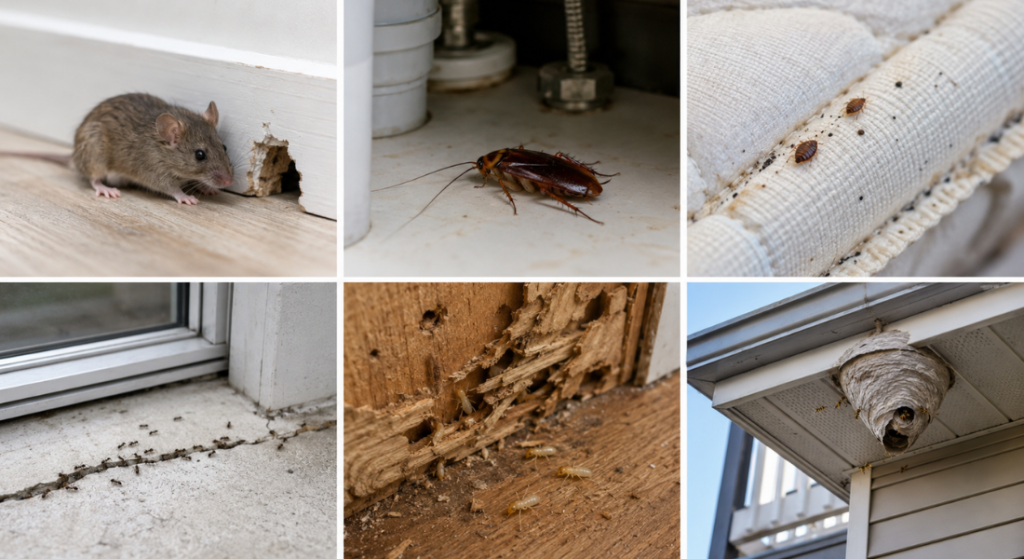
Pests are more than an inconvenience. Cockroaches, mice, rats, bed bugs, ants, fleas, flies, wasps, and other pests can affect tenant comfort, damage belongings, contaminate food, create health concerns, and harm the reputation of a rental property.
For landlords, ignoring pest activity can make a small issue worse. A few droppings under a sink may turn into a full rodent infestation. A single bed bug complaint in one apartment may spread to nearby rental units. Moisture around a bathroom or kitchen can attract cockroaches, silverfish, and ants. Gaps around pipes, doors, vents, and foundations can become easy entry points for rodents and insects.
Pest control rental property management should be proactive, not reactive. The best landlords do not wait until tenants are angry. They inspect, seal, clean, repair, educate, and document.
Common Landlord Responsibilities
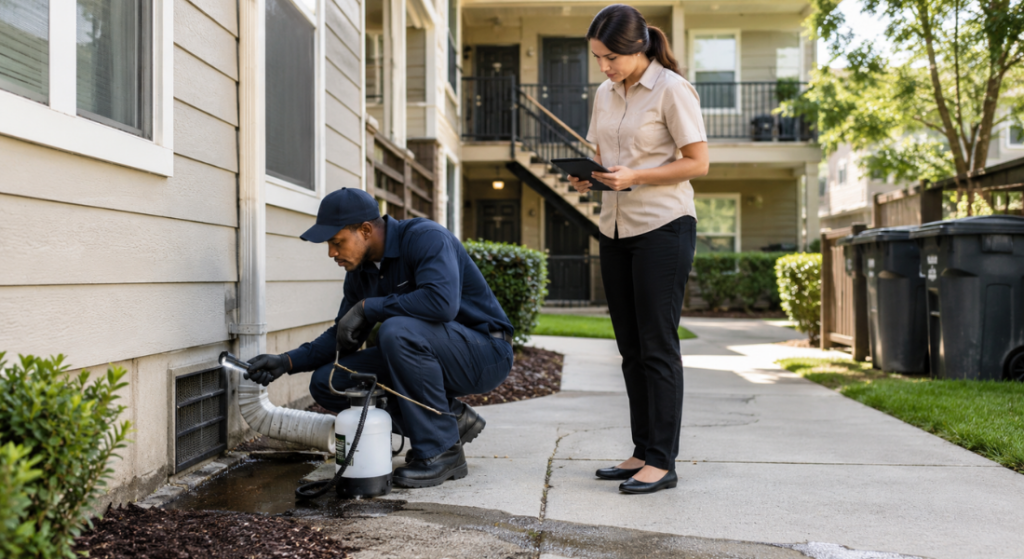
Landlords are generally expected to provide rental units that are safe, clean, maintained, and fit for normal living. Pest control often falls under that broader maintenance responsibility.
A landlord is usually responsible for pest control when:
- The infestation existed before the tenant moved in.
- Pests are entering because of structural gaps, cracks, damaged screens, holes, broken vents, or poor sealing.
- There are leaks, damp areas, drainage issues, or moisture problems attracting pests.
- The infestation affects more than one unit or appears to be building-wide.
The pest issue is connected to common areas, garbage rooms, basements, hallways, laundry rooms, exterior walls, or shared utility spaces.
The pest problem makes the rental property unhealthy or difficult to live in.
A tenant reports a pest issue and the landlord needs to investigate the source.
A strong landlord pest control process includes arranging inspections, hiring a licensed pest control professional when needed, repairing entry points, treating affected areas, coordinating access, and following up after treatment.
What are the Landlord’s Responsibilities in Pest Control?
Start With a Pest-Free Move-In
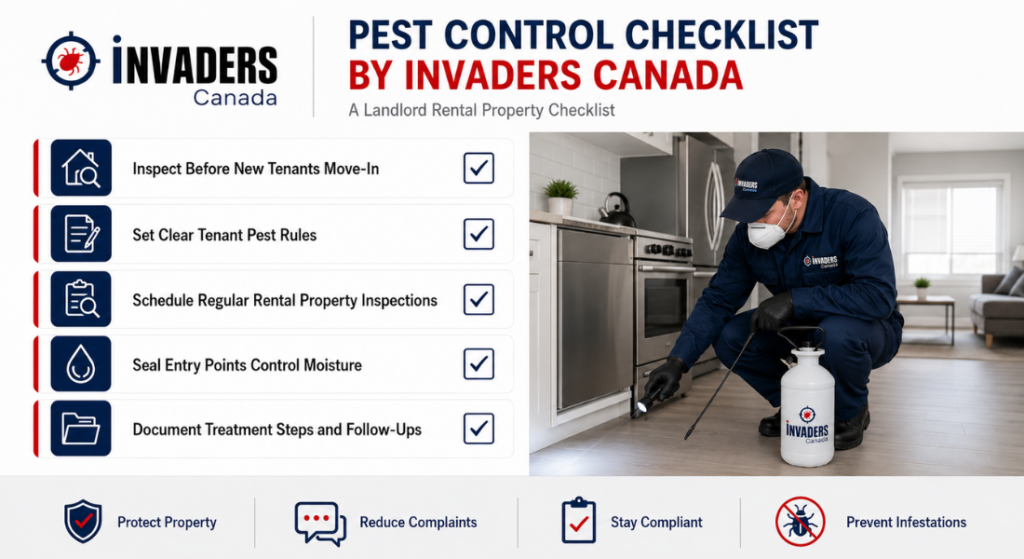
One of the most important steps in pest control rental property management is the move-in inspection. Before a tenant receives the keys, the landlord should check the unit carefully and document its condition.
Inspect the kitchen, bathroom, closets, basement, attic, laundry space, garage, utility areas, baseboards, under sinks, behind appliances, and around windows and doors. Look for droppings, dead insects, grease marks, nests, egg cases, damaged wood, chewed materials, stains, odors, or live pest activity.
Take dated photos and keep a written move-in checklist. If possible, have the tenant sign the inspection report. This helps show whether the unit was pest-free at the start. If a pest complaint appears later, both sides have a clearer record.
For multi-unit buildings, landlords should also inspect shared spaces. Pests often travel through pipe chases, wall voids, laundry rooms, garbage areas, storage rooms, and hallways.
Use Lease Clauses Carefully
A lease can explain pest control expectations, but it should not be used to avoid legal maintenance responsibilities. A good lease clause should be balanced and clear.
It can say that tenants must keep the rental unit clean, dispose of waste properly, report pests immediately, cooperate with inspections, prepare for treatments, and avoid bringing infested items into the property. It can also state that tenants may be responsible for costs if their actions directly cause the infestation.
However, landlords should avoid overly broad language that makes the tenant always responsible for all pest control. In many areas, that kind of clause may not override habitability or property maintenance laws. A better approach is to define responsibilities fairly and handle each tenant pest problem based on evidence.
Handle Gaps and Cracks
The strongest pest control rental property plan focuses on prevention. Prevention is usually cheaper than emergency treatment. Landlords should seal cracks, holes, and gaps around foundations, doors, windows, pipes, utility lines, vents, and exterior walls. Door sweeps should be installed where gaps exist. Damaged screens should be repaired. Weather-stripping should be replaced when worn.
Moisture, Garbage, and Landscaping
Moisture should be controlled. Fix leaky faucets, sweating pipes, damaged drains, roof leaks, clogged gutters, and basement dampness. Many pests need water to survive.
Garbage areas should be clean and secure. Dumpsters should close properly. Trash should not be allowed to pile up around the building. Outdoor bins should be rodent-resistant where possible.
Landscaping matters too. Trim branches away from the building, keep grass short, remove debris, reduce standing water, and avoid storing firewood directly against the structure.
Inside rental units, landlords should educate tenants about food storage, cleaning, garbage disposal, and early reporting. A welcome packet with pest prevention instructions can prevent many problems.
Who Is Responsible for Pest Control: Landlord or Tenant?
In most rental situations, landlord pest control responsibility depends on the cause of the infestation, the condition of the property, the lease agreement, and local rental laws.
As a general rule, landlords are usually responsible when pests are connected to the structure, maintenance issues, building-wide problems, or pests that were present before the tenant moved in. Tenants may be responsible if their actions, neglect, poor sanitation, or failure to report the issue caused or worsened the infestation.
This is where many disputes happen. A tenant may say the building has gaps, leaks, or old pest activity. A landlord may say the tenant left food out, stored trash indoors, brought in infested furniture, or refused treatment preparation. The best way to avoid conflict is to have clear move-in records, regular inspections, written communication, and professional pest control reports.
Common Tenant Responsibilities
Tenants also have responsibilities. A landlord cannot prevent every pest issue if a tenant creates conditions that attract pests or refuses to cooperate with treatment.
A tenant is usually expected to:
- Keep the rental unit reasonably clean.
- Store food in sealed containers.
- Take garbage out regularly.
- Avoid leaving dirty dishes, food scraps, pet food, or spills exposed.
- Report pest sightings quickly.
- Allow reasonable access for inspection and pest treatment.
- Follow pest control preparation instructions.
- Avoid bringing in used furniture, mattresses, boxes, or appliances that may contain pests.
- Avoid creating clutter that prevents treatment.
- Report leaks, holes, broken screens, or gaps that may attract pests.
If a tenant pest problem is clearly caused by neglect, the tenant may be responsible for some or all costs, depending on the lease and local laws. However, landlords should still respond professionally. Even if the tenant contributed to the problem, the infestation can spread and damage the property if ignored.
Responsibility Preferences for Landlords and Tenants
| Situation | Usually Responsible | Why It Matters |
|---|---|---|
| Pests were present before move-in | Landlord | The rental unit should be pest-free at the start of tenancy |
| Rodents entering through holes or gaps | Landlord | Structural repairs are usually a property maintenance issue |
| Cockroaches spreading through multiple units | Landlord | Multi-unit infestations usually require building-wide treatment |
| Tenant leaves food, trash, or pet waste exposed | Tenant may be responsible | Poor sanitation can attract pests |
| Bed bugs found shortly after move-in | Often landlord, depending on evidence | Bed bugs can be difficult to trace and may have existed before tenancy |
| Tenant brings in infested furniture | Tenant may be responsible | The source may be tenant-caused |
| Wasps nesting in exterior wall or roofline | Landlord | Exterior pest activity is usually connected to property maintenance |
| Ants entering through foundation cracks | Landlord | Entry-point sealing may be required |
| Fleas caused by tenant’s pets | Tenant may be responsible | Pet-related infestations often depend on lease terms |
| Common area garbage attracting rodents | Landlord | Shared waste management is typically a landlord responsibility |
How Landlords Should Respond to a Tenant Pest Problem?
When a tenant reports pests, the landlord should respond quickly and in writing. A slow response can make the issue worse and increase the chance of disputes.
The best process is simple.
- First, acknowledge the complaint. Ask the tenant what they saw, when they saw it, where it appeared, and whether they have photos.
- Second, schedule an inspection. For serious issues like rodents, cockroaches, bed bugs, termites, or wasps near entry points, do not rely only on tenant descriptions.
- Third, identify the pest. Different pests require different treatments. Cockroach control is not the same as bed bug treatment. Rodent control requires exclusion and trapping. Ant control depends on the species and entry points.
- Fourth, determine the likely cause. Look for food sources, leaks, entry points, sanitation problems, clutter, shared building issues, and exterior conditions.
- Fifth, hire a professional when needed. DIY sprays may temporarily reduce visible pests, but they often fail to address the source.
- Sixth, document everything. Keep tenant messages, inspection notes, photos, pest control invoices, treatment reports, access notices, preparation instructions, and follow-up records.
- Seventh, follow up. Pest control usually needs monitoring. A single visit may not solve the issue, especially with bed bugs, cockroaches, rodents, and multi-unit infestations.
Common Pests in Rental Properties
Rodents
Mice and rats are common in rental properties, especially during colder months. They enter through small gaps around foundations, doors, pipes, vents, garages, and utility lines. Rodents can chew wires, damage insulation, contaminate food, and create strong odors.
Landlords should seal entry points, remove exterior food sources, repair damaged doors and screens, secure garbage bins, and use professional trapping or baiting where appropriate.
Cockroaches
Cockroaches are one of the most frustrating rental property pests. They are attracted to food, warmth, moisture, and hiding spaces. In apartment buildings, they can move between rental units through walls, plumbing lines, and shared spaces.
Treatment usually requires tenant cooperation. Tenants may need to clean cabinets, remove food, reduce clutter, and follow preparation instructions. Landlords should also address leaks, cracks, garbage areas, and adjacent units.
Bed Bugs
Bed bugs are difficult because they can travel through luggage, used furniture, clothing, mattresses, and neighboring units. They are not always caused by poor cleanliness.
Landlords should take bed bug complaints seriously and use professional treatment. In multi-unit housing, nearby units may need inspection. Delays can make treatment more expensive and stressful.
Ants
Ants often enter through cracks, windows, foundations, and utility gaps. Moisture, crumbs, pet food, and sweet liquids can attract them. Carpenter ants are more serious because they can damage wood.
Landlords should identify the ant species, seal entry points, remove moisture sources, and treat nests when needed.
Termites and Carpenter Ants
Wood-destroying insects are a property protection issue. Tenants may notice sawdust, damaged wood, wings, mud tubes, soft flooring, or hollow-sounding wood. Landlords should arrange inspection quickly because structural damage can become expensive.
Fleas
Fleas are often connected to pets, but they can also come from wildlife, previous tenants, carpets, or shared areas. Lease terms, pet policies, and inspection records matter when deciding responsibility.
Wasps and Bees
Exterior nests around rooflines, sheds, wall voids, balconies, and entryways are usually a landlord concern because they affect safety and access. Tenants should not be encouraged to remove active nests themselves.
Inspections and Documentation
Inspections are one of the best tools landlords have. They help identify early signs of pests before the issue becomes serious. Useful inspection times include:
- Before move-in.
- After move-out.
- During seasonal maintenance.
- After a tenant reports pests.
- After pest control treatment.
- Before renewing a lease.
- During routine property checks allowed by local law.
During inspections, landlords should check for droppings, insects, nests, entry points, leaks, damaged screens, food buildup, trash issues, clutter, and signs of tenant neglect. Take photos when appropriate and keep records.
Documentation protects both landlord and tenant. It helps prove the unit’s condition, treatment timeline, tenant cooperation, and repair history.
Multi-Unit Rental Properties Need Extra Care
Pest control in multi-unit buildings is more complex than in single-family rentals. Pests do not respect unit boundaries. Cockroaches, mice, rats, bed bugs, and ants can move through shared walls, utility lines, hallways, and common areas.
If one tenant reports pests, landlords should consider whether nearby rental units need inspection. Treating only one unit may fail if the source is next door, behind a wall, in a basement, or near garbage storage.
Multi-unit landlords should have a written pest management plan. This plan should include inspection schedules, tenant reporting procedures, professional pest control contacts, waste management rules, common area cleaning standards, and follow-up treatment steps.
Should Landlords Use DIY Pest Control?
DIY pest control may work for very minor issues, such as a few ants or a few flies. However, landlords should be careful. Over-the-counter sprays can push pests deeper into walls, expose tenants to unnecessary chemicals, or fail to solve the root cause.
Professional pest control is usually better for rodents, bed bugs, cockroaches, termites, carpenter ants, wasps, and repeated infestations. A licensed pest control provider can identify the pest, locate the source, recommend repairs, treat safely, and provide written documentation.
For landlords, that written report is valuable. It may explain whether the pest issue was caused by structural conditions, building-wide activity, tenant sanitation, infested furniture, moisture, or another factor.
Tenant Communication Tips
Good communication prevents conflict. When a tenant reports a pest issue, avoid blaming them immediately. Start with inspection and evidence.
Use clear written messages. Confirm the report, explain the next step, provide appointment details, and send preparation instructions if treatment is scheduled. If the tenant must clean, remove clutter, empty cabinets, wash bedding, or move furniture, explain why.
Also explain that cooperation is required. Pest control often fails when tenants refuse access, skip preparation, continue leaving food out, or do not report new sightings.
A professional tone matters. Pest issues are stressful for tenants. A quick, organized response helps maintain trust.
Investing in professional pest extermination services can offer long-term benefits. You can keep your properties in good condition when you choose expert pest control services from Invaders Canada.
We have years of expertise, a combination of eco-friendly and advanced pest extermination measures, and a team of professionals. Contact us today for further details.
Conclusion
To conclude, pest control for a rental property is a necessary job that landlords must complete for a good relationship with their tenants. A professional landlord prefers to prevent and manage pest infestations for the well-being of their tenants. When they take proactive preventive measures, they can maintain a pest-free environment for their tenants. Understanding the responsibilities of landlords and tenants and how to prevent pest issues can help ensure a safe living environment.
Carpenter Ants vs Termites: Key Differences